

Wallpaper Styles for Living Room Walls: 2026 Guide
Wallpaper styles for living room walls are defined by substrate type, finish, and pattern scale, and each choice directly affects how a room looks, feels, and holds up over time. The main categories are vinyl, grasscloth, peel-and-stick, flocked, foil, and fabric, and each suits a different lifestyle and budget. Vinyl wallpaper is washable and built for active households, while peel-and-stick options give renters a damage-free way to personalize their space. Color, pattern scale, and light conditions all shape the final result. This guide covers every major type, how to choose the right color and pattern, installation steps, and care routines.
What are the most popular wallpaper types for living room walls?
The right wallpaper type depends on how the room is used, who lives there, and how much maintenance you are willing to do. Each substrate has real trade-offs.
- Vinyl. Scrub and wipe friendly, vinyl handles spills, fingerprints, and regular cleaning without fading. It is the most practical choice for households with children or pets.
- Grasscloth. Made from natural fibers like jute and hemp, grasscloth adds texture and sound absorption to a room. It requires gentle, dry cleaning and should not be exposed to moisture.
- Peel-and-stick. This format allows damage-free application and removal, making it the top pick for renters and anyone who changes their decor frequently. Wallsneedlove offers a full range of peel-and-stick designs, from geometric prints to scenic murals.
- Flocked. Flocked wallpaper has a raised, velvet-like texture that reads as luxurious. It collects dust easily and needs careful, dry maintenance.
- Foil. Metallic foil wallpaper reflects light and can make a small room feel larger. It shows every wall imperfection, so surface prep is critical.
- Fabric. Fabric-backed wallpaper adds warmth and softness. It works best in low-traffic areas and formal sitting rooms where it will not be touched often.
- Paintable. Textured paintable wallpaper lets you change the color without removing the wall covering. It suits homeowners who want flexibility over time.
Pro Tip: If you are unsure which type fits your lifestyle, start with vinyl or peel-and-stick. Both are forgiving for first-time installers and easy to update.
How to choose the right wallpaper color and pattern for your living room
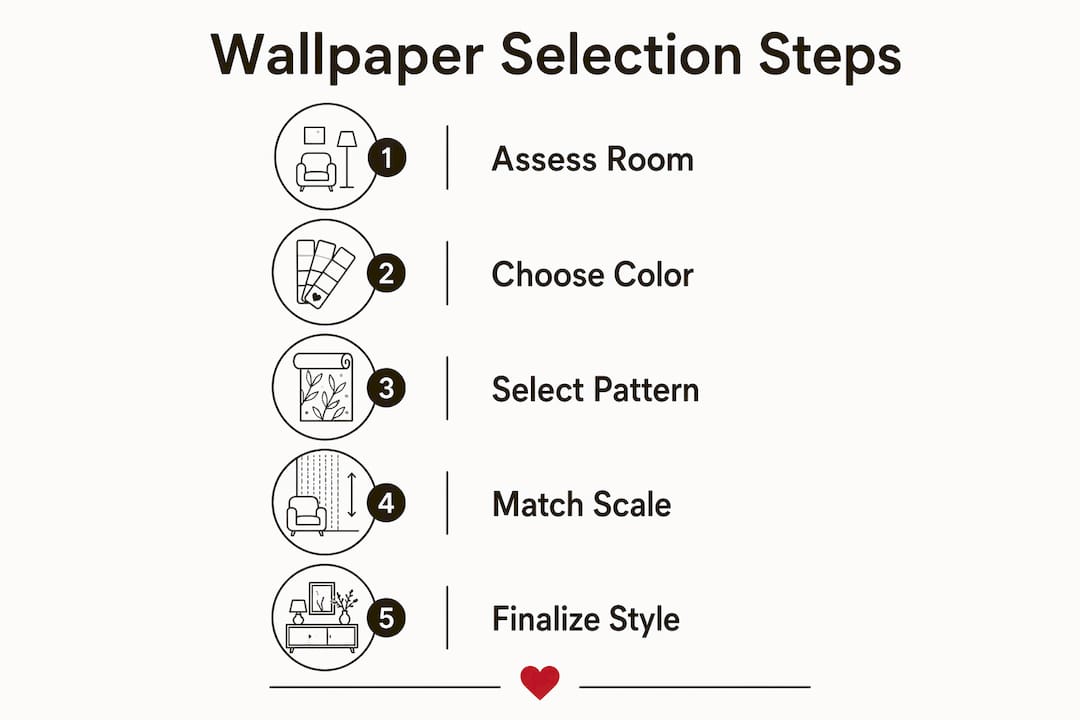
Wallpaper color choice should reflect how the space is used daily, how daylight moves through the room, and how the living room connects to adjacent spaces. Aesthetics matter, but function drives the best decisions.
Matching color to room size and light
Lighter tones open up smaller rooms. Balanced tones like beige, light gray, soft green, and muted blue work well in most living rooms because they stay flexible as furniture and accessories change. Darker hues like deep green, charcoal, or navy add depth and a sense of comfort in larger rooms without feeling heavy when applied thoughtfully. North-facing rooms with limited natural light benefit from warm whites and soft yellows. South-facing rooms can handle cooler tones without feeling cold.
Choosing pattern scale
Pattern scale should match the room’s proportions. Large-scale prints work in rooms with high ceilings and generous floor space. Small, repeating patterns suit compact rooms or accent walls where a full-room application would feel busy. Check the wallpaper scale guide from Wallsneedlove for a practical breakdown of how to match repeat size to wall dimensions.
Popular style trends for 2026
Modern wallpaper styles feature biophilic designs, geometric patterns, tactile surfaces, and bold prints that create immersive, personal spaces. Wallpaper now functions as a defining element for atmosphere and identity, not just background decoration. The table below shows how to match style trends to room types.
| Style trend | Best room type | Key effect |
|---|---|---|
| Biophilic (botanical, leaf) | Any living room | Brings nature indoors, calming |
| Geometric patterns | Modern or minimal rooms | Adds structure and visual interest |
| Tactile surfaces (grasscloth, linen) | Formal or low-traffic rooms | Adds warmth and dimension |
| Bold scenic murals | Feature walls, large rooms | Creates a strong focal point |
| Colorful abstract prints | Eclectic or creative spaces | Expresses personality |
What are the practical steps for installing living room wallpaper?
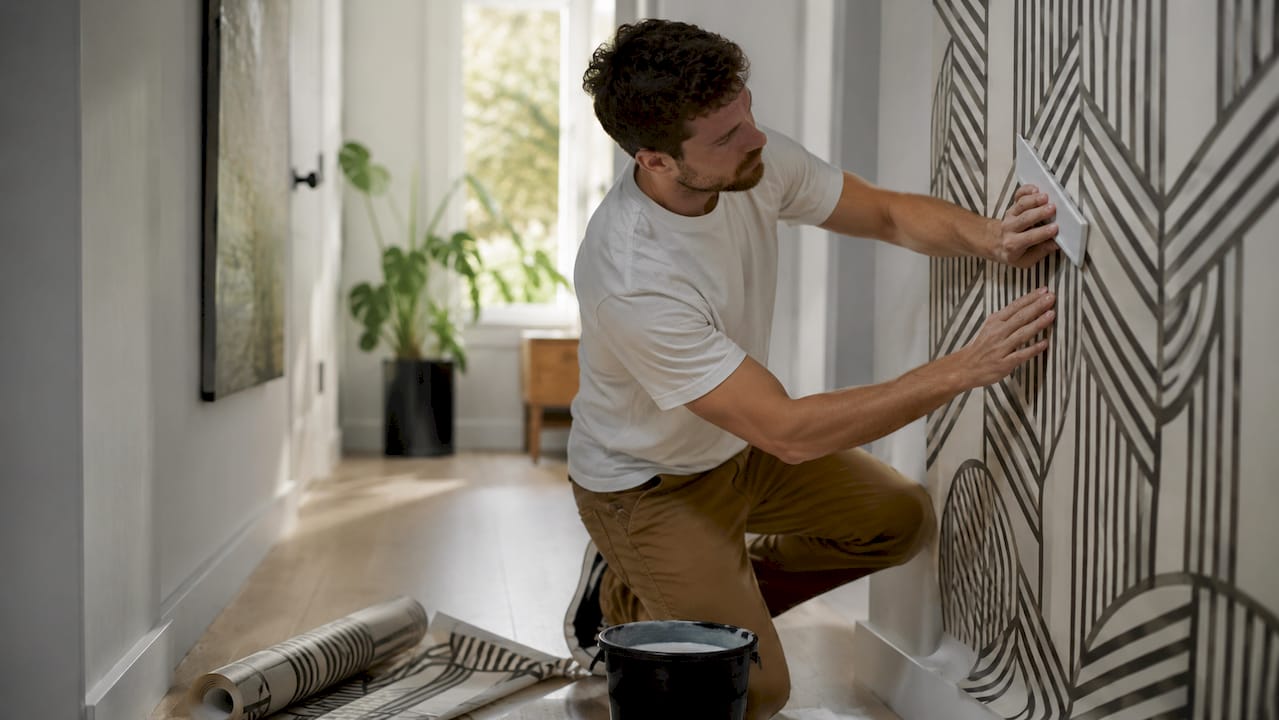
Good installation starts with preparation, not with the wallpaper itself. Essential tools include a measuring tape, smoothing tool, scissors, adhesive if needed, and a cutting knife. Skipping any of these steps leads to bubbles, misaligned patterns, and edges that lift.
Tools and materials at a glance
| Tool or material | Purpose |
|---|---|
| Measuring tape | Measure wall height and width accurately |
| Smoothing tool or squeegee | Remove air bubbles during application |
| Utility knife and cutting mat | Trim edges and pattern repeats cleanly |
| Wallpaper paste or activator | Adhere paste-the-wall or paste-the-paper types |
| Primer or sizing | Seal porous walls for better adhesion |
| Level and pencil | Mark a straight vertical guide line |
Step-by-step installation process
- Clean the wall. Remove dust, grease, and loose paint. A clean surface is the single biggest factor in how well wallpaper adheres.
- Smooth and prime. Fill any holes or cracks with spackle. Apply a wallpaper primer or sizing to seal porous surfaces and improve adhesion.
- Measure and cut. Measure wall height and add 2–3 inches for trimming at the top and bottom. Account for pattern repeat when cutting multiple strips.
- Mark a vertical guide line. Use a level to draw a straight plumb line. This keeps the first strip straight, which keeps every strip after it straight.
- Apply the wallpaper. For paste types, apply adhesive to the wall or paper as directed. For peel-and-stick, peel the backing and press from top to bottom, smoothing as you go.
- Trim edges. Use a utility knife and straight edge to trim excess at the ceiling, baseboard, and corners.
- Align seams carefully. Butt seams together without overlapping. Overlapping seams create visible ridges.
Pro Tip: Always hang the first strip next to a window and work away from the light source. This makes seams less visible from the main viewing angle.
Proper wall preparation, including cleaning, smoothing, and priming, is the most important factor in achieving a professional finish. Skipping prep is the most common reason wallpaper fails early.
For open-plan living rooms, read the designer’s guide to open-plan spaces from Wallsneedlove for advice on handling large wall areas and transitions between zones.
How to maintain and clean different wallpaper types
Proper care extends the life of any wall covering and keeps colors looking fresh. The right cleaning method depends entirely on the wallpaper material.
- Vinyl and washable wallpapers. Wipe with a damp cloth and mild detergent for everyday marks. Scrubbable vinyl can handle a soft brush for tougher stains. Always wipe in a gentle circular motion and dry the surface afterward.
- Grasscloth and natural fiber wallpapers. Use a dry or barely damp cloth. Water causes grasscloth to stain and warp. Vacuum lightly with a brush attachment to remove dust.
- Flocked and fabric wallpapers. Dust with a soft brush or low-suction vacuum. Avoid water entirely. Spot-treat stains with a dry-cleaning solvent applied with a cotton swab.
- Foil wallpapers. Wipe with a barely damp, lint-free cloth. Avoid abrasive cleaners, which scratch the metallic surface.
Sunlight fades all wallpaper types over time. UV-filtering window film or lined curtains slow this process significantly. Repair small tears with a dab of wallpaper seam repair adhesive and a damp cloth to press the edge flat. For renters, the rental walls guide from Wallsneedlove covers how to handle repairs without damaging the underlying wall.
Pro Tip: Test any cleaning product on a hidden section of wallpaper first. Even mild detergents can lift color from delicate materials like grasscloth or flocked finishes.
Key Takeaways
The most effective approach to choosing wallpaper for a living room is to match substrate type to lifestyle first, then select color and pattern to suit the room’s size, light, and existing decor.
| Point | Details |
|---|---|
| Match type to lifestyle | Vinyl suits active households; peel-and-stick works best for renters and frequent decorators. |
| Color follows function | Choose tones based on daylight, room size, and connection to adjacent spaces, not aesthetics alone. |
| Pattern scale matters | Large prints suit spacious rooms; small repeats work better in compact spaces or on accent walls. |
| Prep determines results | Clean, smooth, and primed walls are the foundation of a lasting, professional-looking installation. |
| Care method depends on material | Vinyl tolerates scrubbing; grasscloth and flocked types need dry or minimal-moisture cleaning only. |
What Wallsneedlove has learned about picking wallpaper for real living rooms
The most common mistake homeowners make is choosing wallpaper based on how it looks in a photo. A pattern that looks bold and exciting on a screen can feel oppressive on four walls, or it can look exactly right on a single accent wall behind a sofa. The difference comes down to scale and light, not the pattern itself.
Renters tend to underestimate how much a peel-and-stick design can change a room. A well-chosen geometric or botanical print on one wall does more for a living room than repainting the entire space. The commitment is low, and the visual impact is immediate.
The trend toward tactile and biophilic wallpaper is real and worth paying attention to. Grasscloth, linen-look prints, and botanical murals are not passing fads. They reflect a broader shift toward materials that feel considered and personal. The living room is the most-used space in most homes, and people want it to reflect something specific about how they live.
One thing that gets overlooked in most wallpaper guides is the connection between rooms. A living room wallpaper that works beautifully in isolation can feel jarring if it clashes with the hallway or dining area. Choosing a color that appears in both spaces, even in different proportions, creates a flow that makes the whole home feel intentional.
— Wallsneedlove
Wallsneedlove’s living room wallpaper collection
Wallsneedlove carries a wide range of designs built specifically for living room walls, from bold scenic murals to clean geometric prints, all available in peel-and-stick or traditional paste formats.

The Pixel Diamonds geometric wallpaper is a high-priority pick for modern living rooms, with a repeating dot pattern that adds structure without overwhelming a space. For a more dramatic focal point, the Java Mountain wall mural delivers a full-wall scenic design that works on a single feature wall. All Wallsneedlove products are Greenguard Gold certified, custom printed within 1–3 days, and designed for straightforward DIY installation. Browse the full wallpaper and murals catalog to find the right fit for your living room.
FAQ
What wallpaper type is best for a living room?
Vinyl is the most practical choice for most living rooms because it is washable, durable, and available in a wide range of styles. Peel-and-stick is the best option for renters or anyone who wants flexibility without wall damage.
How do I choose wallpaper colors for a small living room?
Light tones like soft white, light gray, and pale green make small rooms feel more open. Avoid large-scale dark patterns on all four walls in compact spaces.
Can renters use wallpaper in a living room?
Peel-and-stick wallpaper is specifically designed for rental walls. It applies without paste and removes cleanly, leaving no damage to the underlying surface.
How do I maintain grasscloth wallpaper in a living room?
Grasscloth requires dry or barely damp cleaning only. Use a soft brush or low-suction vacuum to remove dust, and avoid any water-based cleaning products that can cause staining or warping.
What are the most popular wallpaper styles for modern living rooms?
Biophilic designs, geometric patterns, tactile surfaces, and bold scenic murals are the leading styles in 2026. These options work as full-room treatments or as accent wall features depending on the room’s size and layout.


Leave a comment