

What Is Peel and Stick Wallpaper: Renter's Guide
Peel and stick wallpaper is a self-adhesive wall covering with a pressure-sensitive backing that lets you decorate walls without paste, primers, or professional installation. The industry term is removable wallpaper, and it works by peeling away a protective liner to expose the adhesive, then pressing the panel directly onto a prepared wall surface. Renters, first-time homeowners, and DIY decorators favor it because removal is clean and residue-free, protecting security deposits and painted surfaces alike. Wallsneedlove offers this format alongside traditional paste options, giving you a clear choice based on your project needs.
What is peel and stick wallpaper made of?
Peel and stick wallpaper is most commonly made from vinyl-based material, which provides enough moisture resistance for most interior walls. That vinyl construction makes it suitable for kitchen accent walls and powder rooms, though not for wet areas like full bathrooms with direct water exposure. Some products use fabric-backed materials for a softer texture and more natural look. The adhesive layer sits between the decorative face and a paper or plastic liner. You peel the liner away as you apply each panel, exposing the pressure-sensitive glue underneath.
The adhesive technology matters more than most buyers realize. It is designed to grip smooth surfaces firmly but release cleanly when you pull the panel away at a low angle. This balance between grip and release is what separates quality removable wallpaper from budget versions that either fall off walls or tear paint on removal.
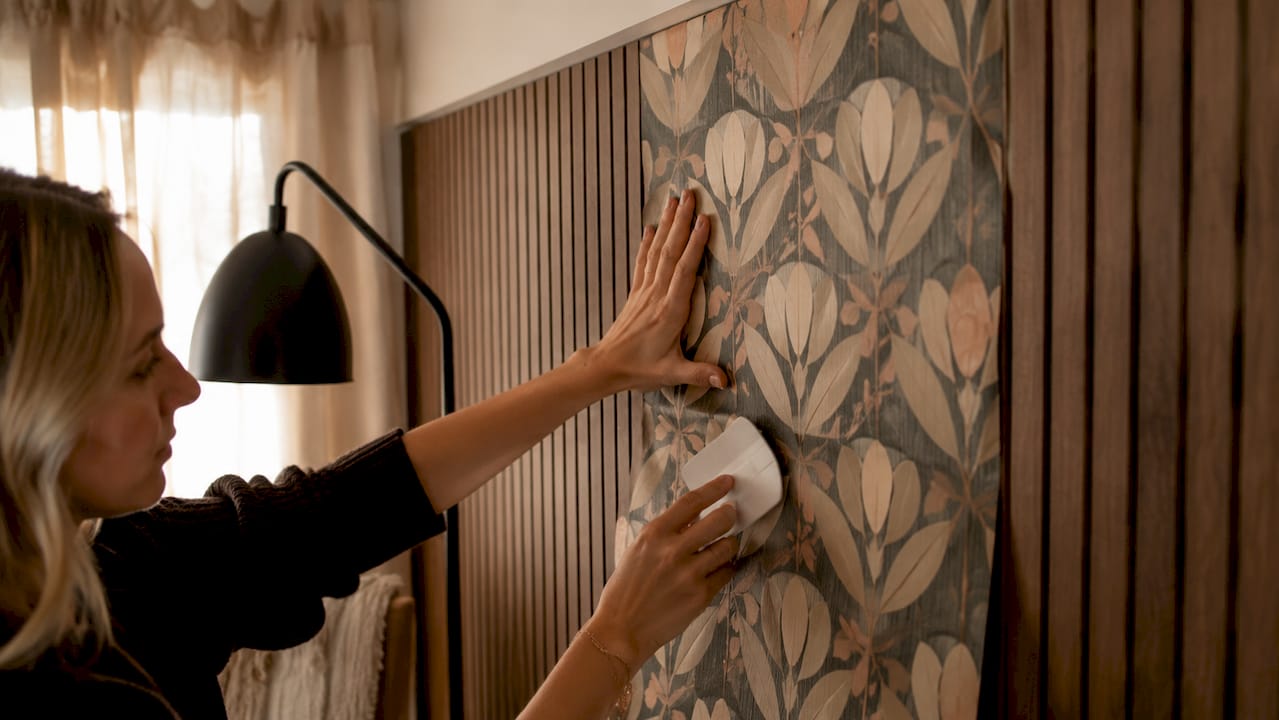
How to apply peel and stick wallpaper: step-by-step
Proper application follows a clear sequence. Skipping any step increases the chance of bubbles, lifting edges, or misaligned patterns.
- Clean the wall. Wipe down the surface with a damp cloth and mild cleaner. Remove all dust, grease, and residue. A living room cleaning checklist can help you cover all prep steps before you start.
- Let the wall dry completely. Any moisture under the adhesive will prevent bonding. Allow at least 24 hours after cleaning.
- Check paint cure time. Wall paint should cure at least 4 weeks before you apply removable wallpaper. Fresh paint has not fully hardened and the adhesive can bond too aggressively, pulling paint off during removal.
- Measure and cut panels. Add 2–3 inches to your height measurement to allow for trimming at the top and bottom.
- Start at a plumb vertical line. Use a level to draw a straight vertical guide on the wall. This keeps your first panel straight and every panel after it aligned.
- Peel the liner slowly. Pull the liner back at a low angle rather than straight off. This prevents the adhesive from folding onto itself.
- Smooth as you go. Use a flat squeegee or credit card to press the panel from the center outward, pushing air bubbles toward the edges.
- Trim excess at top and bottom. Use a sharp utility knife and a straight edge for clean cuts.
Pro Tip: Peel the liner back only 6–8 inches at a time rather than removing it all at once. This gives you control over placement and prevents the panel from sticking to itself before it hits the wall.
Most panels are repositionable, meaning you can gently peel them back and reapply if your alignment is off. However, repeated repositioning reduces adhesive performance. Get your placement right within one or two attempts.
Peel and stick vs. paste wallpaper: pros, cons, and when to choose each
The choice between self-adhesive and traditional paste wallpaper comes down to your timeline, skill level, and how permanent you want the result.
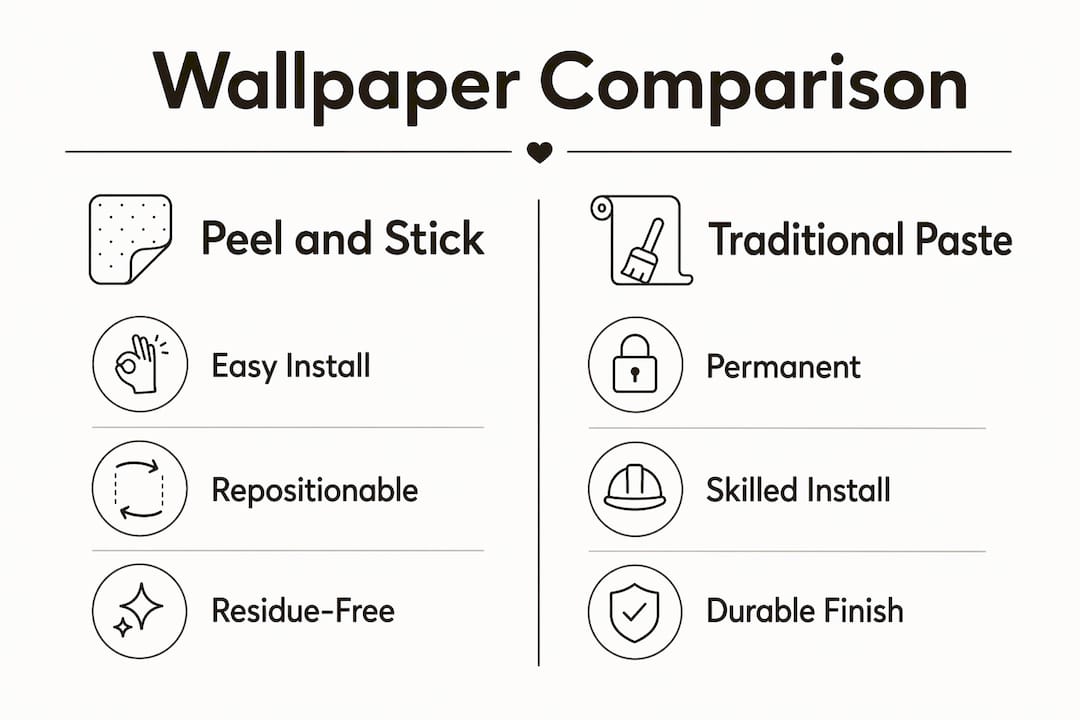
| Feature | Peel and stick | Traditional paste |
|---|---|---|
| Installation skill needed | Low to moderate | Moderate to high |
| Tools required | Squeegee, knife, level | Paste, tray, brush, seam roller |
| Mess level | Minimal | High |
| Durability | 3–5 years typical | 10+ years |
| Moisture resistance | Moderate (vinyl) | High (depends on type) |
| Removal | Clean, renter-friendly | Often requires steaming or soaking |
| Best for | Renters, accent walls, DIY | Permanent installs, full rooms |
Traditional wallpaper offers superior durability and moisture resistance but requires messy paste, professional skill, and longer installation times. That trade-off is worth it for a permanent family home where you plan to stay for a decade. For a rental apartment, a nursery that will change in two years, or a quick refresh before selling, removable wallpaper is the practical choice.
Key advantages of self-adhesive wallpaper:
- No paste, no mess, no drying time between panels
- Repositionable during installation to correct alignment errors
- Removable without professional help or wall damage on compatible surfaces
- Available in mural panels and repeating patterns for design flexibility
- Greenguard Gold certified options, like those from Wallsneedlove, confirm low chemical emissions
Limitations to know before you buy:
- Edges may lift in high-humidity rooms or high-traffic areas
- Not suitable for textured walls, brick, or heavily embossed surfaces
- Lifespan is shorter than paste wallpaper, typically 3–5 years
- Surface and paint finish directly affect both adhesion and removal success
Common mistakes and how to avoid them
The biggest misconception about removable wallpaper is that it is foolproof. Installation requires practice, patience, and precise technique to avoid stretching panels and misaligning patterns. Treating it like a simple sticker leads to the most common failures.
Wall surface problems:
- Applying to textured walls causes gaps in adhesion and visible bubbles
- Dusty, textured, or freshly painted surfaces lead to poor adhesion and early failure
- Skipping the cleaning step is the single most common cause of lifting edges
Paint finish problems:
- Flat or matte paint finishes can cause the adhesive to grip too aggressively, risking paint peeling on removal
- Eggshell, satin, and semi-gloss finishes are the safest bases for removable wallpaper
- If your walls have flat paint, apply a test patch in an inconspicuous area and leave it for 48 hours before committing to a full installation
Application errors:
- Pulling the liner off all at once makes the panel hard to control
- Stretching the panel while applying distorts the pattern and weakens adhesion
- Pressing too hard too fast traps air bubbles that are difficult to remove later
Pro Tip: To remove a panel cleanly, heat the surface gently with a hair dryer on low heat for 20–30 seconds per section. Warm adhesive releases more easily and reduces the risk of paint damage.
Seam visibility is another common complaint. Butt seams (where two panels meet edge to edge) look best when panels are cut precisely and the wall surface is perfectly smooth. Overlapping panels creates a visible ridge that catches light.
Style options: mural panels, patterns, and accent walls
Peel and stick wallpaper comes in two main formats: repeating pattern rolls and large-format mural panels.
Repeating pattern rolls work like traditional wallpaper. You match the pattern repeat across panels to create a continuous design across the full wall. Options range from geometric prints like the Dimensional Retro chevron design to botanical prints, faux textures, and script patterns.
Mural panels are a different product category. Peel and stick murals are large panels that align together to form one continuous image across a wall. They require careful panel-by-panel alignment during installation but create a dramatic, custom look that repeating patterns cannot achieve. A scenic mountain mural or a floral wall mural transforms a single wall into a focal point without any framing or artwork.
Current design trends favor:
- Accent walls using a single bold mural behind a bed, sofa, or dining table
- Botanical and floral prints in living rooms and bedrooms, like the Vintage Bouquet mural with oversized roses
- Geometric and abstract patterns for home offices and modern interiors
- Vintage and retro styles for eclectic spaces
- Night sky and nature murals for children’s rooms and creative spaces
Wallsneedlove carries all of these categories, with murals custom printed within 1–3 days and available in both peel and stick and traditional paste formats.
Key takeaways
Peel and stick wallpaper is the most practical wall covering choice for renters and short-term decorating projects, provided walls are smooth, properly painted, and fully cured before installation.
| Point | Details |
|---|---|
| Surface prep is non-negotiable | Clean, dry, smooth walls with cured eggshell or satin paint give the best adhesion and removal results. |
| Lifespan is 3–5 years | Plan for replacement in high-traffic or high-humidity areas sooner than in dry, low-touch spaces. |
| Paint finish affects removal | Flat or matte paint risks peeling on removal; always test a patch before full installation. |
| Murals differ from patterns | Mural panels form one large image and require precise alignment; they are not interchangeable with repeating rolls. |
| Repositionable does not mean unlimited | Each repositioning attempt reduces adhesive strength; aim to get placement right within one or two tries. |
Wallsneedlove’s take on removable wallpaper
The product category gets oversimplified in most buying guides. Removable wallpaper is not a beginner-proof product. It rewards preparation and penalizes shortcuts. The customers who are happiest with their results are the ones who spent more time cleaning and assessing their walls than they did browsing patterns.
The most underrated step is the paint cure check. Wallsneedlove sees this come up repeatedly. A wall painted two weeks ago looks and feels dry, but the paint film has not fully hardened. Adhesive applied too early bonds to a surface that is still slightly soft, and removal later pulls the paint layer with it. Four weeks is the minimum. Six weeks is better.
The other misconception worth addressing: mural panels are not harder than repeating patterns. They are actually more forgiving for first-timers because you do not have to match a repeat. You just align panel edges. The Hometaping wall mural is a good example of a design that looks complex but installs cleanly because the panel edges are clearly numbered and the image has natural variation that hides minor alignment gaps.
Renters specifically should prioritize paint finish research before buying anything. Check your lease for the paint type used, or apply a small test strip before ordering full quantities. That one step prevents the most common deposit dispute related to wall decor.
— Wallsneedlove
Explore peel and stick wallpaper and murals at Wallsneedlove
Wallsneedlove carries a curated selection of removable wallpaper and large-format murals, all custom printed within 1–3 days. Every product is available in peel and stick or traditional paste format, so you choose the installation method that fits your walls and timeline. The collection spans geometric patterns like Pixel Diamonds, scenic murals like the Java Mountain wall mural, and dozens of floral, abstract, and vintage styles. All products carry Greenguard Gold certification for low chemical emissions. Browse the full wallpaper and murals collection to find the right design for your space.
FAQ
What surfaces work best for peel and stick wallpaper?
Smooth, clean, dry surfaces such as painted drywall, primed walls, glass, tile, and wood provide the best adhesion. Textured walls, brick, and surfaces with flat or matte paint are not recommended without testing first.
How long does peel and stick wallpaper last?
Removable wallpaper typically lasts 3–5 years depending on installation quality, room humidity, and how much the surface is touched. Edges in high-traffic or high-humidity areas may lift sooner.
Can you reuse peel and stick wallpaper after removing it?
Most removable wallpaper is not designed for reuse after full removal. The adhesive loses strength once fully separated from the wall, and panels may not re-adhere reliably to a new surface.
Is peel and stick wallpaper safe for renters?
Yes. Removal is typically clean and residue-free on properly prepared walls with eggshell or satin paint finishes. Always apply a test patch first to confirm your specific wall surface is compatible before installing full panels.
What is the difference between mural panels and patterned rolls?
Mural panels align together to form one large continuous image, while patterned rolls repeat a design across the wall. Murals require panel-by-panel alignment; patterned rolls require matching the repeat between panels.


Leave a comment