

Wallpaper Scale for Residential Spaces: A Design Guide
Wallpaper scale is defined as the size and repetition of a pattern relative to a room’s dimensions, and it is the single most important factor in whether a wallpaper choice enhances or disrupts a space. Pattern scale refers directly to how a design’s visual weight interacts with wall area, ceiling height, and furniture mass. Get it right, and a room feels intentional and balanced. Get it wrong, and even a beautiful pattern can make a space feel cramped, chaotic, or flat. This guide covers wallpaper scale selection for rooms of every size, from compact powder rooms to open-plan living areas, with practical criteria for pattern size, orientation, and placement.
How does wallpaper scale affect room perception and proportion?
Wallpaper scale directly controls how large or small a room feels to anyone standing in it. The relationship between pattern size and wall area determines whether a design reads as dramatic, textured, or visually neutral. Understanding this relationship is the foundation of all residential wallpaper design decisions.
Large-scale patterns
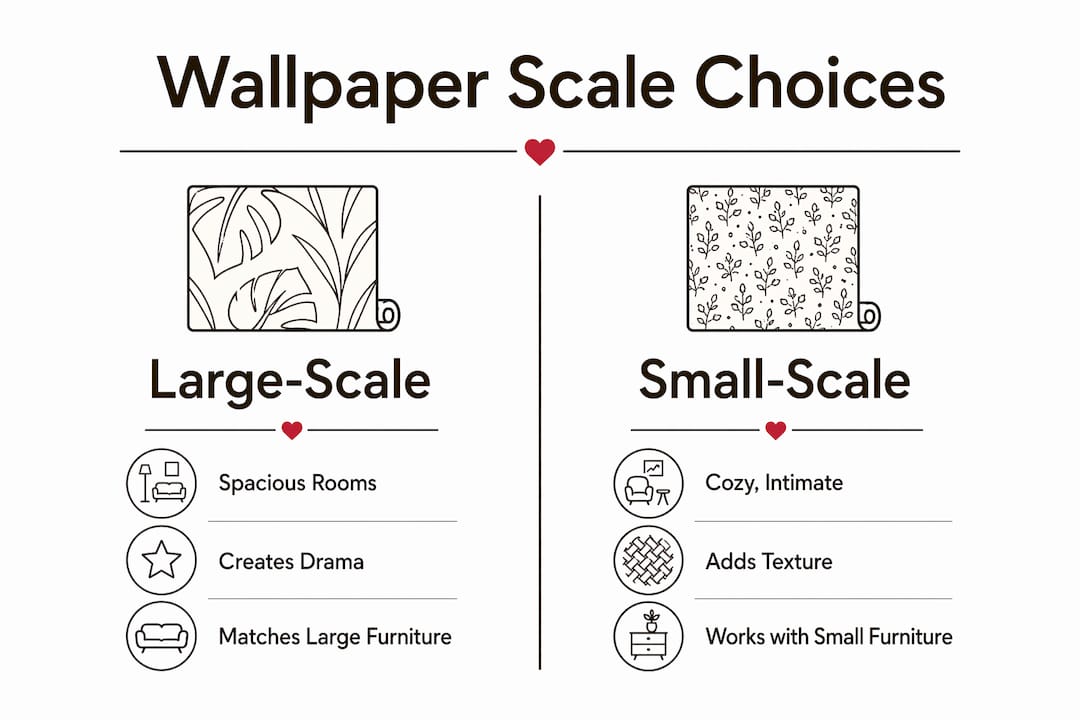
Large-scale patterns create visual drama and work best in rooms with generous wall space. In a spacious living room or dining area, an oversized botanical or geometric print gives the walls a focal point without cluttering the room. Oversized patterns anchor large rooms visually, providing structure across wide wall expanses without overwhelming them. The key risk with large-scale patterns is placing them in tight spaces where the repeat cannot complete fully before hitting a corner or ceiling, which fragments the design.
Small-scale and medium-scale patterns
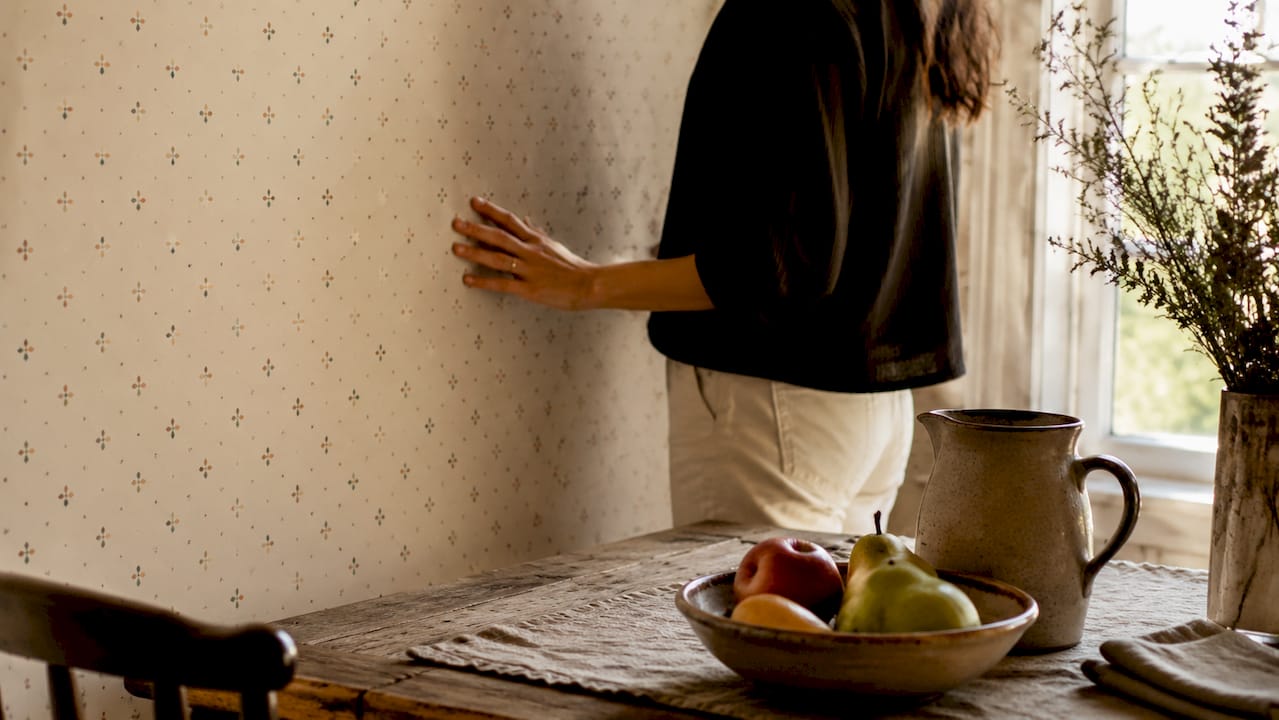
Small-scale patterns add surface texture and depth without demanding attention. Fine-scale designs suit balanced, intimate spaces and pair well with smaller furnishings. Medium-scale patterns are the most versatile option in residential wallpaper design. They work across a wide range of room sizes and rarely clash with furniture or architectural details.
The directional effect of stripes
Orientation is a separate but equally powerful tool. Vertical stripes guide the eye upward, increasing perceived ceiling height and making rooms feel taller. Horizontal stripes do the opposite, widening narrow rooms by drawing the eye along the wall’s length. This directional effect applies to any striped wallpaper, from bold graphic lines to subtle tone-on-tone textures.
Pro Tip: Before committing to a striped wallpaper, identify your room’s weakest spatial dimension. Low ceiling? Go vertical. Narrow hallway? Go horizontal. Orientation choice alone can correct a room’s proportions without any structural changes.
- Large-scale patterns: best for rooms with tall ceilings and wide walls
- Small-scale patterns: add texture without overpowering compact spaces or heavy furniture
- Medium-scale patterns: versatile across most residential room sizes
- Vertical orientation: raises perceived ceiling height
- Horizontal orientation: widens narrow rooms and hallways
- Stripe width and spacing: affects how bold or subtle the directional effect reads
How to select wallpaper scale considering room size, function, and furniture
Choosing the right scale starts with a clear assessment of three factors: room dimensions, room function, and the visual weight of existing furniture. Skipping any one of these leads to the most common wallpaper mistakes seen in residential interiors.
-
Measure ceiling height and wall width first. Rooms with tall ceilings and wide walls support larger scale patterns more naturally than compact spaces. A 9-foot ceiling can carry a medium-scale pattern comfortably. A 12-foot ceiling opens the door to large-scale murals and oversized repeats.
-
Match pattern scale to furniture visual weight. Oversized patterns suit large furniture, while fine patterns work better alongside smaller furnishings. A sectional sofa and a heavy dining table need a wallpaper that holds its own visually. Delicate small-scale prints disappear behind large furniture and lose their effect entirely.
-
Factor in room function. Bold, high-contrast patterns work well in powder rooms and entryways because visitors spend limited time there. The visual intensity reads as intentional rather than exhausting. Bedrooms and home offices benefit from quieter, medium-scale or small-scale patterns that do not compete with the need for calm.
-
Use wallpaper strategically, not universally. Accent walls, headboard walls, and alcoves are ideal locations for bolder scale choices. Wallpaper patterns can define zones and add interest in open-plan spaces without overwhelming the entire room. A single feature wall with a large-scale mural delivers impact while keeping the rest of the room visually open.
-
Test with large samples, not small swatches. A 4-inch swatch tells you almost nothing about how a pattern will read at full scale. Order or print a sample at least 12 inches square, and tape it to the actual wall in the room’s natural lighting before deciding.
Pro Tip: If you are working with a bold, large-scale pattern in a smaller room, keep the remaining walls, trim, and furnishings in solid, neutral tones. The pattern needs breathing room to read correctly.
Large-scale vs small-scale wallpaper: which works where?
The choice between large and small pattern scales is not simply about room size. Small rooms can handle large wallpaper patterns when the design is balanced properly. Intentional use and proportion matter more than square footage alone. The table below outlines the practical differences between the two approaches across common residential spaces.
| Pattern scale | Best rooms | Spatial effect | Key consideration |
|---|---|---|---|
| Large-scale | Living rooms, dining rooms, primary bedrooms | Creates drama, anchors wide walls | Needs full repeat to complete without fragmentation |
| Medium-scale | Most rooms, hallways, home offices | Versatile, balanced visual weight | Works with most furniture styles and sizes |
| Small-scale | Compact rooms, bathrooms, busy architecture | Adds texture, reads as near-neutral | Can look busy if pattern density is too high |
| Scenic mural | Feature walls, open-plan zones | Defines space, creates depth | Scale must be calibrated to wall dimensions exactly |
Large-scale patterns in living rooms and large dining areas provide visual structure that smaller patterns cannot. A scenic wall mural on a primary wall turns the room’s largest surface into a deliberate design statement. The surrounding furniture and decor then organize themselves around that anchor point naturally.
Small-scale patterns serve a different purpose. They add surface interest and depth without competing with architectural details like crown molding, wainscoting, or exposed beams. In rooms where the architecture is already busy, a fine-scale or tone-on-tone pattern keeps the walls from adding visual noise.
The most underused option is the scenic or photographic mural, which operates outside the standard repeat-pattern logic entirely. A mural is sized to the exact wall dimensions, so scale fragmentation is not a concern. This makes murals a reliable choice for feature walls in rooms of any size, including smaller spaces where a traditional large-scale repeat would not complete cleanly.
Practical tips for applying wallpaper at scale in residential spaces
Correct installation preserves the scale effect you selected. Poor alignment, mismatched seams, or wrong orientation can undermine even the best pattern choice.
- Align pattern repeats precisely. Seams that do not match break the visual continuity of the pattern and make scale inconsistencies obvious. Measure the repeat length before cutting panels and account for waste in your material order.
- Confirm orientation before installation. Vertical orientation raises ceilings. Horizontal orientation widens rooms. Confirm which effect you need before the first panel goes up, because reversing orientation after installation is not practical.
- Use peel-and-stick options for flexibility. Removable wallpaper lets you test a scale choice in a real room before committing to a permanent installation. Wallsneedlove offers peel-and-stick formats across its full catalog, including geometric and floral patterns suited to a range of room sizes.
- Apply large-scale patterns to accent walls first. A single feature wall is lower risk than a full-room application and gives you a clear read on how the pattern scale interacts with the room’s dimensions and light.
- Balance wallpaper with lighting. Natural light reveals pattern scale accurately. Artificial lighting, especially warm or directional sources, can compress or flatten a pattern’s visual weight. Evaluate your sample under the room’s actual lighting conditions before finalizing.
- Consider furniture placement before installation. Large furniture placed in front of a bold pattern reduces the visible wall area and can cut off the pattern repeat. Plan furniture layout alongside wallpaper placement to preserve the full visual effect.
For rooms where you want to make walls work harder without permanent commitment, removable floral wallpaper offers a practical starting point for testing scale choices in real conditions.
Key takeaways
Wallpaper scale selection requires matching pattern size, orientation, and placement to room dimensions, furniture weight, and function before any other design decision.
| Point | Details |
|---|---|
| Scale is defined by proportion | Pattern size must relate to wall area and ceiling height, not personal preference alone. |
| Orientation controls spatial perception | Vertical patterns raise ceilings; horizontal patterns widen rooms. |
| Function determines boldness | Powder rooms and entryways tolerate high-contrast large-scale patterns; bedrooms benefit from quieter scales. |
| Small rooms can use large patterns | Balance and intentional placement matter more than room size when selecting pattern scale. |
| Test before committing | Large samples in real lighting conditions reveal scale effects that small swatches cannot. |
What Wallsneedlove has learned about wallpaper scale
The most consistent mistake seen in residential wallpaper projects is choosing scale based on the pattern’s appearance on a screen or in a catalog photo. A design that looks bold and graphic at thumbnail size often reads as flat and underwhelming once installed across an 8-foot wall. The reverse is also true. A pattern that looks overwhelming in a small product photo can settle into a room beautifully when the repeat has room to complete across a full wall.
The second most common error is treating large-scale patterns as exclusively a large-room solution. A powder room with a single oversized botanical print is one of the most effective scale applications in residential design. The pattern does not need to repeat many times to read correctly. One or two complete repeats across a small wall deliver the full visual impact of the design without fragmentation.
The advice that holds across every project: commit to the scale choice fully. Half measures, like using a large-scale pattern on a narrow strip of wall or pairing an oversized print with equally bold furniture, produce the visual confusion that gives bold wallpaper a bad reputation. Pick a scale, give it the wall space it needs, and keep the surrounding elements calm. That combination works in rooms of every size.
— Wallsneedlove
Find the right scale for your walls with Wallsneedlove
Wallsneedlove offers custom-printed wallpaper and wall murals across a full range of scales, from fine geometric repeats to full-wall scenic murals. Every order is custom made within 1–3 days and carries Greenguard Gold certification for indoor air quality.
For large residential walls, the Java Mountain wall mural delivers a large-scale scenic design sized precisely to your wall dimensions. For rooms where a medium-scale geometric pattern fits better, the Pixel Diamonds removable wallpaper offers a versatile, peel-and-stick option. Browse the full wallpaper and murals catalog to find scale-appropriate options for every room in your home.
FAQ
What is wallpaper scale in residential design?
Wallpaper scale refers to the size of a pattern’s design elements relative to the room’s wall area and dimensions. It directly affects how balanced, spacious, or dramatic a room feels.
Does wallpaper pattern size affect how large a room looks?
Yes. Large patterns create drama in spacious rooms, while small-scale patterns add texture without altering perceived room size significantly. Vertical orientation increases perceived ceiling height.
Can you use large-scale wallpaper in a small room?
Small rooms can handle large-scale wallpaper when the pattern is balanced with neutral furnishings and solid-color walls on adjacent surfaces. Intentional placement matters more than room size alone.
How do you match wallpaper scale to furniture?
Match pattern scale to furniture visual weight. Oversized patterns suit large furniture; fine-scale patterns work better alongside smaller or lighter furnishings to maintain visual balance.
What is the best wallpaper option for small spaces?
Medium-scale or fine-scale patterns work reliably in small spaces. Peel-and-stick removable wallpaper is the best starting point because it allows scale testing without permanent commitment.


Leave a comment