

Dining Room Wallpaper Ideas Worth Trying in 2026
The strongest dining room wallpaper ideas share four traits: a clear mood, a pattern scale that fits the room, a material suited to daily wear, and a finish you can actually install without a headache. A statement mural works for rooms that host formal dinners, tonal texture suits everyday family dining, ceiling papering (the “fifth wall” approach) creates drama in small or awkward rooms, and a single feature moment (a niche, a shelf back, a chair rail line) works when you want impact without commitment. Walls Need Love carries all four in peel-and-stick or paste formats, several with Greenguard Gold certification for low chemical emissions, and you can browse hundreds of real examples on Pinterest or Houzz before deciding.
Pick your approach based on three questions: How much daylight does the room get? How often do you rearrange the furniture? How much pattern can the room’s scale handle without feeling cramped?
- Small, dim dining nook: go tonal or textured, skip dark saturated murals.
- Large open-plan dining area: a large-scale mural or ceiling wrap actually makes the space feel more intimate.
- Rental or short-term space: peel-and-stick removable wallpaper, full stop.
- Formal dining room used mainly at night: test everything under lamp light, not just daylight, before committing.
Pro Tip: Order a sample panel before the full roll. Hold it against the wall at 6 p.m. with your dining light on. Colors that look neutral at noon can turn muddy or overly warm under a dimmer.
Key Takeaways
Dining room wallpaper works best when it’s chosen for mood and pattern scale first, then matched to a material that fits how the room actually gets used.
| Point | Details |
|---|---|
| Pick one design move | Choose a mural, ceiling wrap, or texture as the statement, and keep other elements restrained around it. |
| Test samples at night | Judge undertones under evening dining light, not just daylight, since dining rooms are used mostly after dark. |
| Order extra material | Add roughly 10% to your order to cover pattern repeat and cutting waste. |
| Match material to household needs | Choose washable vinyl for daily family dining and delicate grasscloth or fabric-backed paper for formal, low-traffic rooms. |
| Use Wallsneedlove for fast custom orders | Wallsneedlove produces custom murals and peel-and-stick wallpaper in one to three days, with Greenguard Gold options for lower emissions. |
Table of Contents
- 1. Dining Room Wallpaper Ideas Sorted by Effect
- 2. How to Choose Dining Room Wallpaper for Your Space
- 3. Materials and Finishes That Hold Up in a Dining Room
- 4. Budgeting Time and Cost for a Dining Room Wallpaper Project
- 5. 2026 Wallpaper Trends Designers Want You to Try
- 6. Where to Buy Dining Room Wallpaper and How to Order It Right
- 7. Five Dining Room Looks You Can Copy Directly
- 8. Sustainable and Non-Toxic Wallpaper Options Worth Knowing
- What Actually Makes a Dining Room Wallpaper Choice Work
- Get These Looks With Custom Wallpaper Made in Days, Not Weeks
- Sources
1. Dining Room Wallpaper Ideas Sorted by Effect
Instead of scrolling endlessly, work from the effect you want, then narrow the pattern within that category. Each idea below includes a styling note so you can picture it with real furniture, not just a swatch.
- Statement mural. A single panoramic scene, like a mountain landscape or dense jungle print, becomes the room’s only decoration. Pair it with simple black or brass chairs and skip patterned rugs so the wall stays the focal point.
- Contemporary floral. Oversized, loosely painted florals read modern rather than country. Works best with matte black pendant lighting and a plain linen tablecloth.
- Maximalist color-drenching. Wallpaper, trim, and ceiling all in the same print or a matched paint tone. Keep furniture low-profile and light-toned so the room doesn’t feel like a box.
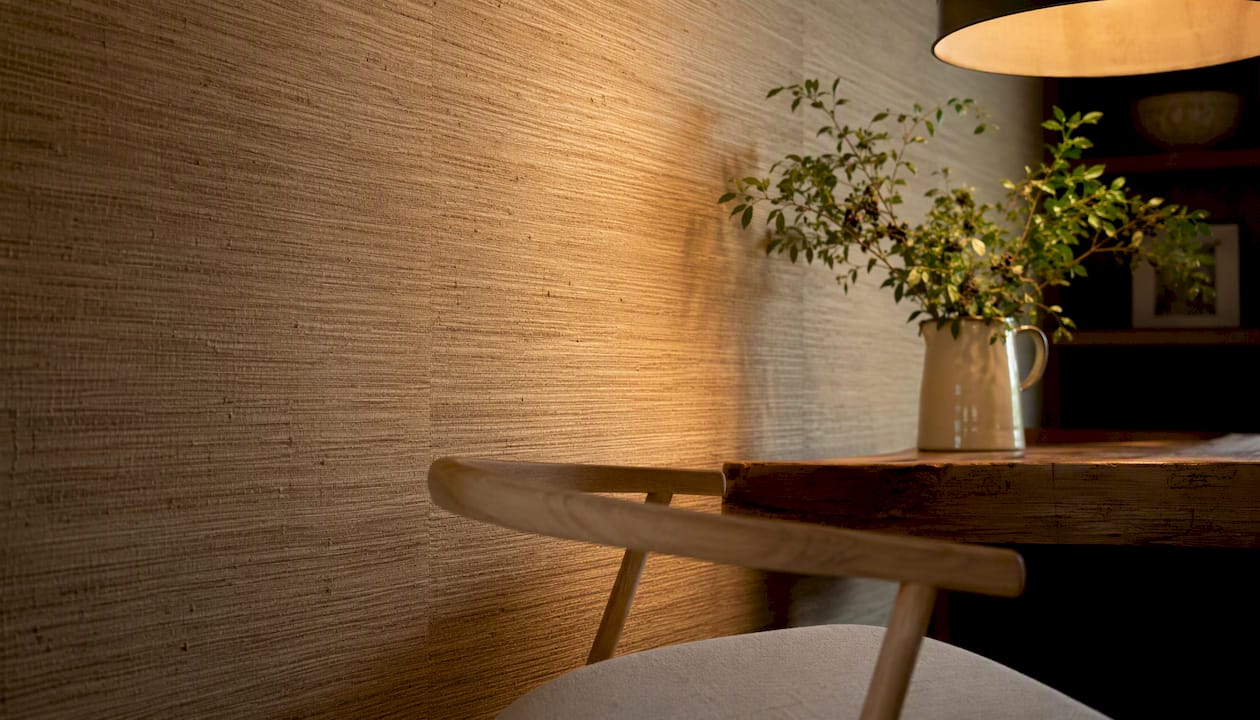
- Neutral, textured grasscloth. A woven, tonal backdrop that adds warmth without visual noise. Pairs naturally with wood tables and woven pendant shades.
- Heritage damask, scaled down. Traditional motifs shrunk to a smaller repeat feel current instead of dated. Works with polished silver and a classic chandelier.
- Geometric modern. Clean repeating shapes for dining rooms that also function as a home office or reading nook. Pair with a glass or lacquered table to keep the look sharp.
- Ceiling papering, the “fifth wall.” Designers like Kelsey Matyas point to ceiling wallpaper as a 2026 trend that makes every surface feel deliberate. It’s especially effective in dining rooms with no windows, where the ceiling is the only “view.”
- Framed wallpaper inside paneling. Install wainscoting or picture-frame molding, then paper only the panels above it. Gives you pattern without covering the whole wall, and it’s a good compromise for renters negotiating with a landlord.
- Micro-moments. Line the back of a built-in shelf or a serving niche with a bold print. Low commitment, high payoff, and a smart way to test a pattern before committing to a full wall.
- Bold accent wall. One wall gets the pattern; the rest stay a coordinating solid. The safest entry point if you’re wallpaper-curious but not ready to fully commit.
Pro Tip: Drench the whole room only when the space is used mostly for one purpose (formal dining, rarely repurposed). If the room doubles as a home office or playroom during the day, a single feature wall gives you the impact without locking in the mood.
2. How to Choose Dining Room Wallpaper for Your Space
Before you fall for a pattern online, answer these five questions. They’ll cut your shortlist from twenty options to two or three fast.
- Which way does the room face? North-facing dining rooms lose warm light and can handle richer, warmer tones. South-facing rooms already get warm light, so cooler or more neutral patterns keep the room from feeling overheated visually.
- Is this a daily-use room or an occasional one? Everyday family dining rooms need durable, wipeable finishes. A formal room used a few times a month can support more delicate materials like fabric-backed paper.
- What’s the furniture scale? A large table with heavy, dark wood chairs can carry a bold, large-scale pattern. Slim modern furniture pairs better with restrained or smaller-scale prints.
- What color is the flooring and rug? Match undertones, not just colors. A warm oak floor fights a cool gray-blue wallpaper more than most people expect.
- How much cleaning will this wall realistically get? Kids, red wine, and gravy boats are dining room realities. Choose accordingly.
Pattern scale deserves its own moment here, because it’s the detail most people get wrong. Large-scale murals and big motifs can make an oversized dining room feel more intimate and grounded, while smaller, evenly distributed patterns tend to recede and can make tight rooms feel a bit more open when lighting is managed well. If your dining room is small and dark, a giant mural isn’t automatically off-limits, but it needs stronger, layered lighting to avoid feeling closed in.
Sampling matters more in dining rooms than almost anywhere else in the house, because these rooms get used at night under artificial light more than daylight. One specialist guide on choosing dining room colors and papers recommends testing samples under both daylight and evening lighting before ordering, since undertones shift dramatically once the sun goes down.
What to test with a sample before you order the full run:
- A printed sample panel, not just a tiny swatch card.
- A photo mockup taped to the actual wall, viewed from where you sit at the table.
- Your existing paint chips or trim color held directly against the sample.
3. Materials and Finishes That Hold Up in a Dining Room
Dining rooms take more abuse than almost any other room except the kitchen. Spills, dragged chairs, and steam from serving dishes all test a wallcovering’s durability, so the material matters as much as the pattern.
| Material | Cleanability | Best for |
|---|---|---|
| Peel-and-stick vinyl | Wipeable, spot-cleanable | Renters, quick refreshes, DIY installs |
| Traditional paste-backed vinyl | Wipeable, durable | High-traffic family dining rooms |
| Grasscloth and natural fiber | Delicate, spot-clean only | Formal rooms with minimal splashing |
| Fabric-backed paper | Delicate, professional cleaning recommended | Low-traffic, adult-only dining spaces |
| Textured/velvet-look finishes | Gentle wipe only | Statement walls away from the table itself |
| Washable coated vinyl | Fully washable | Households with kids or frequent entertaining |
Textured and fabric-like wallcoverings do more than look good. Grasscloth, linen weaves, and textile-backed papers add a tactile quality that can help absorb sound, which matters in dining rooms with hard floors and bare windows where conversation can otherwise echo.
If low chemical emissions matter to your household, look for Greenguard Gold certified papers, which Walls Need Love offers across several collections. That certification screens for lower VOC emissions, a genuine consideration in a room where you’re eating for an hour at a time. For anyone still deciding between paint and pattern altogether, it helps to read through the trade-offs in wallpaper texture versus painted walls before you commit to either.
4. Budgeting Time and Cost for a Dining Room Wallpaper Project
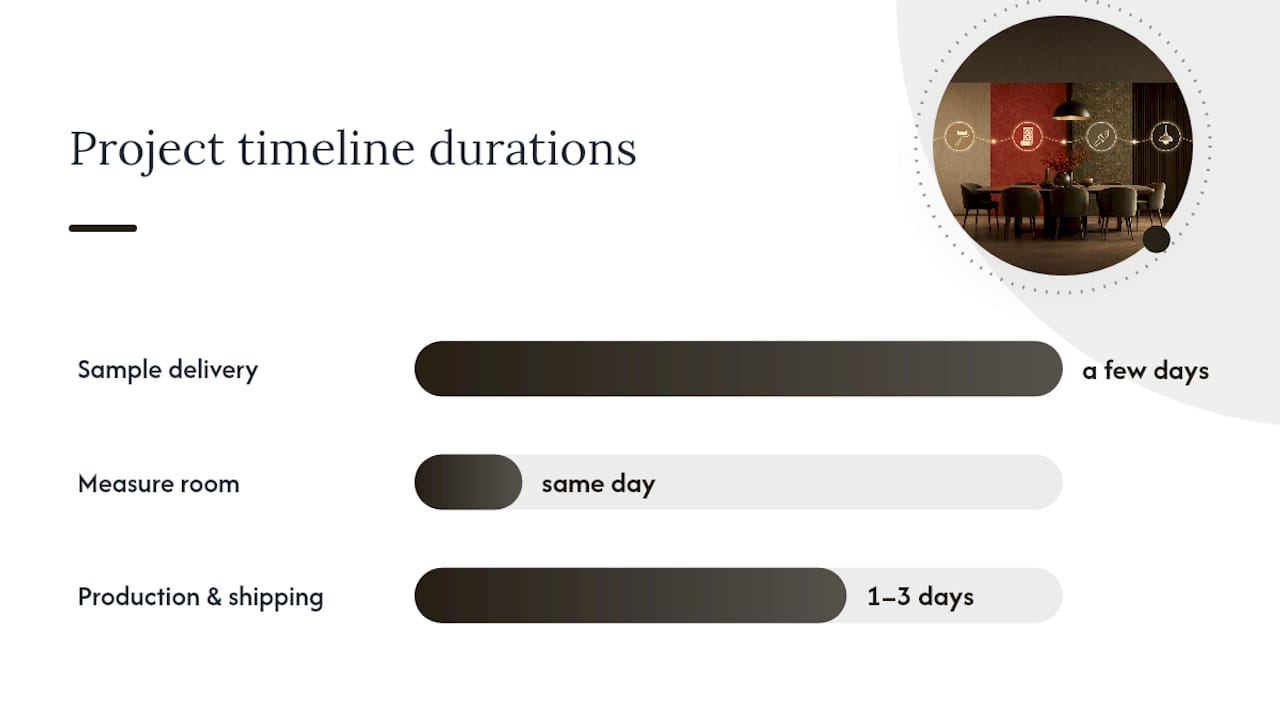
Custom wallpaper doesn’t take months to arrive, but it also isn’t instant, and knowing the sequence helps you plan around a dinner party or holiday deadline.
Rough project timeline, start to finish:
- Order printed samples and wait for delivery (a few days).
- Measure the room, accounting for pattern repeat and waste (same day).
- Place your final order for custom production.
- Production and shipping (Walls Need Love typically custom-produces orders within one to three days before shipping, which is unusually fast for made-to-order wallpaper).
- Wall prep: patch, sand, and prime if the surface needs it.
- Installation, either DIY or professional.
Cost depends on three variables: the type of paper (peel-and-stick versus paste, standard pattern versus custom mural), the size of the wall or ceiling being covered, and whether you’re hiring a professional installer. Custom murals and full-room ceiling wraps run higher than a single accent wall in a standard repeating pattern, and paste-applied paper generally costs more in labor than peel-and-stick.
When to DIY versus hire a pro:
- DIY works fine for a single flat accent wall using peel-and-stick material.
- Hire a pro for ceilings, since papering overhead is physically awkward and unforgiving of mistakes.
- Hire a pro for large murals with multiple panels that need precise alignment.
- Hire a pro for heavily textured walls (plaster, brick, uneven paneling) where adhesion is unpredictable.
- DIY is reasonable for small niches, shelf backs, or framed panel inserts, since mistakes are cheap to fix.
Anyone leaning DIY should read through common installation mistakes to avoid before starting, since most failed jobs trace back to skipped wall prep rather than the paper itself.
5. 2026 Wallpaper Trends Designers Want You to Try
Trend reports for 2026 circle back to the same few ideas: more texture, more immersion, and less literal, photographic imagery. That’s genuinely useful for dining rooms, which tend to reward atmosphere over statement-making.
Designers are pulling back from hyper-realistic graphic prints in favor of what one trend piece calls “material suggestion,” meaning patterns that imply texture, weave, or heritage motifs rather than depicting anything literal.
Designers like Jemma Cave are advising a move away from graphic realism toward tactile, heritage-driven motifs that read as texture rather than visual noise.
That shift matters for dining rooms specifically, because these patterns coexist better with artwork, china cabinets, and table settings than bold graphic prints do. Ceiling papering continues to gain traction as designers treat the ceiling as a genuine design surface instead of an afterthought, and murals remain the go-to move for anyone chasing a fully immersive, “drenched” room. Designers report growing use of panoramic wallcoverings to create a strong sense of place, which is exactly the goal in a dining room meant for lingering meals.
Practical ways to borrow these trends without redoing the whole room:
- Paper just the ceiling and leave walls painted a coordinating solid.
- Choose a heritage-style print scaled down from its original size for a softer, less dated look.
- Use a mural on the wall facing the table, since that’s the view guests actually sit and look at.
Pro Tip: If you want the immersive “drenched” look but you’re nervous about commitment, drench a smaller adjacent space first, like a butler’s pantry or a connecting hallway, and see how you feel about it before committing the whole dining room.
6. Where to Buy Dining Room Wallpaper and How to Order It Right
A good idea falls apart fast with a bad measurement or the wrong substrate. Before ordering anything, run through this checklist.
Ordering checklist:
- Measure wall height and width twice, and measure at three points per wall (corners shift more than people expect).
- Order 10% extra material to account for pattern repeat and cutting waste.
- Request a printed sample, not a digital rendering, since screen colors rarely match printed ink.
- Confirm the substrate (peel-and-stick versus paste) matches your wall type and your willingness to commit long-term.
- Ask about cleanability if the room sees kids, pets, or heavy entertaining.
Walls Need Love is worth a direct look if you want a fast turnaround without sacrificing quality. The company custom-produces most orders within one to three days, offers both peel-and-stick and traditional paste options, and carries Greenguard Gold certified collections for lower-emission installs. Their ordering process guide walks through the sample-to-installation sequence in more detail, which is worth reading before you place a first order.
Once your paper arrives, wall prep decides whether the job looks professional or amateur. Patch nail holes, sand rough patches, and prime bare drywall so the adhesive bonds evenly. Renters or anyone unsure about long-term commitment should check what’s realistic on rental walls before ordering paste-backed paper that isn’t meant to come down cleanly.
7. Five Dining Room Looks You Can Copy Directly
Sometimes the fastest way to decide is to picture the whole room at once, not just the wallpaper swatch.
- Warm neutral formal room: grasscloth in a soft camel tone, brass pendant light, a wood table with a linen runner as the centerpiece.
- Small dark dining nook: ceiling papered in a warm botanical print, walls left white, layered sconce lighting to keep the room from feeling boxed in.
- Bold entertaining space: a full mural depicting a mountain or forest scene, black metal chairs, a low glass bowl centerpiece so the wall stays the star.
- Family everyday dining room: washable geometric print on one accent wall, durable laminate table, a simple potted plant as the centerpiece.
- Heritage-leaning dining room: small-scale damask in muted tones, a polished wood table, a classic chandelier that echoes the pattern’s formality.
If you’re testing a mural or a large pattern for scale, tape a printed mockup directly on the wall at eye level from where you sit at the table, not from the doorway. That’s the vantage point that actually matters.
For a wider photo library before you commit, Houzz hosts a large collection of wallpapered dining room photos across nearly every style, and Pinterest remains one of the fastest ways to build a mood board sorted by color palette or pattern type.
8. Sustainable and Non-Toxic Wallpaper Options Worth Knowing
Sustainability in wallpaper comes down to two separate questions: what’s in the material, and what happens to it later. Low-VOC and Greenguard Gold certified papers address the first question, screening for chemical emissions that matter in a room where a family sits for extended meals. That certification is a genuine, third-party benchmark, not a marketing label a brand assigns itself.
Recyclability is trickier, since most vinyl wallpaper isn’t easily recyclable through standard municipal programs. Natural fiber options like grasscloth break down more readily, though they trade off some durability and cleanability in exchange. Peel-and-stick materials generally use less adhesive overall than traditional paste, which cuts down on the chemical load introduced into a room during installation, even if the material itself isn’t fully recyclable at end of life.
If sustainability ranks high on your priority list, ask directly about a product’s certification status and its adhesive type before ordering, rather than assuming “eco-friendly” language on a listing means the same thing across every brand.
What Actually Makes a Dining Room Wallpaper Choice Work
The best dining room wallpaper does one job well: it sets a mood, and then it gets out of the way. I think the biggest mistake homeowners make is treating wallpaper as decoration layered on top of a finished room, instead of the thing that decides the room’s whole personality before anything else goes in.
Pick one design move and commit to it. A mural, a ceiling wrap, a textured neutral, whatever it is, let that be the statement, and keep the table, chairs, and lighting quieter around it. Two competing bold choices in the same small room read as clutter, not confidence.
And test everything under the lighting you’ll actually use. A dining room is mostly an evening room. Judge your samples the same way.
Get These Looks With Custom Wallpaper Made in Days, Not Weeks
Most of the ideas above require a paper you can’t just grab off a shelf, and that’s exactly where Wallsneedlove fits. Instead of waiting weeks for a specialty order or settling for a stock pattern that almost matches your vision, you can get a custom mural or peel-and-stick texture produced in as little as one to three days.
For a fully immersive dining room, the Out Wall Mural delivers the kind of drenched, atmospheric look designers are pushing for 2026 without the wait typically associated with custom murals. Prefer something quieter and tactile? The faux wood grain wallpaper brings the warm, natural texture trend into a peel-and-stick format that’s simple enough to install on a Saturday afternoon. Every collection lists its substrate and cleanability details up front, and several carry Greenguard Gold certification for households prioritizing lower emissions. Browse the full range and order a sample panel before committing to the room.
Sources
- The Biggest Wallpaper Trends for 2026, According to Designers
- These Are the Wallpaper Trends Taking Over in 2026, According to Experts
- Does wallpaper make a room look bigger or smaller?


Leave a comment