

Wallpaper Ordering Process Explained for Homeowners
The wallpaper ordering process is a precise sequence of steps: measure your walls, order samples, calculate rolls, and place your purchase. Skipping any step leads to costly mistakes, from short orders to pattern mismatches. This guide covers the full wallpaper purchase guide from first measurement to final checkout, using current industry standards for 2026 interior design projects. Whether you own your home or rent, understanding how to order wallpaper correctly saves time, money, and frustration.
How does the wallpaper ordering process work, step by step?
The wallpaper ordering process starts with accurate wall measurements and ends with a confirmed purchase that accounts for pattern repeat, roll coverage, and waste. Each step builds on the previous one. Miss a step, and you risk ordering too few rolls or receiving wallpaper that does not match your space.
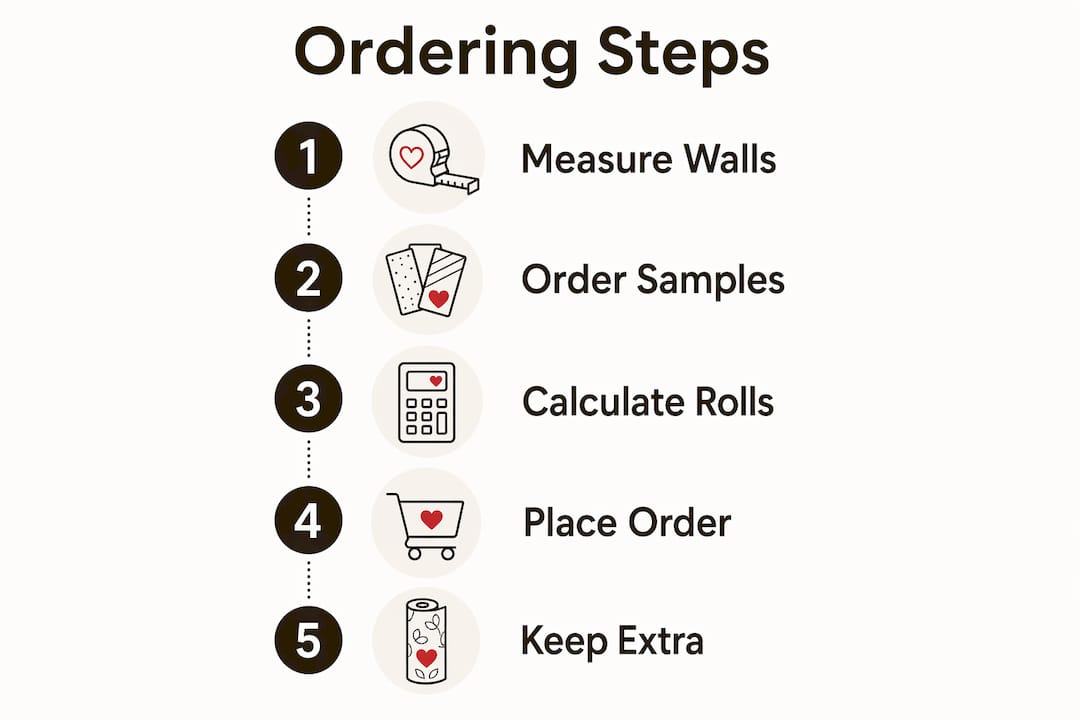
The core steps are:
- Measure your walls to calculate gross wall area
- Order samples to verify color, texture, and scale in your actual space
- Calculate roll quantity using pattern repeat type and waste allowance
- Place your order with batch numbers confirmed for color consistency
Wallpaper calculators, such as the Tallyard wallpaper calculator, account for pattern repeat waste between 10% and 30%, plus typical cut waste of around 15%. That level of precision is why using a dedicated calculator matters more than rough estimates. Common terms you will encounter include double rolls (also called bolts), pattern repeat, dye lots, and roll coverage. Knowing these terms before you shop prevents confusion at checkout.
How to measure your walls accurately for wallpaper ordering

Accurate measurement is the foundation of the entire wallpaper selection process. A wrong number here multiplies into wasted rolls and budget overruns.
Start by calculating your gross wall area using this method:
- Measure the full perimeter of the room (add all wall widths together)
- Multiply the perimeter by the wall height to get total square footage
- Subtract standard door and window sizes: 21 square feet per door, 15 square feet per window
- Skip subtracting small openings like vents or narrow decorative windows, as the material saved is negligible
For accent walls or partial walls, measure only the specific surface you plan to cover. This is common in rental spaces where covering one feature wall is more practical than papering an entire room.
Pattern repeat adds another layer to measurement. Each strip of wallpaper must align with the previous one, which means you cut more from each roll than the wall height alone requires. A wall that is 9 feet tall with a 12-inch repeat needs strips cut longer than 9 feet to allow for alignment. That extra length comes out of your roll, reducing how many usable strips you get per roll.
Pro Tip: After measuring, check the coverage listed on your specific wallpaper product. Roll dimensions vary by brand and market, so always verify coverage per roll before calculating quantity.
Renters should also check wall conditions before measuring. Textured or uneven walls affect how well wallpaper adheres. Peel-and-stick options, covered in detail in Wallsneedlove’s renter-specific wallpaper guide, work best on smooth, clean surfaces.
Why should you order wallpaper samples first?
Ordering wallpaper samples lets you assess true color, texture, and scale at home before committing to a full purchase. A color that looks perfect on a screen can read completely differently under your room’s lighting. Samples eliminate that risk.
The sample ordering process typically works like this:
- Shortlist your top choices to three or four designs before ordering anything. Ordering too many samples creates decision fatigue.
- Place your sample order through the retailer’s website. Most sample orders follow a standard e-commerce process, requiring your name and delivery address even when samples are free.
- Check delivery times before ordering. Sample shipping timelines vary by retailer, and waiting two weeks for a sample delays your full order.
- Hold the sample against your wall in different lighting conditions: morning light, afternoon sun, and artificial evening light.
- Compare finishes and textures in person. Matte, satin, and textured finishes look and feel different from each other in ways a product photo cannot convey.
Pro Tip: Order one “safe” option (a design you know works), one “stretch” option (a bolder choice), and one practical comparator. This three-sample method gives you a real decision framework without overwhelming yourself.
Retailers commonly limit the number of free samples per order. Check the policy before adding items to your cart. Never place your full roll order until your samples have arrived and you have made a final decision in your actual space.
How to calculate the right number of wallpaper rolls to order
Roll calculation is where most homeowners make their biggest mistakes. The formula is straightforward, but pattern repeat type changes the numbers significantly.
Pattern repeat types and waste allowances
Pattern matching types include straight match, drop match, random match, and multiple drop match, and each type affects waste differently. Here is how waste scales by repeat type:
| Pattern type | Typical waste allowance | Notes |
|---|---|---|
| No pattern / random match | 10% | Minimal trimming needed |
| Straight match | 15% | Strips align horizontally |
| Drop match (small repeat) | 15–20% | Every other strip drops by half the repeat |
| Drop match (large repeat, 24 in.) | Up to 30% | Significant material lost to alignment cuts |
Large repeats and drop matches require more trimming per strip. A room that needs 10 rolls with no pattern may need 13 rolls with a large drop match repeat.
Roll coverage standards
American double rolls cover roughly 56 square feet, while European single rolls cover about 29 square feet. This distinction matters when shopping across brands. Always check the coverage listed on the specific product, not just the roll count.
The calculation method
Start with your gross wall area (perimeter times height, minus doors and windows). Add your waste percentage based on pattern type. Divide the adjusted total by the coverage per roll. Round up to the next whole number. Then add one extra roll.
That extra roll is not optional. Discontinued patterns make future matching nearly impossible. Keeping one unopened roll gives you material for repairs without the risk of a color or pattern mismatch years later.
Pro Tip: Keep that extra roll sealed in its original packaging. An unopened roll stores better and retains its dye lot information, which you will need if you ever order more.
For complex rooms with multiple windows, alcoves, or angled ceilings, use a dedicated tool. The Tallyard wallpaper calculator handles pattern repeat waste and cut waste automatically, reducing the chance of a manual calculation error.
What are the key steps to placing your wallpaper order?
Placing the actual order is the final stage of the wallpaper ordering process. Getting this step right protects your investment.
Common mistakes to avoid when placing your order:
- Skipping batch or run number verification. Mismatched dye lots cause noticeable color differences between rolls, even within the same design. Always confirm all rolls ship from the same production run.
- Confusing single roll pricing with double roll quantities. Wallpaper is priced by single rolls but sold in double rolls in the US market. A listing showing 8 rolls at single-roll pricing means you receive 4 double rolls. Verify the unit before checkout.
- Ordering without confirming lead times. Custom and print-to-order wallpapers have longer production windows. Wallsneedlove produces custom orders within 1–3 days, but standard shipping adds time on top of that.
- Ignoring return and cancellation policies. Custom-printed wallpaper is typically non-returnable. Read the policy before placing your order, not after.
- Choosing paste wallpaper when peel-and-stick is more practical. Renters benefit from peel-and-stick wallpaper because it removes cleanly without damaging walls. Check your lease before ordering paste-type products.
For design selection, pay attention to scale relative to your room size. A large-scale pattern that looks bold and beautiful in a showroom can feel overpowering in a small bedroom. Wallsneedlove’s wallpaper scale design guide covers this in detail for residential spaces.
Once your order is placed, save your order confirmation and note the run numbers listed. If you need to reorder even a single roll later, that batch information is the only way to get a color-consistent match.
Key Takeaways
The wallpaper ordering process requires accurate measurement, sample verification, and precise roll calculation before placing any purchase.
| Point | Details |
|---|---|
| Measure walls first | Calculate gross area using perimeter times height, then subtract 21 sq ft per door and 15 sq ft per window. |
| Always order samples | Test color, texture, and scale in your actual space before committing to a full roll order. |
| Factor in pattern repeat waste | Waste ranges from 10% for random match to 30% for large drop match repeats. |
| Verify roll coverage by market | American double rolls cover roughly 56 sq ft; European single rolls cover about 29 sq ft. |
| Buy one extra roll | Keep an unopened roll for future repairs, especially if the pattern may be discontinued. |
Wallsneedlove’s take on what most buyers get wrong
The single most common error in the wallpaper buying process is placing a full order before the samples arrive. Homeowners shortlist a design, feel confident about it online, and order full rolls to save time. Then the samples show up and the color is wrong for the room. That mistake costs real money and delays the project by weeks.
The second most common error is underestimating waste. A 10% waste buffer feels generous until you are working with a 24-inch drop match repeat. Wallsneedlove sees this regularly with first-time buyers who run short on their last wall and cannot find a matching batch.
The fix for both problems is patience. Wait for your samples. Use a calculator for your roll count. Add that extra roll. The process is not complicated, but it does require following the steps in order. Buyers who do that almost never have problems. Buyers who skip steps almost always do.
— Wallsneedlove
Ready to put these steps to work?
Wallsneedlove offers a full range of custom-printed wallpaper and wall murals, including peel-and-stick options built for renters and paste options for permanent installs. Every order is custom made, typically within 1–3 days, and carries Greenguard Gold certification.
Browse designs like the Monkeying Around removable wallpaper for a bold, nature-inspired statement, or the Java Mountain wall mural for a dramatic scenic feature wall. Both are available to order directly, with sample options to test before you commit. Visit Wallsneedlove to browse the full collection and apply everything covered in this guide to your next project.
FAQ
What is the first step in the wallpaper ordering process?
The first step is measuring your walls to calculate gross wall area. Multiply room perimeter by wall height, then subtract standard sizes for doors and windows.
How many wallpaper samples should I order?
Order three samples: one safe option, one bolder choice, and one comparator. Ordering more than four samples increases decision fatigue without improving your final choice.
What is the difference between a single roll and a double roll?
In the US market, wallpaper is priced by the single roll but sold in double rolls (also called bolts). A double roll covers roughly 56 square feet under American standards.
How does pattern repeat affect how many rolls I need?
Pattern repeat increases waste because each strip must align with the previous one. Waste ranges from 10% for no-pattern wallpaper to 30% for large drop match repeats, meaning you need more rolls for the same wall area.
Why should I keep an extra roll after installation?
Discontinued patterns make future matching nearly impossible. One unopened extra roll gives you material for repairs without the risk of a dye lot mismatch years later.


Leave a comment