

Bar Wallpaper Feature Walls: Moody, Image-Forward Looks and Durable Materials
The fastest way to transform a bar is a wallpapered feature wall. Choose moody florals for an intimate lounge, geometric repeats for a modern nook, or a custom mural to make the wall the centerpiece. Peel-and-stick works best for speed and rentals, while traditional paste holds up better for permanent, high-traffic installs. Read on for style picks, placement rules, and installation tips.
TL;DR:
- Using a feature wall with bold wallpaper sharply enhances the bar’s visual impact without excessive coverage.
- Small-scale patterns work better behind counters, while larger murals or scenic designs serve as dramatic focal points in the space.
- Peel-and-stick wallpaper offers quick, renter-friendly installation, while traditional paste provides stronger adhesion for permanent setups.
- Dark palettes with warm lighting and metallic accents create intimacy, whereas lighter tones make small or outdoor bars appear larger and brighter.
- Consistent metal finishes and strategic lighting amplify wallpaper effects and help maintain a cohesive, stylish atmosphere.
Table of Contents
- Top wallpaper style ideas for bars and when to use them
- How much wall should your pattern actually cover?
- Materials and finishes: peel-and-stick, paste, and backsplash-grade options
- Color, pattern, and mood: how to choose tones that set the right atmosphere
- Lighting, shelving, and accessories that amplify wallpapered bar walls
- Installation and maintenance tips for long-lasting bar wallpaper
- Practical examples using Walls Need Love: custom murals, peel-and-stick options, and environmental credentials
- Maintenance and cleaning best practices for bar environments
- Budget considerations for bar wallpaper projects
- How to choose wallpaper themes that match different bar types
- Designer perspective: balancing drama and function
- How Walls Need Love can help
- FAQ
- Sources
Top wallpaper style ideas for bars and when to use them
Moody florals and dark botanicals suit intimate, lounge-style bars. A dark, moody floral pattern can set the tone for an entire room and should guide every other material choice that follows, from stone to metal to cabinetry, according to one home bar design case study. Pair these patterns with warm metals and natural wood for depth.
Transitional and speakeasy-style patterns work well in bars that open onto a living room, since vintage motifs and mirrored backsplashes read as polished without feeling closed off. Geometric and retro repeats fit tight nooks, adding rhythm without visual overload. Scenic murals and custom art suit bars where you want one wall to function as a piece of art, scaled to the full height and width of the space. Faux textures, like concrete, plaster, or wood grain, give you depth and tactility without any structural work.
- Moody florals: best for lounges, paired with brass or wood accents.
- Transitional patterns: vintage motifs plus mirrors for open-plan bars.
- Geometric repeats: ideal for small or awkward nooks.
- Scenic murals: a full-wall focal point for a bold statement.
- Faux textures: concrete or plaster looks with none of the construction.
How much wall should your pattern actually cover?
Scale and placement decide whether wallpaper reads as a design choice or an accident. A few rules keep the result intentional.
- Pick a feature wall when you want drama on a budget, and reserve a full-wall treatment for rooms where the bar is the only focal point in view.
- Use small, tight repeats for walls viewed up close, like behind a counter, and larger motifs for walls seen from across the room.
- Build the composition around fixed elements first: let shelving, mirrors, arches, or backlit stone frame the pattern instead of competing with it.
- For outdoor or covered bars, confirm the material is rated for moisture and temperature swings before committing to a pattern you love indoors.
Materials and finishes: peel-and-stick, paste, and backsplash-grade options
Material choice decides how long the look lasts and how much work installation takes.
- Peel-and-stick goes up fast, comes off cleanly, and is easy to sample before committing, making it a strong fit for rentals or staged spaces.
- Traditional paste holds stronger seams over time, which matters for permanent installs and for wide murals that need to stay flat for years.
- Washable, backsplash-grade options matter most directly behind sinks or drink stations, where splashes and wipe-downs happen daily.
Premium peel-and-stick backsplash products can last several years when applied to a clean, dry wall, and choosing a quality brand over the cheapest option helps avoid wrinkling and bubbling, according to one bar wall decor guide.
Mounting a clear acrylic panel or a mirror over wallpaper in high-splash zones can help protect the pattern and make it easier to clean.

Color, pattern, and mood: how to choose tones that set the right atmosphere
Color and scale do more to set the mood than any single accessory.
- Dark palettes create intimacy, especially when balanced with warm lighting and reflective surfaces like brass or glass.
- Light palettes with small-scale repeats make a tight bar nook feel larger and airier.
- High contrast and dense patterns can make seams more visible and the wall feel busier, so lower-contrast options read calmer in small spaces.
- Undertones matter: match the wallpaper’s warm or cool cast to your cabinetry and metal finishes so the whole wall feels planned rather than assembled.
Lighting, shelving, and accessories that amplify wallpapered bar walls
Wallpaper does more work when the surrounding elements support it instead of fighting it.
- Use backlighting or under-shelf strips to reveal texture and pattern without glare washing it out.
- Choose shelving that either contrasts (glass, to let the pattern show through) or grounds (wood or metal, for a heavier look).
- Keep metal finishes consistent across hardware, lighting, and shelving. Designer practice favors repeating one metal finish throughout a bar area specifically to avoid visual noise when the wallpaper is bold, per that same design case study.
- Add mirrors, framed cocktail art, or a rotating bottle display to keep the wall feeling current without reprinting anything.
Installation and maintenance tips for long-lasting bar wallpaper
A few habits separate a wall that looks good for years from one that peels within months.
- Prep and prime the surface first. Adhesion fails most often on dusty, glossy, or uneven walls, not on the wallpaper itself.
- Measure for repeats and order extra material. Pattern matching eats more paper than a flat wall, and running short mid-install is a common, avoidable mistake, as outlined in our guide to installation mistakes decorators must avoid.
- Trim and seal carefully around outlets, shelves, and sinks, and add a protective panel anywhere spills are likely.
- Call in a professional for large murals, tricky corners, or textured walls, and ask upfront about seam matching and drying time before booking.
For tight spots like window trim or archways, our guide to wallpapering around windows with custom panels covers precision cuts that keep pattern lines straight.
Practical examples using Walls Need Love: custom murals, peel-and-stick options, and environmental credentials
We build wallpaper and murals around the choices covered above, in peel-and-stick or traditional paste.
- Custom murals as focal art, ordered to the exact dimensions of your bar wall through our custom wall murals option.
- Peel-and-stick for fast installs and easy sample testing before you commit to a full wall.
- Greenguard Gold-certified, PVC-free materials, which matter in enclosed bar spaces where low-VOC finishes keep air quality in check.
- Step-by-step installation support through our guide to getting started with wallpapering.
Maintenance and cleaning best practices for bar environments
Bar walls take more abuse than any other wall in the house: splashes, fingerprints, steam from ice buckets, and the occasional dropped lime wedge. Washable and backsplash-grade wallpapers hold up to a damp cloth and mild soap, but the technique matters as much as the material. Wipe spills promptly rather than letting liquid sit on a seam, since standing moisture is what causes peeling at the edges over time.

Avoid abrasive scrubbing pads on any textured or embossed pattern. A soft microfiber cloth handles most spills, and a mix of warm water with a small amount of dish soap clears sticky residue without stripping color. Skip ammonia-based cleaners on metallic or foil-accented patterns, since these can dull the finish.
Check seams every few months, especially near sinks or ice wells where humidity is highest. Catching a lifting edge early means a small touch-up instead of a full panel replacement. For sections directly behind a prep area, a clear protective panel or a sheet of tempered glass cuts down on wear dramatically and makes daily cleanup a wipe-and-done task rather than a scrubbing session.
If you notice fading near a window or under direct spotlighting, rotating accessories or shelving to shade that section can extend the wallpaper’s life without any repair work at all.
Budget considerations for bar wallpaper projects
Wallpaper costs scale with coverage, not just square footage. A full accent wall behind a home bar costs less than papering an entire commercial lounge, and a backsplash strip costs less than either. Behind a bar, a strip of only three to four feet directly behind the prep area is often enough to protect the wall and add visual interest, without paying for wall-to-wall coverage, according to one bar wall decor guide.

Peel-and-stick options generally cost less upfront and let you test a pattern at a smaller scale before committing to a full room, which helps if you are deciding between two or three styles. Traditional paste installs often add labor cost if you hire a professional, but they tend to need fewer touch-ups over time on permanent walls.
Murals scaled to a full wall cost more than a standard repeat pattern simply because of the custom sizing and printing involved, but they remove the need for extra trim work or seam matching that a repeating pattern requires near corners and windows.
The most budget-friendly approach for most home bars is a single feature wall in a durable, washable material, reserving the splurge for one statement surface instead of spreading the budget thin across every wall in the room. If you are coordinating trim, doors, or cabinetry finishes alongside the wallpaper, guidance on choosing an interior door style can help keep those material costs aligned with the overall look.
How to choose wallpaper themes that match different bar types
A sports bar, a cocktail lounge, and a home bar all call for different patterns, even when the wall dimensions are identical.
For a sports bar, bold geometric repeats or team-neutral graphic patterns hold up to crowds and high turnover without looking dated after one season. Durability and easy cleaning matter more than subtlety here.
For a cocktail lounge, moody florals, dark botanicals, or transitional vintage motifs set an intimate tone, especially paired with warm lighting and mirrored or brass accents. This is where a dark, dramatic pattern can do the most work, since it directly shapes the mood of the entire room, per that design case study.
For a home bar, transitional styles tend to work best because they need to coexist with an adjoining living room or kitchen rather than standing apart as their own themed space. Reclaimed wood shelving paired with sleek metal accents and a forgiving, flexible pattern lets the bar flow visually into the rest of the house, a style one bar decor guide points to as popular specifically because it suits homeowners who want the space to read as part of the home rather than a separate theme park. If your bar opens into a shared living area, our guide to wallpaper in open-plan spaces covers how to keep the transition smooth.
Designer perspective: balancing drama and function
Pick the wallpaper first and let shelving, finishes, and lighting follow its lead rather than the other way around. Repeat one metal finish throughout the space instead of mixing brass, chrome, and black hardware, which quietly fights the pattern for attention. Always test a sample under the bar’s actual lighting before ordering, since colors and sheen shift once the lights are down low.
— WallsNeedLove
How Walls Need Love can help
Wallpaper and murals are printed to order, so the pattern and sizing chosen for your bar wall are customized to your specifications.
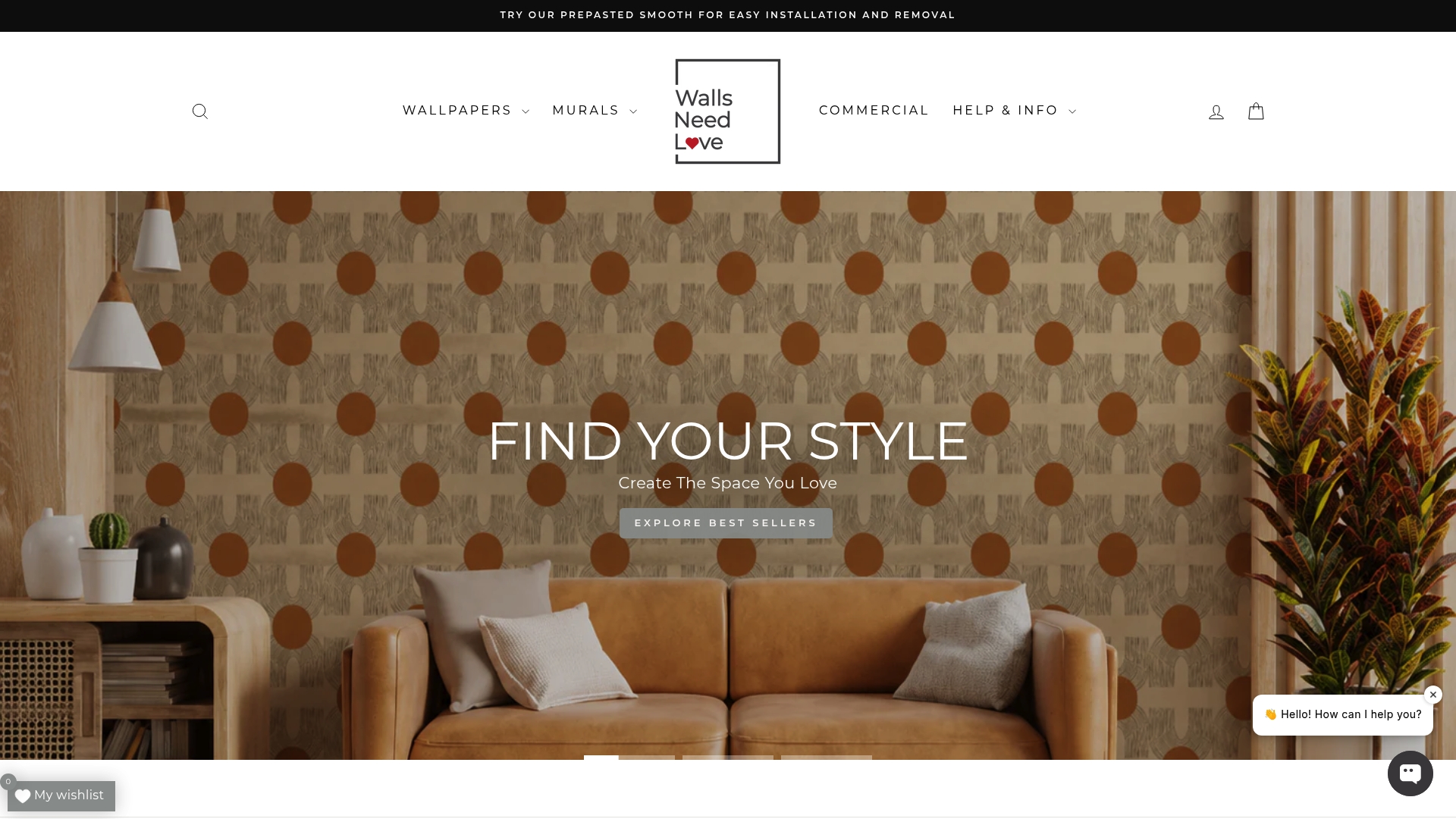
- Browse full wallpaper collections for florals, geometrics, and faux textures.
- Size a custom wall mural to fit a full bar wall exactly.
- Choose peel-and-stick removable wallpaper for a faster, renter-friendly install.
Custom orders are typically made quickly, so a sample or a full order fits most project timelines without a long wait. Order a sample or start browsing collections to find the pattern that fits your bar.
FAQ
What are some creative ideas for bar decor?
Wallpaper is one of the fastest ways to add personality: a dark floral or botanical pattern on a feature wall, a scenic mural behind the bottles, or a geometric repeat in a small nook all work well. Pair any of these with consistent metal finishes and warm, layered lighting to tie the look together.
What are some cool ideas for a wallpaper pattern?
Moody florals, retro geometrics, faux concrete or plaster textures, and full scenic murals are popular choices for bar walls. The right pick depends on whether you want intimacy (dark florals), rhythm in a tight space (geometrics), or a single bold statement (a mural).
How do I make a home bar look good?
Start with one wallpapered feature wall that sets the tone, then repeat a single metal finish across shelving, fixtures, and lighting to avoid visual clutter. Transitional patterns that blend reclaimed wood and sleek metal accents tend to work best in a home bar since they flow naturally into an adjoining living space.
What are some creative ways to cover an outdoor bar?
For a covered or outdoor bar, choose a wallpaper rated for moisture and temperature changes, or use a faux texture panel designed for exterior-adjacent use. Keep the pattern scale larger if the bar is viewed from a distance, like across a patio, so the design still reads clearly.
Should I use peel-and-stick or traditional paste for a bar wall?
Peel-and-stick is faster to install, easier to sample, and a good fit for rentals or spaces you might change often. Traditional paste holds stronger seams over time, making it a better choice for permanent installs and large murals that need to stay flat for years.
Sources
- How to Design a Bar Area Where Every Detail Earns Its Place | L. Pearson Design
- Transform Your Space: The Ultimate Guide to Bar Wall Decor in 2026 - Bloomingfieldhome


Leave a comment