

What Is Architectural Wallcovering: A Complete Guide
Architectural wallcovering is defined as an engineered, high-performance wall surface designed to meet rigorous safety, durability, and design standards in commercial and institutional environments. Unlike standard residential wallpaper, these materials comply with codes such as NFPA Life Safety Code 101 and are built to withstand heavy use, harsh cleaning agents, and demanding aesthetic requirements. They serve hospitals, offices, schools, and hotels where walls must perform as functional surfaces, not just decorative ones. Wallsneedlove offers a range of printed wallcoverings and murals that bring this same design thinking to residential and commercial spaces alike.
What is architectural wallcovering, and how is it defined?
Architectural wallcovering is a professional-grade surfacing material engineered for performance, safety, and spatial harmony. The term “architectural” signals a design philosophy focused on supporting the interior environment through rhythm, scale, and texture rather than competing visually with furniture or room features. Patterns read as textures or materials from a distance, which creates spatial harmony rather than visual noise. This is what separates architectural wallcovering from decorative wallpaper in both intent and execution.
The materials used include vinyl, textile, and composite backings, each selected for specific performance needs. Vinyl is the most common choice in commercial settings because it resists moisture, cleans easily, and holds up under repeated scrubbing. Textile-backed options add acoustic absorption and a softer visual quality suited to hospitality and corporate interiors. Composite materials combine layers of different substrates to achieve specific fire ratings, flexibility, or surface textures.

What materials and types define architectural wallcoverings?
Architectural wallcoverings are categorized by performance rating, not just material. Type II suits heavy-duty commercial environments such as offices, hotels, and schools, while Type III addresses severe conditions found in industrial or high-traffic institutional settings. Choosing the wrong type leads to premature failure and higher long-term costs. Specifiers and designers use these ratings as the primary filter when selecting products for a project.
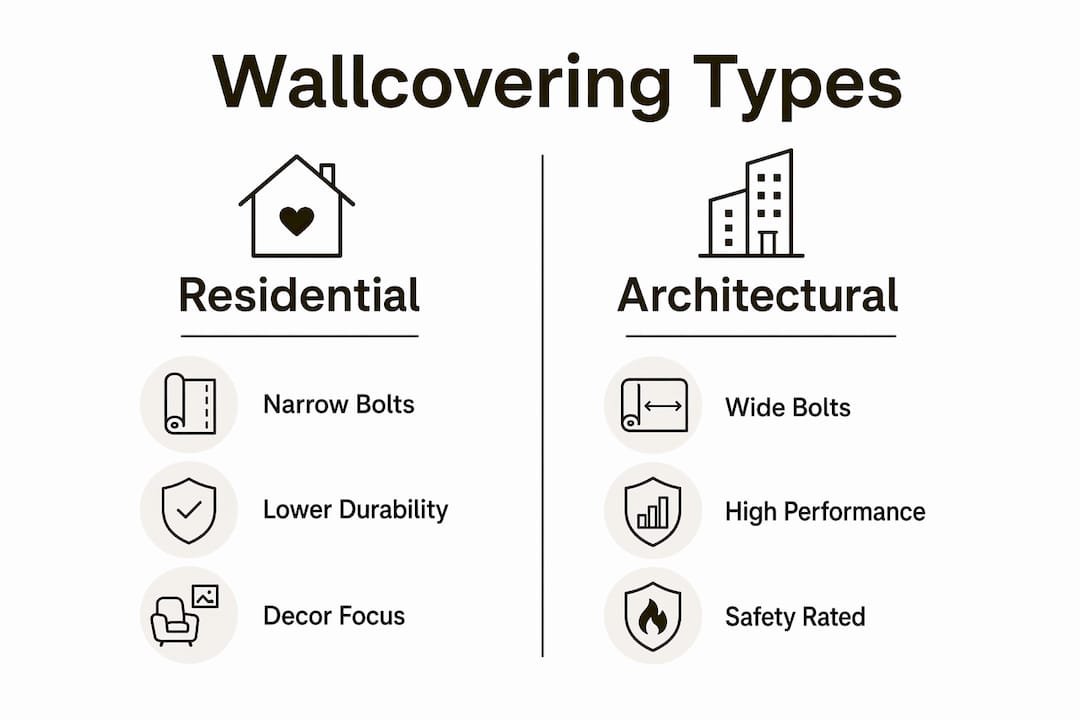
The table below shows the core differences between residential wallpaper and architectural wallcovering:
| Feature | Residential wallpaper | Architectural wallcovering |
|---|---|---|
| Bolt width | 27 inches | 52 inches |
| Performance rating | None | Type II or Type III |
| Fire compliance | Rarely tested | NFPA Life Safety Code 101 |
| Durability | Light use | Heavy to severe use |
| Cleaning tolerance | Mild wiping | Harsh disinfectants |
| Typical backing | Paper | Vinyl, textile, composite |
The 52-inch wide bolt used in commercial wallcovering reduces vertical seams across large wall surfaces. Fewer seams mean a cleaner visual finish and faster professional installation on large-scale projects. Residential wallpaper at 27 inches creates more seams, which is acceptable in smaller rooms but impractical in lobbies or corridors.
Material innovations have expanded the category significantly. Antimicrobial agents are now embedded directly into vinyl surfaces during manufacturing, not applied as a topcoat. Stain-resistant polymer coatings repel liquids before they can penetrate the surface. These features are not optional upgrades in healthcare or food-service settings. They are baseline requirements.
Pro Tip: Always verify the Type II or Type III rating before specifying a wallcovering for a commercial project. The rating determines cleaning tolerance, abrasion resistance, and expected lifespan in that environment.
What benefits do architectural wallcoverings offer beyond aesthetics?
Architectural wallcoverings deliver measurable functional benefits that painted drywall cannot match. Painted drywall fails when exposed to the harsh disinfectants used in healthcare and hospitality settings, while performance-grade wallcoverings retain both integrity and appearance. This durability directly reduces maintenance costs and repainting cycles over a building’s life.
The functional benefits include:
- Acoustic performance: Textile-backed wallcoverings absorb sound in open offices, corridors, and dining spaces, reducing ambient noise without requiring separate acoustic panels.
- Antimicrobial protection: Embedded agents inhibit bacterial growth on the surface, a critical feature in hospitals, clinics, and food-service environments.
- Moisture resistance: Vinyl and composite surfaces prevent moisture from penetrating the wall substrate, reducing mold risk in bathrooms, kitchens, and humid climates.
- Wayfinding support: Color zoning and texture variation guide occupants through large buildings intuitively, reducing signage dependency.
- Branding and identity: Digitally customized wallcoverings reflect an organization’s culture or identity, adding meaning to a space beyond surface decoration.
The concept of salutogenic design connects directly to wallcovering choices. Salutogenic design focuses on building environments that actively support health and well-being rather than simply avoiding harm.
Designers are increasingly adopting architectural wallcoverings not just for surface aesthetics but for their ability to enhance occupant wellness through salutogenic principles such as clarity, manageability, and meaningfulness. Wallcoverings contribute to reduced cognitive load and improved wayfinding through color zoning and texture, enhancing well-being in hospitals, schools, and offices.
Pro Tip: In open-plan offices, pair a textile-backed wallcovering on the perimeter walls with acoustic ceiling tiles. The combination addresses both vertical and horizontal sound reflection without major construction.
Exploring wallpaper in open-plan spaces shows how these principles apply across different commercial layouts. The functional case for architectural wallcovering is strongest in environments where walls take daily abuse and occupant well-being is a design priority.
How does architectural wallcovering differ from traditional wallpaper?
The differences between architectural wallcovering and traditional wallpaper go beyond material thickness. Architectural wallcovering is built to a specification. Traditional wallpaper is built to a price point. That distinction shapes every decision from material selection to installation method.
Key differences include:
- Scale: Commercial bolts at 52 inches versus residential rolls at 27 inches change the entire installation workflow and seam frequency.
- Fire compliance: Architectural wallcoverings meet NFPA Life Safety Code 101 requirements. Most residential wallpapers do not carry this certification.
- Design intent: Architectural wallcovering reads as a texture or material from a distance, while decorative wallpaper often features detailed illustrations meant to be seen up close.
- Maintenance: Performance-grade surfaces tolerate scrubbing and chemical disinfectants. Residential wallpaper requires gentle cleaning and can delaminate under harsh conditions.
- Longevity: Correctly specified architectural wallcovering lasts years longer in heavy-use environments than residential alternatives.
The installation process also differs. Commercial wallcovering installation requires professional applicators familiar with large-format seaming, substrate preparation, and adhesive selection for heavy vinyl. Residential wallpaper installation is more accessible for DIY practitioners, particularly with peel-and-stick formats. Understanding wallpaper texture versus painted walls helps clarify where each surface treatment fits best.
The design role is equally distinct. Traditional wallpaper often serves as the visual focal point of a room. Architectural wallcovering supports the room’s overall composition without dominating it. This is not a limitation. It is the intended function.
What are the modern innovations in architectural wallcoverings?
Technology has advanced architectural wallcovering well beyond vinyl sheets and textile backings. Nanotechnology and advanced polymer coatings now create surfaces that are stain-resistant, antimicrobial, and moisture-regulating at a microscopic level. These coatings are applied during manufacturing, making them permanent rather than surface treatments that wear away.
Digital printing has changed customization entirely. Designers can now specify wallcoverings printed with branded graphics, site-specific photography, or nature-inspired patterns at commercial scale. Low-VOC inks and recycled fiber substrates make these custom options compatible with green building certifications. Biophilic motifs, including botanical patterns and natural textures, are currently the most requested custom designs in healthcare and workplace settings.
Installation best practices for modern architectural wallcoverings follow this sequence:
- Prepare the substrate. Walls must be smooth, dry, and primed. Any surface irregularities telegraph through the wallcovering, especially on vinyl.
- Acclimate the material. Allow rolls to rest in the installation environment for 24–48 hours before hanging to prevent expansion or contraction after installation.
- Select the correct adhesive. Heavy vinyl requires a Type I commercial adhesive. Using residential paste on commercial material causes delamination.
- Align seams carefully. With 52-inch bolts, seam placement requires planning before the first strip goes up. Mark the wall layout in advance.
- Smooth from center outward. Use a plastic smoother, not a brush, to eliminate air pockets without damaging the surface.
- Clean immediately. Remove adhesive residue from the face of the wallcovering before it sets. Most commercial surfaces tolerate a damp cloth at this stage.
Pro Tip: For long-term appearance, follow the manufacturer’s cleaning schedule. Most Type II wallcoverings tolerate quarterly cleaning with a diluted neutral detergent. Avoid abrasive scrubbers even on surfaces rated for scrub durability.
Sustainable options now include cork-based wallcoverings, recycled textile backings, and water-based adhesives that meet LEED and WELL Building Standard requirements. These materials address both environmental responsibility and occupant health in a single product decision. For guidance on wallpaper maintenance basics, the principles of regular, gentle care apply across both residential and commercial formats.
Key Takeaways
Architectural wallcovering is an engineered, performance-rated surface material that combines fire compliance, durability, and design intent to serve commercial and institutional environments far beyond what traditional wallpaper can deliver.
| Point | Details |
|---|---|
| Definition and purpose | Architectural wallcovering is engineered for safety, durability, and spatial support, not just decoration. |
| Performance ratings matter | Type II suits most commercial spaces; Type III addresses severe industrial or institutional conditions. |
| Material width affects installation | 52-inch commercial bolts reduce seams and speed large-scale installation versus 27-inch residential rolls. |
| Functional benefits are measurable | Antimicrobial coatings, acoustic absorption, and moisture resistance deliver real operational value. |
| Modern options include customization | Digital printing and low-VOC inks allow branded, sustainable designs at commercial scale. |
Wallsneedlove’s perspective on architectural wallcovering
Working with wall surfaces across residential and commercial projects, Wallsneedlove has observed one consistent pattern: the clients who get the best results treat their walls as active design components, not passive backgrounds. Architectural wallcovering embodies that thinking. It asks you to consider what a wall needs to do, not just how it should look.
The salutogenic design movement has made this functional thinking more mainstream. Spaces that use color zoning, texture variation, and nature-inspired patterns consistently report better occupant experience. That is not a coincidence. It reflects what good wallcovering specification has always known: the surface of a wall affects how people feel in a room.
The most underused application Wallsneedlove sees is acoustic wallcovering in open offices. Designers invest heavily in furniture and lighting but leave the walls bare. A textile-backed wallcovering on the perimeter walls of an open office changes the acoustic character of the entire space without a single structural change. The return on that investment is immediate and measurable.
Digital customization is the next frontier worth watching. The ability to print site-specific imagery, cultural references, or brand identity directly onto a performance-grade substrate means wallcovering can now carry meaning as well as function. That combination is rare in any building material.
— Wallsneedlove
Wallsneedlove’s wallcovering options for your next project
Wallsneedlove offers a curated selection of printed wallpapers and wall murals suited to both residential and commercial interiors. Every product ships custom-made within 1–3 days and carries Greenguard Gold certification, making it a practical choice for spaces where air quality and material safety matter.
The collection includes geometric patterns, faux textures, botanical murals, and watercolor designs available in peel-and-stick or traditional paste formats. For a strong example of pattern-as-texture design thinking, the geometric textures wallpaper demonstrates how abstract hand-drawn patterns function as architectural surface treatments rather than decorative focal points. Designers and homeowners can browse the full range at Wallsneedlove to find options that fit both the aesthetic and functional requirements of any project.
FAQ
What is architectural wallcovering used for?
Architectural wallcovering is used in commercial and institutional environments including offices, hospitals, hotels, and schools where walls must meet fire safety codes, withstand heavy cleaning, and support occupant well-being through color and texture.
What materials are used in architectural wallcovering?
The most common materials are vinyl, textile, and composite backings. Vinyl dominates commercial applications for its moisture resistance and cleanability, while textile-backed options add acoustic absorption in offices and hospitality spaces.
How does Type II differ from Type III wallcovering?
Type II wallcovering suits heavy-duty commercial environments such as offices and hotels, while Type III is specified for severe conditions including industrial facilities and high-traffic institutional corridors.
Why are commercial wallcovering bolts wider than residential rolls?
Commercial bolts at 52 inches reduce the number of vertical seams on large wall surfaces, creating a cleaner finish and speeding professional installation compared to 27-inch residential rolls.
Can architectural wallcovering support sustainable design goals?
Modern architectural wallcoverings use recycled fiber substrates, low-VOC inks, and water-based adhesives that align with LEED and WELL Building Standard requirements, making them a viable choice for green building projects.


Leave a comment