

Wallpaper Maintenance Basics Explained for Homeowners
Wallpaper maintenance is the process of cleaning, caring for, and protecting wall coverings to keep them attractive and durable over time. Getting wallpaper maintenance basics explained clearly matters because the wrong cleaning method can cause uneven sheen, worn textures, or peeling within months. With proper care, most quality wallpapers last 10–15 years. The material type, cleaning frequency, and environmental conditions in your home all determine how long your walls stay looking their best. This guide covers every stage of care, from identifying your wallpaper type to managing humidity and repairing minor damage before it spreads.
What types of wallpaper are common and how does care differ?
Wallpaper type determines every cleaning and care decision you make. Using the wrong method on the wrong material causes damage that shows up slowly and is difficult to reverse.
Vinyl wallpaper is the most durable option for high-traffic and moisture-prone rooms. Vinyl wallpapers tolerate damp wiping with a mild detergent monthly without damage, making them the standard recommendation for kitchens and bathrooms. This durability comes from a plastic coating that resists moisture and abrasion.
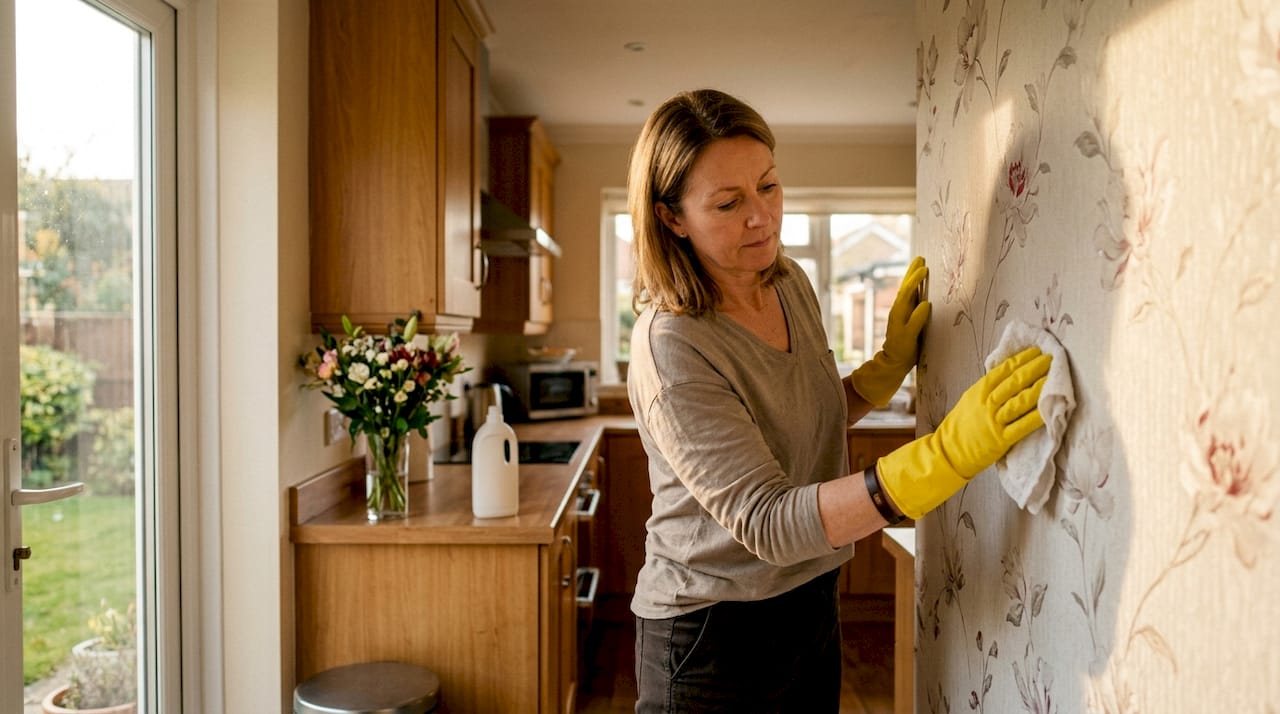
Vinyl-coated wallpaper has a paper base with a thin vinyl layer on top. It handles light damp cleaning but needs more care than solid vinyl. Avoid soaking the edges, as moisture can work under the coating and loosen the seams.
Non-woven wallpaper is made from a blend of polyester and cellulose fibers. Non-woven surfaces tolerate light damp wiping but require moisture control to prevent seam issues. The material is breathable and dimensionally stable, which reduces shrinkage during installation.
Paper-based wallpaper is the most delicate type. It absorbs moisture quickly, so damp cleaning risks warping, staining, and color bleed. Dry cleaning only is the safe rule for traditional paper wallpaper.
Natural fiber wallpapers (grasscloth, jute, sisal) are highly sensitive to water. Spot cleaning with a barely damp cloth is the maximum safe approach. Stains on natural fibers are often permanent.
| Wallpaper type | Cleaning method | Frequency |
|---|---|---|
| Solid vinyl | Damp cloth, mild detergent | Monthly |
| Vinyl-coated | Light damp wipe, dry edges | Every 6–8 weeks |
| Non-woven | Light damp wipe, minimal moisture | Every 6–8 weeks |
| Paper-based | Dry dusting only | Weekly dry, no damp |
| Natural fiber | Dry brush or barely damp spot | As needed, minimal |
Pro Tip: Before cleaning any wall, find a hidden section near a baseboard or behind furniture and test your method there first. Wait 24 hours to check for color lift, sheen change, or surface damage.
How should you clean wallpaper safely and effectively?
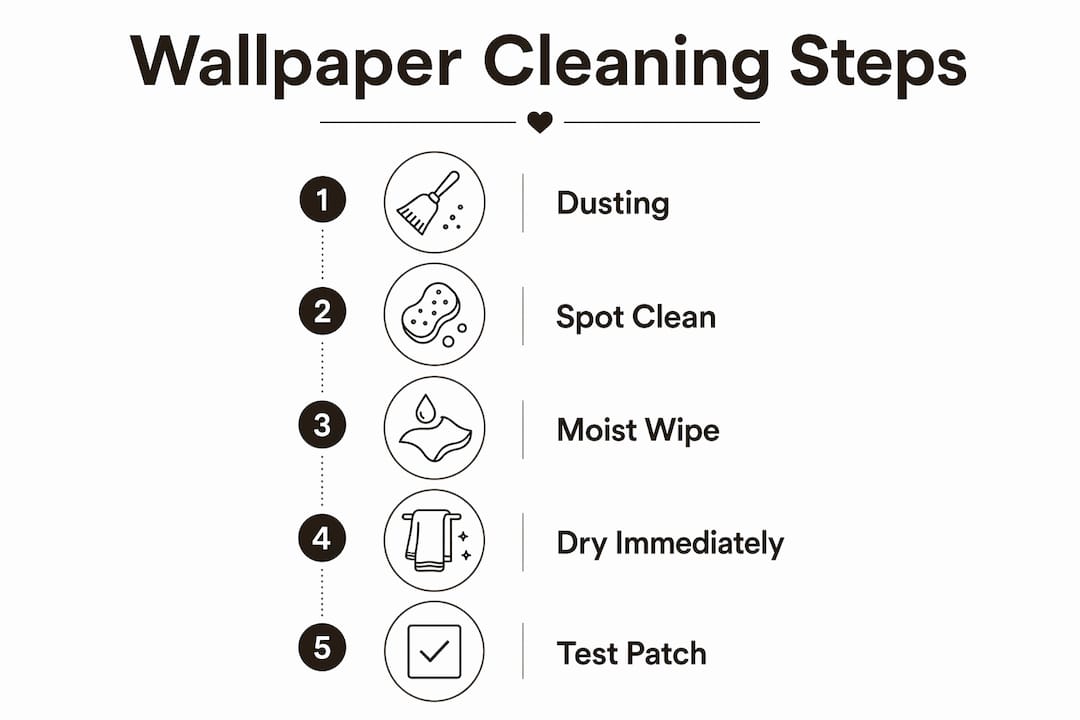
Safe wallpaper cleaning means lifting dirt gently rather than scrubbing it away. Overworking a wallpaper surface causes uneven sheen and worn textures that appear months after the cleaning session. The damage is not always immediate, which is why aggressive scrubbing feels harmless until it is not.
Routine dry dusting with a microfiber cloth or a vacuum with a soft brush attachment prevents grit buildup that scratches the surface during later cleaning. Dry cleaning also reduces how often you need to use any moisture at all. Make it a weekly habit in dusty rooms and a monthly habit elsewhere.
For damp cleaning, mix a small amount of mild dish soap with warm water. Wring the cloth until it is barely damp, not wet. Work in small sections from top to bottom, using light circular motions. Rinse the cloth frequently to avoid spreading dirt.
Tools and materials needed for safe wallpaper cleaning:
- Microfiber cloths (at least two: one for cleaning, one for drying)
- Soft brush vacuum attachment
- Mild dish soap or a pH-neutral cleaner
- Two buckets (one for solution, one for clean rinse water)
- Soft sponge for spot cleaning
- Clean dry towels for blotting
Excess moisture is the most common cleaning mistake. Water that sits on wallpaper seeps under the surface, weakens adhesive, and causes bubbling or peeling. Always blot wet areas dry immediately after cleaning.
Pro Tip: Never clean a loose or peeling section of wallpaper with any moisture. Secure loose edges with seam adhesive first, then clean once the repair has fully dried.
What common wallpaper issues arise and how can you maintain or repair them?
Peeling seams, bubbling, staining, and fading are the four most common wallpaper problems. Each one has a clear cause and a practical fix when caught early.
Securing loose wallpaper edges with adhesive before cleaning prevents peeling and tearing. Cleaning a loose section with moisture risks further detachment and can pull an entire strip away from the wall. Address loose seams before any other maintenance task.
Bubbling usually signals trapped moisture or adhesive failure. Small bubbles sometimes flatten on their own as humidity stabilizes. Persistent bubbles need a small slit with a craft knife, a thin application of seam adhesive injected with a syringe, and firm pressure with a seam roller.
Stains require fast action. Blot fresh stains immediately with a clean dry cloth. Never rub. For dried stains on vinyl or vinyl-coated wallpaper, use a mild soap solution and a soft sponge. For paper-based or natural fiber wallpaper, consult a professional before attempting stain removal, as water-based solutions often make the stain worse.
Simple DIY repair steps for peeling seams:
- Gently lift the peeling edge without forcing it further away from the wall.
- Clean any old adhesive residue from the back of the wallpaper and the wall surface with a barely damp cloth.
- Apply seam repair adhesive to both the wall surface and the back of the wallpaper strip.
- Press the edge firmly back into place, working from the center outward to avoid air pockets.
- Wipe away any adhesive that squeezes out with a clean damp cloth.
- Place a flat, heavy object against the seam or use painter’s tape to hold it while the adhesive cures for at least 24 hours.
Fading is harder to reverse than peeling or staining. Prevention is the only reliable strategy, which connects directly to environmental control.
How do environmental factors affect wallpaper lifespan and appearance?
The environment inside your home does more damage to wallpaper than cleaning errors do. Humidity, sunlight, and furniture placement are the three factors that shorten wallpaper life the most.
Humidity weakens wallpaper adhesive and causes bubbling or peeling. Using dehumidifiers and exhaust fans reduces moisture damage in humid rooms like bathrooms and kitchens. The goal is to keep indoor relative humidity between 40% and 60%, which is the range where most adhesives and paper materials remain stable.
Sunlight exposure fades wallpaper colors over time. West-facing walls with intense afternoon sun need protection to maintain color vibrancy. UV-filtering window film and lined curtains are the most practical solutions for rooms that receive direct sunlight for more than four hours daily.
Furniture placed directly against wallpapered walls causes abrasion and indentation over time. Leave at least one inch of clearance between furniture and the wall surface. This also improves air circulation, which helps manage moisture buildup behind large pieces.
| Environmental factor | Effect on wallpaper | Recommended action |
|---|---|---|
| High humidity | Adhesive failure, bubbling, peeling | Use exhaust fans, dehumidifier |
| Direct sunlight | Color fading, surface degradation | UV window film, lined curtains |
| Furniture contact | Abrasion, dents, surface wear | Maintain clearance from wall |
| Poor ventilation | Moisture buildup, mold risk | Improve airflow, use fans |
| Temperature swings | Expansion, contraction, seam gaps | Maintain stable indoor temperature |
Controlling these factors costs less than repairing or replacing damaged wallpaper. A $30 dehumidifier in a bathroom protects a wall covering that costs far more to replace.
What are best practices for wallpaper surface preparation and ongoing care?
Wallpaper lifespan depends heavily on installation quality and wall preparation. Poor substrate preparation leads to bubbles, seams opening, and peeling within months of installation. Getting the surface right before the wallpaper goes up is the single most effective long-term maintenance step.
For homeowners planning to wallpaper, the wall surface must be clean, dry, smooth, and primed before any wallpaper goes up. Lining paper applied before the decorative layer reduces surface imperfections and minimizes shrinkage, which keeps seams tight for longer. A quality primer seals the wall and improves adhesion, which directly reduces future peeling.
For renters, peel-and-stick wallpaper on rental walls requires its own preparation approach. The wall surface must be clean and free of grease before application. Removable wallpaper placed on a dirty or textured surface loses adhesion faster and leaves residue when removed.
Ongoing care checklist for all wallpaper types:
- Inspect all seams and edges every three months for early signs of lifting.
- Dust walls monthly with a dry microfiber cloth or soft vacuum attachment.
- Check high-humidity rooms after seasonal changes for bubbling or discoloration.
- Repair any loose edges immediately before moisture or cleaning makes the damage worse.
- Keep a small amount of matching seam adhesive on hand for fast repairs.
- Note the wallpaper type and manufacturer so you can reference care instructions when needed.
Renters benefit most from removable wallpaper options, which are designed for easy removal without wall damage. Understanding how long peel-and-stick wallpaper lasts helps set realistic expectations for care frequency and replacement timing.
Key Takeaways
Proper wallpaper maintenance combines the right cleaning method for your specific material, proactive environmental control, and early repair of minor damage before it spreads.
| Point | Details |
|---|---|
| Match care to material | Vinyl tolerates damp cleaning; paper-based wallpaper requires dry methods only. |
| Dry clean first | Weekly microfiber dusting reduces the need for damp cleaning and prevents surface scratches. |
| Control humidity | Keep indoor humidity at 40%–60% and use exhaust fans to protect adhesive and paper layers. |
| Repair before cleaning | Secure loose seams with adhesive before applying any moisture to the wall surface. |
| Prepare walls properly | Clean, primed, and smooth walls before installation prevent most long-term maintenance problems. |
What Wallsneedlove has learned about wallpaper care
The most common mistake Wallsneedlove sees is homeowners cleaning first and inspecting second. A loose seam that gets wiped with a damp cloth becomes a full strip pulling away from the wall. The fix takes five minutes before cleaning and an hour after. Inspection always comes first.
The second pattern worth noting is over-cleaning. Wallpaper does not need monthly damp cleaning in most rooms. A dry microfiber cloth handles the majority of everyday dust and smudges. Reserving damp cleaning for actual stains and visible grime extends the surface life significantly.
Environmental control gets underestimated because it is invisible. A bathroom without an exhaust fan will damage wallpaper faster than any cleaning error. The fix is not a new cleaning product. It is better ventilation.
The homeowners and renters who get the most years from their wall coverings share one habit: they look at their walls regularly and act on small problems immediately. A bubble addressed in week one is a five-minute repair. The same bubble ignored for six months is a replacement project.
Developing a simple quarterly inspection routine, combined with monthly dry dusting, covers most of what wallpaper care requires. The wallpaper ordering process is straightforward when you know your wall dimensions and material preferences. Maintenance is even simpler once the habits are in place.
— Wallsneedlove
Wallsneedlove removable wallpaper: low-maintenance style for every home
Wallsneedlove designs removable wallpaper that makes maintenance straightforward for both homeowners and renters. Every design ships with Greenguard Gold certification, and the peel-and-stick format means no paste, no priming, and no permanent commitment to a single look.

The Monkeying Around removable wallpaper is one of the most popular options for renters who want bold style without the maintenance complexity of traditional paste wallpaper. The surface wipes clean with a barely damp cloth, and the panels remove without wall damage when it is time to move or refresh. For homeowners who want a striking focal point with equally simple care, the Java Mountain wall mural delivers a full scenic design that cleans as easily as it installs. Browse the full collection at Wallsneedlove to find a design that fits your space and your maintenance routine.
FAQ
What is the safest way to clean wallpaper?
Dry cleaning with a microfiber cloth or soft vacuum brush is the safest method for all wallpaper types. For vinyl and vinyl-coated wallpaper, a barely damp cloth with mild soap handles stains without damaging the surface.
How often should wallpaper be cleaned?
Dry dusting works best on a monthly schedule, while damp cleaning is only needed for visible stains or grime. High-traffic rooms may need more frequent dry cleaning to prevent grit buildup.
What causes wallpaper to peel at the seams?
Humidity, moisture from cleaning, and poor initial adhesion are the main causes of seam peeling. Securing loose edges with seam adhesive before cleaning prevents further detachment.
Can renters use wallpaper without damaging walls?
Peel-and-stick removable wallpaper is designed for rental walls and removes cleanly when applied to a smooth, grease-free surface. Preparing the wall properly before application is the key step for damage-free removal.
How does sunlight affect wallpaper?
Direct sunlight fades wallpaper colors over time, with west-facing walls at the highest risk. UV-filtering window film or lined curtains protect color vibrancy in sun-exposed rooms.


Leave a comment