

Nursery Wallpaper Safety Explained for Parents
Yes — wallpaper can be safe for a baby’s nursery. The condition is straightforward: choose low-VOC, PVC-free materials, verify third-party certifications like Greenguard Gold or OEKO-TEX, and follow specific installation and airing steps before placing the crib. Wallpaper for nursery safety explained comes down to three checks before you buy, and a short timeline to follow after installation.
Three checks before you buy:
- Material and backing type. Prefer paper-backed, non-woven, or PVC-free substrates printed with water-based or pigment inks.
- Adhesive VOC rating. For peel-and-stick options, the adhesive is a separate chemical source. Confirm it is low-VOC or VOC-free, not just the substrate.
- Third-party certification. Look for Greenguard Gold or OEKO-TEX Standard 100 on the product page. If neither appears, request the Safety Data Sheet (SDS) before ordering.
Immediate steps after the wallpaper arrives:
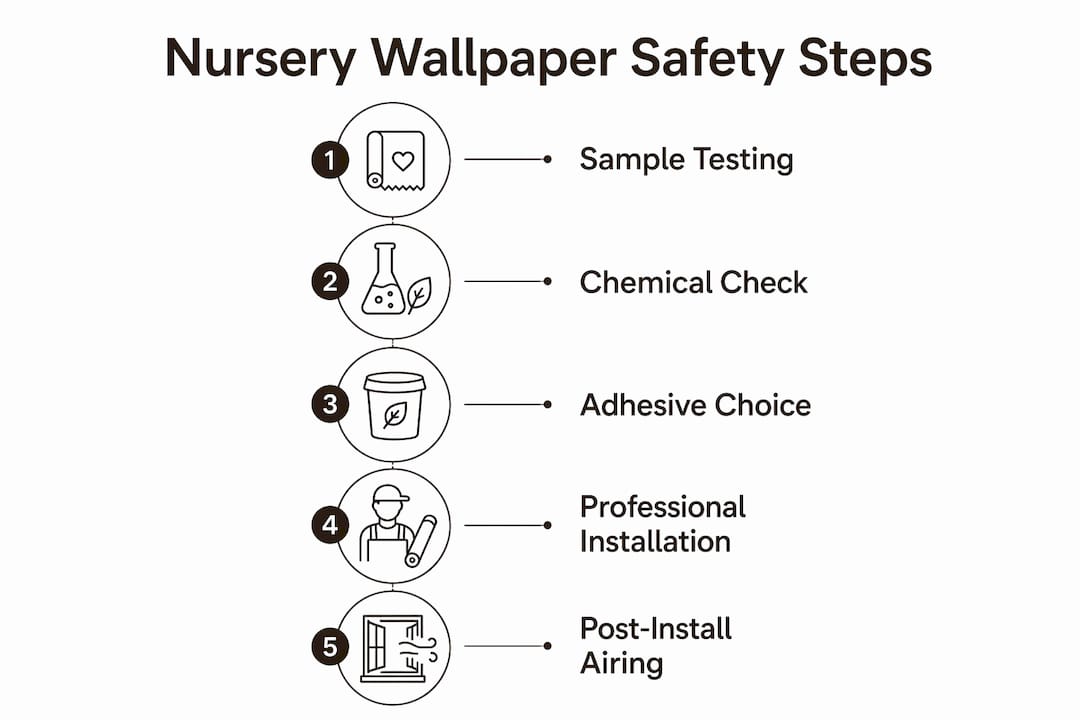
- Unseal samples and air them out 24–48 hours in a ventilated space before bringing them into the nursery.
- Review the SDS for solvent content, VOC levels, and any flagged hazardous components.
- After installation, ventilate the room continuously and delay nursery occupancy until the off-gassing period is complete.
Table of Contents
- What should you check when choosing nursery wallpaper?
- Which chemicals in nursery wallpaper should you avoid?
- Peel-and-stick vs. traditional wallpaper: which is safer for a nursery?
- How to install nursery wallpaper safely and reduce chemical exposure
- How do you clean nursery wallpaper without damaging it?
- How do certifications and SDS documents verify nursery wallpaper safety?
- How do pattern and color choices affect infant sleep and sensory safety?
- How Wallsneedlove approaches nursery-safe wallpaper
- Key Takeaways
- The most common nursery wallpaper mistakes parents make
- Wallsneedlove nursery wallpaper: vetted options for parents
- Useful sources and further reading
What should you check when choosing nursery wallpaper?
The product page alone rarely tells the full story. Here is a practical checklist for evaluating wallpaper options online or in store.
Substrate and backing:
- Paper-backed or non-woven substrates are generally preferable to vinyl-backed options.
- Confirm the product is explicitly labeled PVC-free. Vinyl wallcoverings can contain phthalates and other plasticizers that off-gas over time.
- Water-based or pigment inks are safer than solvent-based inks; look for this in the product description or SDS.
Labels to look for:
- “Low-VOC” or “VOC-free” on both the wallpaper and the adhesive.
- “Phthalate-free” and “formaldehyde-free” where listed.
- Washable or scrubbable finish if the nursery will see heavy use.
Adhesive specifics:
- For peel-and-stick wallpaper, ask the seller what adhesive is used. Pressure-sensitive adhesives vary widely in VOC content.
- For traditional wallpaper, confirm the installer plans to use a water-based, low-VOC paste.
Certifications and documentation:
- Greenguard Gold and OEKO-TEX Standard 100 are the two most useful third-party signals for nursery use.
- If certifications are not listed, request the SDS or a third-party VOC test report. Third-party certification is consistently stronger evidence than marketing copy.
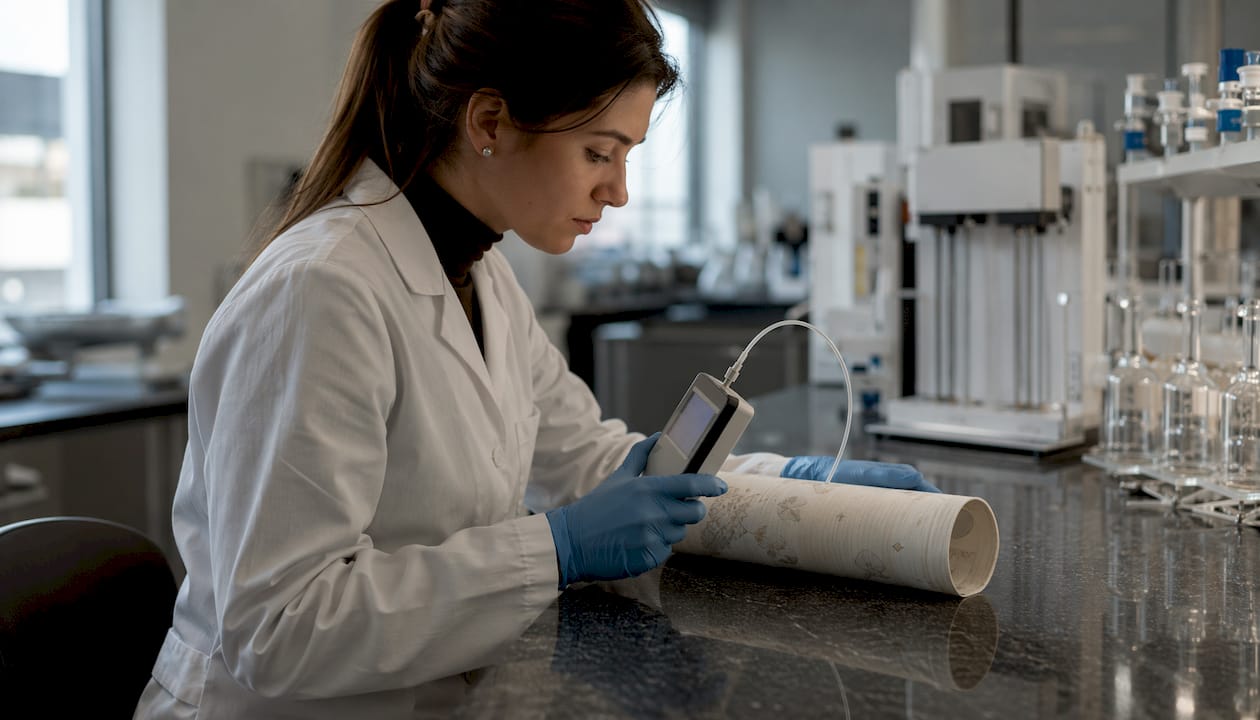
Pro Tip: Order a sample before committing to a full roll. Unseal it, place it in a well-ventilated room for 24–48 hours, and check for any chemical odor. A strong smell after airing is a clear signal to look elsewhere.
You can also review wallpaper samples at home using a structured checklist that covers odor, texture, and color accuracy before purchase.
Which chemicals in nursery wallpaper should you avoid?
Infants breathe at a faster rate than adults and spend more time close to surfaces, which makes indoor air quality in a nursery more consequential than in other rooms. The EPA identifies VOCs as a significant indoor air quality concern, with sources including adhesives, coatings, and wall coverings.
| Chemical / Component | Why It Matters for Babies | Where to Spot It |
|---|---|---|
| VOCs (volatile organic compounds) | Off-gas into indoor air; irritate lungs and airways | SDS, VOC test report, product label |
| PVC (polyvinyl chloride / vinyl) | Can contain phthalates; releases chlorine compounds | Substrate label, “vinyl-free” or “PVC-free” claim |
| Phthalates / plasticizers | Endocrine-disrupting compounds used to soften PVC | “Phthalate-free” label, OEKO-TEX certification |
| Formaldehyde / resin binders | Used in some adhesives and coatings; respiratory irritant | SDS hazardous substances section |
| Solvent residues | Residual solvents from ink or adhesive manufacturing | SDS, water-based ink claim |
| Heavy metals in pigments | Lead and cadmium used in some older or low-cost pigments | OEKO-TEX Standard 100 limits these |
Priority chemicals to avoid:
- PVC-backed wallpaper. Vinyl chloride is classified as a known human carcinogen; PVC products can also contain phthalates as softening agents.
- Formaldehyde-containing adhesives or resin binders. Check the SDS for “formaldehyde” or “urea-formaldehyde” in the ingredients list.
- Solvent-based inks. These off-gas more aggressively than water-based or pigment alternatives.
- Heavy metals in pigments. OEKO-TEX Standard 100 sets limits on lead, cadmium, and other heavy metals; a certified product has been tested against those thresholds.
Quick home checks before installation:
- Unseal the wallpaper and leave it flat in a ventilated room. A sharp chemical smell after 24 hours suggests elevated solvent or VOC content.
- Check for a sticky or tacky residue on the surface that is not part of the adhesive backing. This can indicate plasticizer migration.
- If the product page lists no certifications and the seller cannot provide an SDS, treat that as a red flag.
Peel-and-stick vs. traditional wallpaper: which is safer for a nursery?
Both options can be safe. The difference lies in the adhesive, the substrate, and how each is installed.
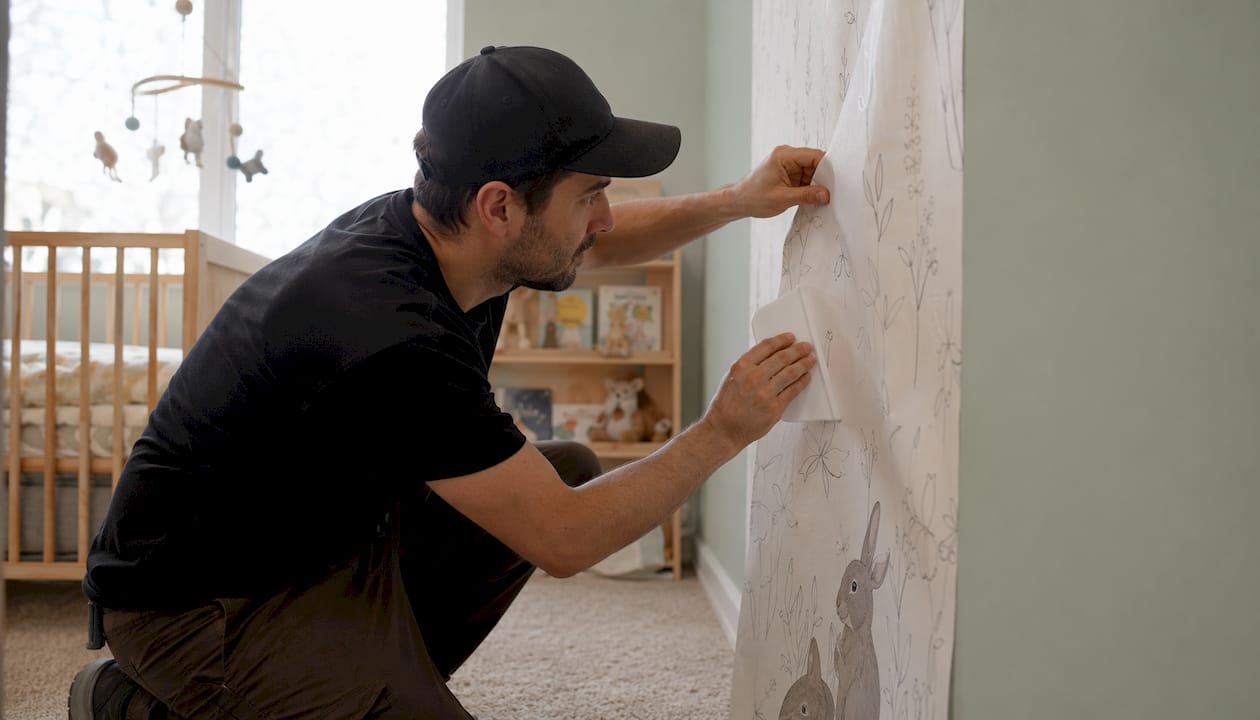
How peel-and-stick wallpaper works
Peel-and-stick wallpaper combines a printed substrate with a factory-applied pressure-sensitive adhesive. The main advantages for nurseries are easy removal and renter-friendliness. High-quality removable papers peel cleanly when walls are properly prepped and samples are tested first.
The adhesive is the variable to watch. Because it is pre-applied at the factory, parents cannot substitute a lower-VOC paste the way they can with traditional wallpaper. Always confirm that both the substrate and the adhesive carry low-VOC or VOC-free status.
Traditional wallpaper with paste
Traditional wallpaper gives the installer more control over the adhesive. A professional using a water-based, low-VOC paste on a non-woven or paper-backed substrate can produce a very low total VOC exposure. The tradeoff is that removal is more involved, which matters for renters.
Pro Tip: For renters, peel-and-stick is the practical choice. Verify adhesive VOC status with the manufacturer before ordering, and review wallpaper on rental walls guidance to understand wall prep requirements.
Decision checklist:
- Renting? Peel-and-stick with verified low-VOC adhesive.
- Long-term nursery? Traditional non-woven with water-based paste, professionally installed.
- Need scrubbability? Confirm the finish is rated washable or scrubbable regardless of construction type.
- Off-gassing priority? Both types require airing; peel-and-stick adhesives may need longer ventilation if VOC status is unconfirmed.
How to install nursery wallpaper safely and reduce chemical exposure
Safe installation follows a clear sequence. Skipping steps, especially the curing and airing periods, is the most common source of avoidable chemical exposure.
Pre-installation timeline
- Paint curing. If walls were recently painted, wait 2–4 weeks before applying wallpaper. Some paints require up to 30 days to fully cure. Applying wallpaper over uncured paint traps paint gases and causes premature peeling.
- Wall prep. Clean walls with a mild, residue-free cleaner. Check for moisture or mildew before covering any surface.
- Humidity check. High humidity affects adhesion and can promote mildew under the wallpaper. Aim for 40–60% relative humidity during installation.
- Sample airing. Unseal samples and air them in a ventilated space for 24–48 hours before the full installation.
Installation day
- Open windows and run fans throughout the installation.
- Ask the installer to use water-based, low-VOC paste for traditional wallpaper.
- Keep the nursery unoccupied during installation and for the airing period that follows.
Post-installation airing timeline
Follow this sequence from sample arrival to crib placement:
- Sample arrives → unseal, air 24–48 hours in a separate ventilated room, check for odor.
- Walls cured and prepped → confirm paint cure period is complete.
- Installation day → ventilate continuously; keep nursery unoccupied.
- Post-install airing → ventilate the nursery for at least 48–72 hours with windows open before placing furniture.
- Final check → no residual chemical odor before the crib goes in.
Pro Tip: Run a HEPA air purifier in the nursery during and after installation. It will not eliminate VOCs on its own, but it reduces particulate matter stirred up during prep and installation.
Wallsneedlove publishes a 13-step peel-and-stick installation guide that covers wall prep, adhesion checks, and finishing steps in detail.
How do you clean nursery wallpaper without damaging it?
Cleaning method depends on the finish. Using the wrong cleaner on the wrong surface can damage the wallpaper or leave chemical residues that are a secondary exposure concern.
Washable vs. scrubbable finishes:
- Washable finishes tolerate light wiping with a damp cloth and mild soap. They are not rated for repeated scrubbing.
- Scrubbable finishes, including vinyl-coated and Type II wallcoverings, handle more aggressive cleaning and are better suited to high-traffic nursery walls.
- Paper-backed and non-woven finishes without a protective coating are generally spot-clean only.
Safe cleaning practices:
- Use mild dish soap diluted in water. Apply with a soft cloth, not a scrub brush.
- Blot stains rather than rubbing, which can spread the stain and damage the surface.
- Test any cleaner on a small, hidden section first and let it dry fully before cleaning the visible area.
- Avoid solvent-based cleaners, bleach, and abrasive products. These can strip finishes, leave VOC residues, and discolor the surface.
Seam and moisture maintenance:
- Re-adhere lifting seams with a seam repair adhesive rated for the wallpaper type. Avoid super glue or contact cement, which off-gas aggressively.
- For nurseries in humid climates or near bathrooms, choose a mildew-resistant substrate and maintain ventilation to prevent moisture buildup behind the paper.
For a full maintenance schedule by finish type, Wallsneedlove’s wallpaper maintenance guide covers cleaning intervals and product recommendations.
How do certifications and SDS documents verify nursery wallpaper safety?
Certifications are the fastest way to verify a safety claim without reading a full lab report. Two programs are most relevant for nursery wallpaper in the United States.
Greenguard Gold
Greenguard Gold (administered by UL) tests products for chemical emissions in indoor environments and applies stricter limits than the base Greenguard standard. It is specifically designed for sensitive spaces, including schools and healthcare facilities, which makes it a practical proxy for nursery use. A product carrying this certification has been tested for VOC emissions, formaldehyde, and other chemical off-gassing under conditions that model real indoor use.
OEKO-TEX Standard 100
OEKO-TEX Standard 100 tests every component of a textile or wallcovering, including dyes, coatings, and backing materials, against limits for harmful substances. It covers heavy metals, phthalates, formaldehyde, and pesticide residues. A product certified to Standard 100 has been tested at an independent OEKO-TEX institute, not self-certified by the manufacturer.
Reading an SDS
The Safety Data Sheet lists hazardous ingredients, VOC content, and handling precautions. For nursery wallpaper, focus on:
- Section 2 (Hazard Identification): lists any classified hazardous components.
- Section 3 (Composition): names specific chemicals and their concentrations.
- Section 8 (Exposure Controls): lists recommended ventilation and PPE, which signals how much off-gassing the manufacturer expects.
When to push for more documentation:
- If a product claims “non-toxic” or “eco-friendly” without listing a certification, request the SDS and a third-party VOC test report.
- Confirm that inks and adhesives carry the same certification as the substrate. A Greenguard Gold substrate paired with an uncertified adhesive is only partially verified.
Pro Tip: Search the Greenguard product database at ul.com/resources/greenguard-certification to verify a product’s certification status directly, rather than relying on the seller’s claim.
How do pattern and color choices affect infant sleep and sensory safety?
Chemical safety is one dimension of nursery wallpaper safety. Visual safety is the other, and it is frequently overlooked.
Design guidance consistently recommends muted tones and low-contrast patterns for nursery walls. Interior design experts suggest watercolor washes, soft sage, warm beige, and muted gray over highly saturated or chaotic patterns. The reasoning is straightforward: infants’ visual systems are still developing, and high-contrast, busy patterns can interfere with sleep onset and contribute to sensory overload.
Practical pattern and color guidelines:
- Prefer soft watercolor prints, small-scale botanicals, or simple geometric shapes in muted palettes.
- Avoid high-contrast black-and-white patterns directly behind or above the crib. These are visually stimulating and can disrupt sleep.
- Keep raised or textured finishes away from reach lines (below 36 inches from the floor) to prevent tactile overstimulation and reduce the risk of a child picking at the surface.
- For accent walls, choose the wall opposite the crib rather than the wall the baby faces while lying down.
For calming color and pattern references, the guide on neutral wall art offers practical examples of palettes that support a restful environment.
A seamless geometric pattern in a muted tone, for example, gives visual interest without the stimulation level of a bold, high-contrast print.
How Wallsneedlove approaches nursery-safe wallpaper
Wallsneedlove offers custom-printed wallpaper and wall murals in both peel-and-stick and traditional paste formats, with orders typically produced within 1–3 days. The product range covers floral, geometric, watercolor, scenic murals, and faux textures, giving parents a range of nursery-appropriate options across different visual styles.
Trust signals parents should check on Wallsneedlove product pages:
- Greenguard Gold certification status where listed on the product.
- PVC-free and low-VOC ink specifications in the product description.
- SDS availability through the product page or customer service.
- Clear adhesive specifications for peel-and-stick options.
Nursery-appropriate product types from Wallsneedlove:
- Removable peel-and-stick prints for accent walls, ideal for renters or parents who want flexibility.
- Custom wall murals for a single statement wall, printed on verified substrates.
- Faux texture options in neutral palettes for a low-stimulation visual effect.
Wallsneedlove also publishes installation and maintenance guides, including a detailed nursery wallpaper style guide covering material and design recommendations for family-friendly spaces.
Pro Tip: Before placing a full order with Wallsneedlove, request a sample of the specific product you plan to use. Air it for 24–48 hours and check the product page for SDS access or certification details.
Key Takeaways
Safe nursery wallpaper requires low-VOC, PVC-free materials with verified third-party certification, a confirmed adhesive VOC rating, and a structured airing and installation timeline before the crib goes in.
| Point | Details |
|---|---|
| Certifications matter most | Greenguard Gold and OEKO-TEX Standard 100 are the two most reliable third-party signals for nursery-safe wallpaper. |
| Adhesive is a separate check | Peel-and-stick adhesives can off-gas independently; confirm low-VOC status for both substrate and adhesive. |
| Air samples before installing | Unseal and ventilate wallpaper samples for 24–48 hours; a persistent chemical odor signals higher VOC content. |
| Wait for paint to cure | Allow 2–4 weeks (up to 30 days for some paints) before applying wallpaper to recently painted walls. |
| Wallsneedlove as a vetted option | Wallsneedlove offers peel-and-stick and paste options with Greenguard Gold certification and published installation guides for nursery use. |
The most common nursery wallpaper mistakes parents make
Most nursery wallpaper problems trace back to three errors: skipping sample testing, applying over uncured paint, and assuming “peel-and-stick” automatically means “no VOCs.”
The sample step is the one parents most often skip because it adds time. But a 24–48 hour airing test costs nothing and catches the products that off-gas most aggressively before they go on the nursery wall. A product that smells strongly after airing in a ventilated room will smell the same, or worse, in an enclosed nursery.
The uncured paint problem is less obvious. Fresh paint continues releasing gases for weeks after it looks and feels dry. Wallpaper applied over that surface traps those gases and can also peel prematurely as the paint continues to cure underneath. Waiting the full 2–4 week period is not optional if longevity and air quality both matter.
The peel-and-stick assumption is the most persistent misconception. Removable wallpaper has improved significantly, and high-quality options now use PVC-free substrates and water-based inks. But the adhesive is factory-applied and cannot be swapped out. Parents who verify the substrate certification but skip the adhesive VOC check are leaving the most direct chemical contact point unverified.
Wallsneedlove recommends a conservative timeline: sample arrives, air 24–48 hours, install only after paint is fully cured, ventilate the nursery for at least 48–72 hours post-installation, and place the crib only after no residual odor remains. Reviewing common installation mistakes before starting can prevent the most avoidable errors.
Wallsneedlove nursery wallpaper: vetted options for parents
Parents who want a starting point with verified materials can browse Wallsneedlove’s nursery collection directly. Wallsneedlove carries peel-and-stick and traditional paste options across a range of nursery-appropriate styles, with Greenguard Gold certification on qualifying products and published installation guides that cover prep, airing, and finishing steps.
For removable options, the Monkeying Around peel-and-stick wallpaper is a nursery-friendly choice with whimsical imagery suited to a child’s room. Parents looking for a muted, nature-themed mural can review the Forest Friends wall mural, which works well as a single accent wall opposite the crib. Before placing any order, request a sample, check the product page for SDS access, and confirm adhesive VOC status with the Wallsneedlove team. Browse the full nursery wallpaper collection to compare substrates, finishes, and certification details across available styles.
Useful sources and further reading
| Resource | Best Used For |
|---|---|
| EPA: VOCs and Indoor Air Quality | Understanding VOC health risks and indoor air quality standards |
| Safer Chemicals: Vinyl Chloride | Verifying PVC and vinyl chloride hazard information |
| The Good Trade: Non-Toxic Wallpaper | Reviewing PVC-free, phthalate-free, and certified removable options |
| FPMomTips: Nursery Wallpaper Safety | Practical parent guidance on certifications, airing, and installation timing |
| Raising Well: Peel-and-Stick Nursery Guide | Renter-friendly peel-and-stick guidance and adhesive considerations |
| Wallsneedlove: 13-Step Installation Guide | Step-by-step peel-and-stick installation for nurseries |
| Wallsneedlove: Maintenance Guide | Cleaning intervals and safe product recommendations by finish type |
For any specific product lot, request the SDS directly from the manufacturer or supplier before installation. Certification databases such as UL’s Greenguard directory allow independent verification of a product’s certification status without relying on seller claims.
This article provides general information for parents and caregivers. For specific health or safety concerns related to your child’s environment, consult a qualified professional and verify current certification status with the relevant certifying body.


Leave a comment