

Custom Color Wallpaper Produced in 1–3 Days: Test Samples First
Yes, custom color wallpaper is available, whether you want a solid tone or a recolored pattern, in peel-and-stick or traditional paste. The immediate next step is simple: pick your substrate and order a printed sample or request a color-matched proof. Samples matter because light, wall texture, and finish all change how a color actually reads once it’s on your wall.
TL;DR:
- Ordering custom wallpaper requires precise color references and a printed sample to account for lighting, wall texture, and finish effects.
- Choice of substrate and finish significantly influences how colors appear, with smoother finishes offering better color accuracy.
- Testing large samples in rooms over several days, from multiple sightlines, is essential to ensure the color matches your expectations under different lighting conditions.
- Combining patterns with a shared accent color and using architectural transitions helps create a cohesive space without visual chaos.
- Most custom wallpaper orders are produced within one to three days, with proper wall preparation and careful seam alignment crucial for a successful installation.
Table of Contents
- How Does Ordering Custom Color Wallpaper Work?
- Which Material and Finish Options Affect Color?
- How Do You Test Wallpaper Color Before Committing?
- What Design Rules Help When Mixing Patterns and Colors?
- What Does Custom Color Wallpaper Cost, and How Long Does It Take?
- How Should You Prepare and Care for Custom Wallpaper?
- Why Trust Wallsneedlove for a Custom Color Project?
- Troubleshooting Color and Material Issues During Installation
- Our Take on Choosing a Custom Color
- Ready to Start Your Custom Color Wallpaper Order?
- Sources
How Does Ordering Custom Color Wallpaper Work?
Custom orders follow a predictable sequence, and knowing it upfront saves you a round of revisions later.
- Start with a design. Choose an existing pattern to recolor, or upload your own artwork for a fully custom print.
- Decide the scope. A simple recolor of a stocked design moves faster than a ground-up custom print.
- Pick substrate and finish, then supply real color references, hex codes, a paint chip, a fabric swatch, anything more precise than “sage green.”
- Order a printed sample or panel, and ask whether a digital proof is available before full production.
- Check file specs if you’re uploading art. Resolution and color mode both affect the final print, and some sellers, including options to upload custom images, offer paid design-hour services if you need help translating an idea into a print-ready file.
Budget a few extra days if you’re working from scratch versus recoloring something that already exists in the catalog.
Which Material and Finish Options Affect Color?
Substrate choice changes more than durability. It changes how your color actually looks on the wall.
- Peel-and-stick is removable, rental-friendly, and forgiving if you change your mind. It can show a slightly different sheen depending on the angle of light hitting it.
- Traditional paste tends to be more permanent, with a wider range of textured stocks that add visible depth to a color, sometimes making the same hex code look richer or more matte than its peel-and-stick counterpart.
- PVC-free and eco-conscious options are increasingly common, and certifications matter here: Greenguard Gold certification signals low VOC emissions, which is worth checking if you’re papering a nursery, bedroom, or anywhere air quality is a concern.
- Bold solids and metallics generally print more evenly on smoother, matte substrates. Heavily textured stocks can mute a saturated color or create subtle shading across the repeat.
If color accuracy is your top priority over texture, a smoother finish is the safer bet.
How Do You Test Wallpaper Color Before Committing?
Screens lie, at least a little. The color you see on your monitor is rarely the color that ends up on your wall, so testing in the actual room isn’t optional if you care about getting this right.
- Order a printed sample sized large enough to actually judge, not a paint-chip-sized scrap.
- Tape it to the intended wall and leave it there for several days. Designers recommend this specifically because morning and evening light can shift how a color reads, sometimes dramatically.
- View the sample from adjoining rooms, not just standing directly in front of it. A color that looks great head-on can feel jarring from a hallway or kitchen sightline.
- Hold it next to your paint chips, upholstery, and flooring. Aim for a family of tones rather than a single perfect match, since perfect matches rarely survive different lighting conditions anyway.
Pro Tip: If color fidelity really matters, such as matching an existing accent wall or a client’s brand palette, request a printed proof rather than approving from a screen. On-screen color and printed output can differ enough to matter, and a proof catches that gap before you’ve committed to a full roll.
For more on how color and pattern together shift a room’s feel, our guide on why wallpaper changes room atmosphere is worth a look before you finalize.
What Design Rules Help When Mixing Patterns and Colors?
Custom color gives you freedom, but freedom without a plan tends to look chaotic. A few rules keep a room cohesive.
- Pick one dominant pattern and let smaller-scale or textured papers support it rather than compete with it. Mixing motif and scale while keeping color as the connecting thread is a more reliable strategy than trying to match patterns exactly, according to designer guidance on layering wallpapers.
- Use color, not pattern, as the throughline between adjacent rooms. A hallway and living room can wear completely different prints and still feel connected if they share an accent tone.
- Break at architectural transitions. Doorways, millwork, and wainscoting are natural stopping points, and using them to separate patterns avoids the restless look you get from switching prints mid-wall.
- Give the eye a rest. A solid or low-contrast paper works well as a visual pause between two busier designs, especially in a small space.
Our wallpaper scale guide covers repeat size in more detail if you’re pairing a large-scale statement print with something smaller and quieter.
What Does Custom Color Wallpaper Cost, and How Long Does It Take?
Price depends on a handful of variables, and knowing them upfront prevents sticker shock.
- Substrate type (peel-and-stick versus paste)
- Total print area and room size
- Pattern complexity and repeat size
- Specialty inks or metallic finishes
- Optional designer hours for custom artwork
Full orders are typically priced per roll or per square foot, and a printed sample costs a fraction of that. Turnaround is one of the more genuinely useful numbers in this whole process: custom orders are typically produced within one to three days, with shipping added on top and expedited options available if you’re on a deadline. Adding design services or professional installation extends the timeline, so factor that in if you’re working toward a fixed move-in or event date.
How Should You Prepare and Care for Custom Wallpaper?
Installation prep affects color consistency more than most people expect.
- Prep the wall first. Walls should be smooth, clean, primed, and completely dry. Moisture or uneven texture underneath can cause visible color irregularities once the paper is up.
- Align seams carefully. Pay close attention where panels meet, since even small misalignments can create a visible shift in tone or pattern continuity across the join.
- Clean according to substrate. Peel-and-stick and paste wallpapers have different care requirements; harsh cleaners or direct sun exposure can fade colors unevenly over time.
- Call a professional for high-stakes jobs. Large murals, tricky pattern repeats, or expensive specialty finishes are worth handing to an installer who can guarantee seam accuracy.
Why Trust Wallsneedlove for a Custom Color Project?
Wallsneedlove offers custom-printed wallpaper and murals in both peel-and-stick and traditional paste, spanning floral, geometric, watercolor, scenic, and faux-texture styles, with custom orders typically produced within one to three days. That fast turnaround matters most when you’ve just approved a proof and don’t want to wait weeks to see it on your wall.
Wallsneedlove is also Greenguard Gold certified, which speaks directly to indoor air quality, particularly relevant for bedrooms, nurseries, and offices where you’re spending long hours. Detailed installation guides come standard with orders, and the company works with local artists on original designs rather than relying solely on stock patterns. For buyers, that combination lowers the real risks of a custom order: safer materials, clear installation support, and a production cycle short enough that a reprint isn’t a month-long setback.
Troubleshooting Color and Material Issues During Installation
Even a well-planned order can hit snags during installation, and most of them trace back to a handful of predictable causes.
Panels look like slightly different shades side by side. This usually happens when panels from different print batches get mixed, or when a wall isn’t uniformly primed, causing the substrate to absorb ink slightly differently in spots. Always install panels in the sequence they were printed, and confirm your wall prep was even before hanging.
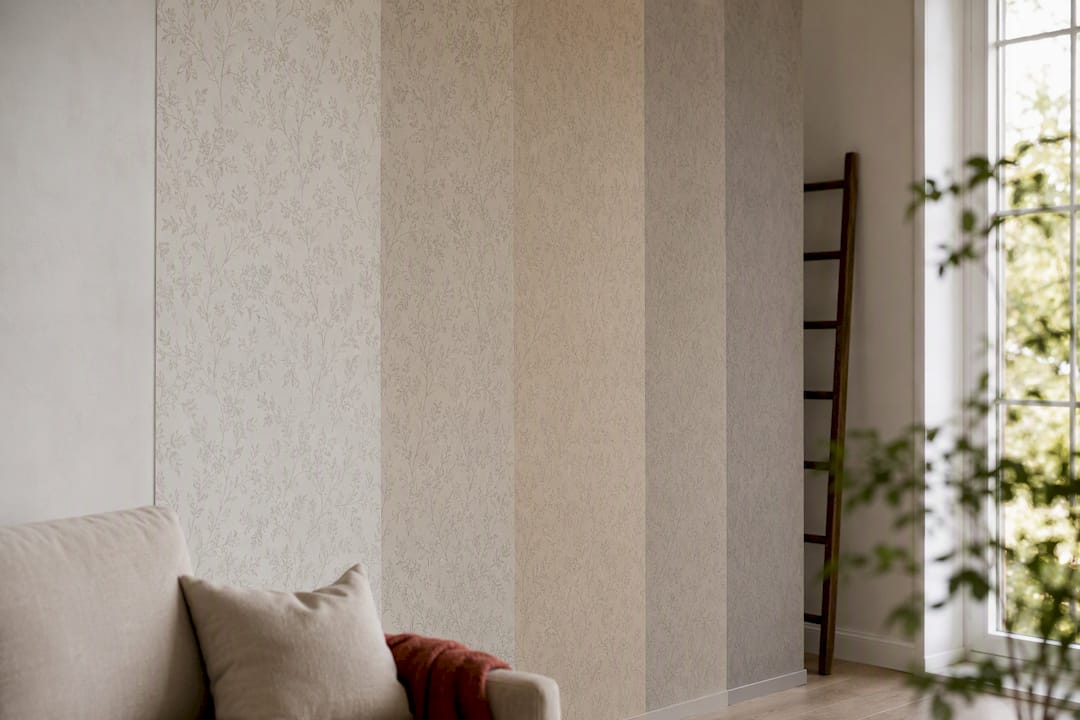
The color looks different than the sample. Lighting is almost always the culprit. A sample tested under daytime light can look noticeably different under warm evening bulbs. This is exactly why testing across several days and sightlines, as recommended earlier, matters more than a single glance.
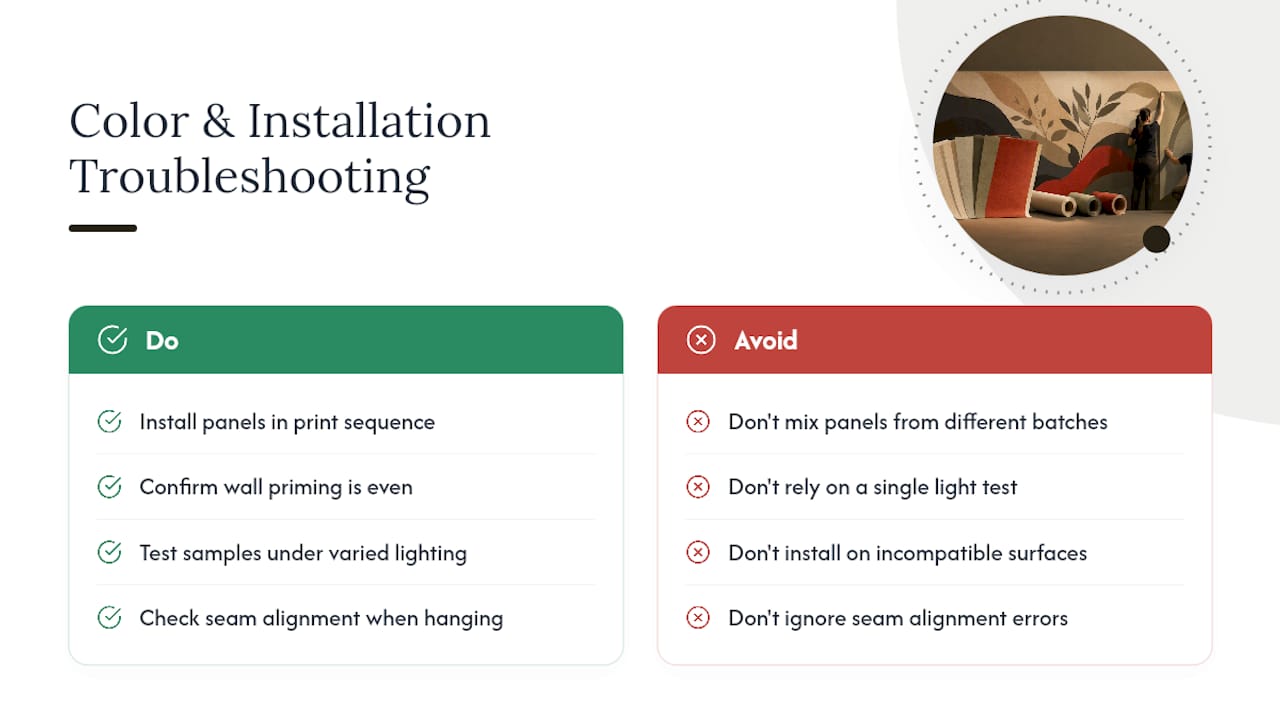
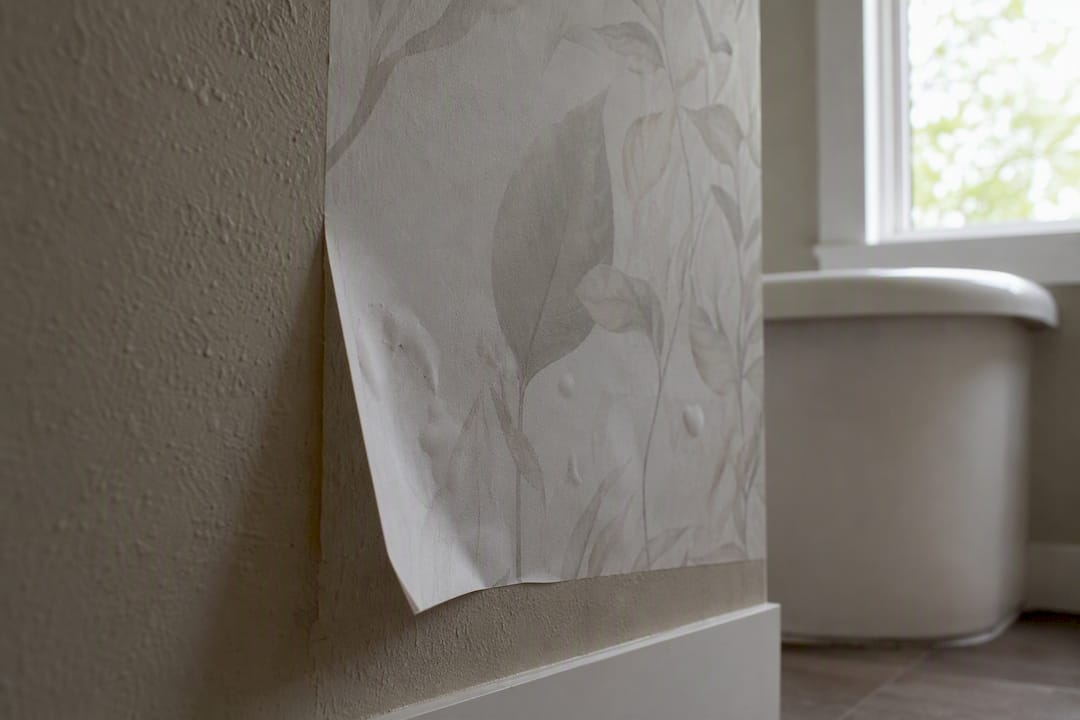
Peel-and-stick isn’t adhering evenly, and the surface looks patchy. This is typically a wall compatibility issue, not a color issue. Textured, glossy, or freshly painted walls (paint needs to cure fully) can prevent proper adhesion. Confirm your wall type matches the substrate’s recommended surfaces before ordering.
Seams show a visible color line. This points to either a wall that wasn’t perfectly flat or a slight trim error during installation. Careful seam alignment during hanging, and double checking panel order, prevents most of this before it starts.
Our Take on Choosing a Custom Color
Samples first, always. We’d rather see you order one printed panel and live with it for a few days than commit to a full room based on a screen. Pair that with a color throughline across rooms, and lean on our design help if you’re stuck between two proofs.
— WallsNeedLove
Ready to Start Your Custom Color Wallpaper Order?
Wallsneedlove recolors existing designs or prints fully bespoke murals from your own artwork, and every order ships from a Greenguard Gold certified process built for people who don’t want to gamble on indoor air quality. Most custom orders are produced quickly, so approving a proof doesn’t mean weeks of waiting to see it on your wall.
If you already have a pattern in mind, a design like Pixel Diamonds recolors cleanly into almost any palette, while a scenic option like Java Mountain works well for a full mural treatment. Not sure where to start? Order a printed sample panel in your target color, request a proof if you’re recoloring an existing print, or reach out to our design service if you’d rather talk it through with someone first.
Sources
For more on layering patterns without the visual clutter, see how architectural transitions can separate two prints cleanly, or how color functions as a throughline between rooms. If you’re coordinating wallpaper with millwork or interior doors, this guide on choosing interior door colors is a useful companion. Our own custom digital printing guide covers file specs in more depth.
- How to mix wallpaper patterns without overwhelming a room - Jocelyn Warner
- How to use two wallpapers in one space : Annie Elliott Design
- The art of using two wallpapers in one room | Vogue


Leave a comment