

Wallpaper for Small Business Storefronts: 2026 Guide
Wallpaper for small business storefronts is one of the most direct ways to turn bare walls into a working part of your brand. Well-designed retail walls increase customer dwell time and spending by creating immersive brand environments. That means the right wall covering does more than look good. It shapes how customers feel, how long they stay, and whether they come back. This guide covers material types, placement strategy, installation steps, brand alignment, and common pitfalls, so you can make a confident decision for your space.
What types of wallpaper work best for small business storefronts?
Commercial wall coverings, the industry term for what most owners call “storefront wallpaper,” fall into several distinct categories. Each serves a different purpose depending on your store type, foot traffic level, and budget.
Material options
- Peel-and-stick (self-adhesive): Ideal for lease spaces or temporary retail activations. Pop-up shops can transform spaces in 24–48 hours using removable wallpaper, with no surface damage on removal.
- Vinyl wallcovering: The most durable option for high-traffic retail. Retail wallpaper requires high abrasion resistance, a scrubbable vinyl finish, UV resistance, and moisture barrier properties, especially in food and beverage spaces.
- Textured wallpaper: Works well as a neutral backdrop in showroom areas. Faux brick, linen, and wood grain textures add depth without competing with merchandise.
- Custom printed wallpaper: Digital printing makes short-run, customized wallpaper more accessible and cost-effective, allowing you to include brand colors, logos, and imagery directly on the wall.
Style categories by business type
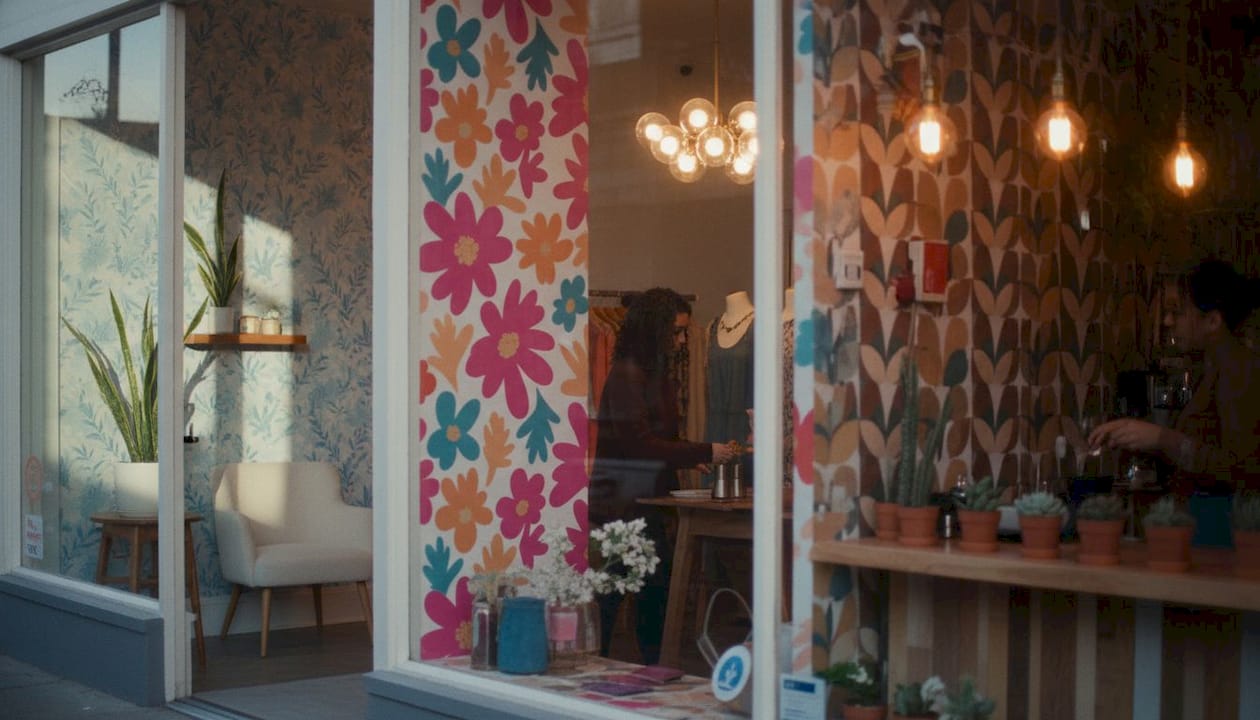
Different store categories call for different visual moods. Calming neutral palettes like blush and sage suit wellness spaces, while high-contrast geometric or industrial textures reinforce innovation in tech and luxury retail. Cafes and food businesses benefit from warm, tactile textures that signal comfort. Fashion boutiques often use bold accent patterns or scenic murals to create a distinct visual identity.
For safety compliance, verifying fire ratings such as Class A is mandatory in some jurisdictions. Meeting ASTM F793 standards is also required for longevity and safety in commercial settings. Always check your lease and local building codes before ordering.
Pro Tip: Order a sample panel before committing to a full wall. Lighting conditions in your store will change how any color or pattern reads compared to a screen preview.
How should you place wallpaper for maximum customer engagement?
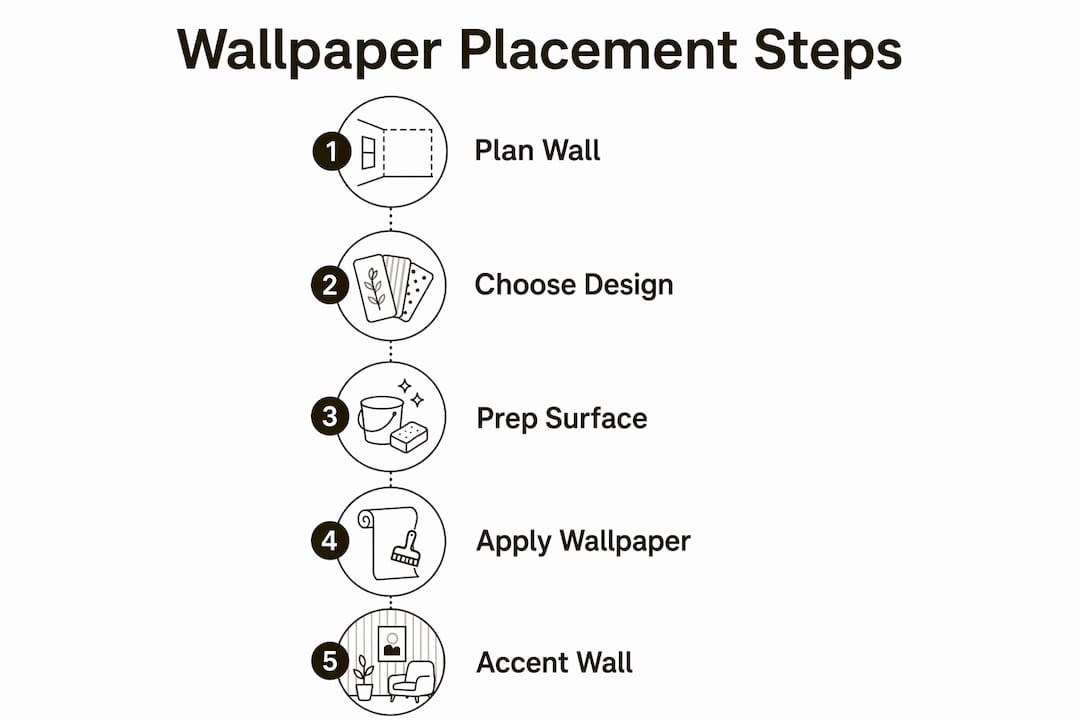
Placement matters more than coverage. Effective storefront wallpapering targets high-impact zones rather than covering all walls, which prevents clutter and keeps the focus on your products.
The four zones that deliver the most return are:
- Behind the cash register. This is where every customer ends up. A bold pattern or branded mural here reinforces your identity at the moment of purchase and creates a natural photo backdrop.
- Fitting rooms. Customers spend focused, private time here. A well-chosen wallpaper pattern in a fitting room increases the perceived quality of the shopping experience.
- Window-facing accent walls. Visible from the street, these walls function as passive advertising. A striking design draws foot traffic before anyone steps inside.
- Feature columns and architectural details. Wrapping columns in a contrasting texture or pattern adds visual structure and guides customer movement through the space.
Creating an “Instagrammable” moment is a real business strategy, not a trend. A single well-placed mural or bold geometric wall can generate consistent organic social content from customers who photograph and share it. That earned visibility costs nothing after the initial installation.
Pro Tip: Avoid wallpapering more than two walls in a small space. One strong accent wall outperforms four busy walls every time.
For more ideas on working with limited square footage, the Wallsneedlove guide on bold choices in small spaces covers specific pattern and scale strategies.
How do you prepare and install storefront wallpaper correctly?
Installation quality determines how long your wallpaper lasts and how professional it looks. Skipping preparation steps is the single most common cause of early failure.
Follow this sequence:
- Strip existing wallpaper or coatings. Old adhesive residue or flaking paint will prevent proper bonding. Remove everything down to a clean substrate.
- Repair surface imperfections. Fill cracks, sand rough patches, and address any moisture issues before priming. Improper surface prep leads to wallpaper failures and costly rework in retail fit-outs.
- Prime the walls. Use a primer appropriate for your wallpaper type. Peel-and-stick products need a smooth, clean surface. Paste-applied vinyl needs a sizing coat.
- Schedule installation strategically. Plan for overnight or weekend installation to avoid disrupting store hours. Most professional crews can complete a single accent wall in a few hours.
- Verify compliance before ordering. Confirm fire ratings, lease restrictions, and any building code requirements. Some commercial leases prohibit permanent adhesive applications.
For ongoing care, keep a maintenance schedule. Vinyl wallcoverings in high-traffic areas should be wiped down monthly. For detailed upkeep steps, Wallsneedlove’s guide on wallpaper maintenance basics covers cleaning methods and when to replace panels.
Key maintenance considerations:
- Use mild, non-abrasive cleaners on vinyl surfaces.
- Inspect seams every six months for lifting, especially near doors and vents.
- Keep a small roll of matching wallpaper for patch repairs.
- Commercial wallpaper is a long-term investment, with durability expected for 3–5 years or more when properly maintained.
How do you align wallpaper design with your brand identity?
Wallpaper has evolved into a critical branding and visual merchandising tool, well beyond its decorative origins. The design you choose communicates your brand before a single word is spoken or product is touched.
Practical alignment principles:
- Color palette. Choose colors that match or complement your existing brand palette. A mismatch between your logo colors and your wall colors creates visual confusion.
- Pattern scale. Large-scale patterns suit spacious stores with high ceilings. Small, repeating patterns work better in compact spaces where the full repeat is visible up close.
- Custom graphics and logos. Including your logo or a thematic motif in a custom mural creates a space that is unmistakably yours. Custom wallpaper designs should adopt modularity so they scale and adapt across different store sizes while preserving brand consistency.
- Exterior consistency. Your interior wallpaper should feel like a continuation of your exterior signage and window displays, not a separate design decision.
For guidance on aligning interior design with brand identity, commercial interior design resources offer frameworks that apply directly to wallpaper selection. Wallsneedlove’s article on wallpaper in open-plan spaces also covers how to maintain visual coherence across larger commercial areas.
What are the most common storefront wallpaper mistakes?
Most problems with commercial wallpaper come from a short list of avoidable errors.
- Overusing bold patterns. Overusing bold wallpaper competes visually with merchandise, reducing its marketing effectiveness. Bold patterns belong on accent walls, not every surface.
- Skipping surface preparation. Bubbles, peeling, and seam failures almost always trace back to inadequate prep. This is not a step to rush.
- Ignoring fire and safety codes. Non-compliant wallpaper can trigger lease violations or fail a building inspection. Always request the fire rating certificate from your supplier.
- Poor lighting. A beautiful wallpaper pattern disappears under flat, inadequate lighting. Plan your lighting alongside your wallpaper selection, not after.
- Budget and timing miscalculations. Custom orders require lead time. Factor in 1–3 days for production, plus shipping and installation scheduling.
The most expensive wallpaper mistake is not the wrong pattern. It is the right pattern installed on an unprepared surface. Rework costs more than doing it correctly the first time, and it means closing your store twice.
Wallsneedlove’s take on storefront wallpaper strategy
Small business owners consistently underestimate what a single well-placed wall can do. At Wallsneedlove, the projects that generate the most customer response are never the ones that covered every wall. They are the ones where one wall was treated as a deliberate design decision.
The instinct to cover everything is understandable. You want the space to feel finished. But restraint is what separates a professional result from a busy one. One strong mural behind your register, one textured accent in your fitting room, and the rest of your walls kept clean and neutral. That combination lets your products breathe and your brand speak clearly.
Quality materials and proper surface preparation are not optional upgrades. They are the baseline for a result that lasts. A small business can absolutely compete visually with chain retailers through thoughtful wallpaper design. The advantage independent owners have is the freedom to be specific, personal, and genuinely on-brand in ways that chain stores cannot.
— Wallsneedlove
Wallsneedlove’s removable wallpaper for storefronts
Wallsneedlove offers a wide range of peel-and-stick and traditional wallpaper options designed for both residential and commercial spaces. Orders are custom made within 1–3 days, and all products carry Greenguard Gold certification for indoor air quality.
For storefronts that need a bold accent wall without permanent commitment, options like the Monkeying Around removable wallpaper and the Java Mountain wall mural offer high-impact visuals with straightforward installation. Geometric patterns, scenic murals, faux textures, and fully custom designs are all available through Wallsneedlove. Browse the full collection to find a style that fits your store’s brand and space.
FAQ
What is the best wallpaper type for a retail store?
Vinyl wallcovering is the most durable choice for high-traffic retail spaces, offering abrasion resistance and a scrubbable finish. Peel-and-stick options work well for lease spaces or temporary installations where surface damage is a concern.
How long does commercial wallpaper last in a storefront?
Commercial wallpaper is typically expected to last 3–5 years or more with proper installation and maintenance. Longevity depends on surface preparation, material quality, and how frequently the area is cleaned.
Do I need to meet fire safety codes for storefront wallpaper?
Fire rating compliance, such as Class A ratings, is mandatory in many commercial jurisdictions and may also be required by your lease. Always request a fire rating certificate from your wallpaper supplier before installation.
How do I choose wallpaper that matches my brand?
Select colors that align with your existing brand palette and patterns that suit your store’s scale and customer profile. Custom printed wallpaper allows you to incorporate logos, brand colors, and thematic imagery directly into the design.
Can I install storefront wallpaper myself?
Peel-and-stick wallpaper is designed for DIY installation and works well for accent walls. Paste-applied vinyl in large commercial spaces typically benefits from professional installation to avoid seam failures and alignment issues.
Key Takeaways
Wallpaper for small business storefronts delivers the strongest results when placed strategically, matched to brand identity, and installed on properly prepared surfaces.
| Point | Details |
|---|---|
| Target high-impact zones | Focus wallpaper on cash registers, fitting rooms, and window-facing walls for maximum visibility. |
| Match material to use case | Use vinyl for durability in high-traffic areas and peel-and-stick for leased or temporary spaces. |
| Verify fire and lease compliance | Confirm Class A fire ratings and lease restrictions before ordering any commercial wallpaper. |
| Align design with brand identity | Choose colors, patterns, and custom graphics that match your existing brand palette and store scale. |
| Prepare surfaces before installation | Proper priming and repair prevents peeling, bubbles, and costly rework after installation. |


Leave a comment