

1–3 Day Salon Wallpaper Ideas for Owners: Washable, Trade Ready
The best salon wallpaper ideas combine four approaches: textured neutrals for calm and acoustic control, bold feature walls at styling stations, botanical or floral patterns for waiting areas, and washable vinyl or peel-and-stick for anywhere clients touch, splash, or brush past. Peel-and-stick and commercial vinyl are the safest default across most zones because they hold up to hairspray, dye, and daily traffic. Some companies supply peel-and-stick and commercial vinyl wallpapers, plus custom murals, if you want a specific pattern rather than a stock option.
TL;DR:
- Vinyl and vinyl-coated wallpapers are essential in wash areas and near sinks to resist moisture, stains, and frequent cleaning.
- Large-scale botanical murals are ideal for reception walls, with metallic or foil accents suitable for small feature areas near mirrors.
- Textured wallpapers like grasscloth or linen help reduce noise and add visual depth on styling floors, but should be avoided in splash zones.
- Scale and placement are critical; use one bold feature wall per room, match pattern size to room dimensions, and test under salon lighting to prevent overwhelm.
- Sample panels should be tested in actual lighting conditions before full installation, and custom murals can be ordered quickly for rebranding needs.
Table of Contents
- Salon Wallpaper Ideas by Zone and Style
- Which Wallpaper Materials Hold Up Best in a Salon?
- How Do You Scale Wallpaper Without Overwhelming the Room?
- Installation and Maintenance: A Quick Checklist
- Why Certified, Fast-Turnaround Wallpaper Matters for Salons
- Order Swatches or Request a Commercial Quote
- Sources
- FAQ
Salon Wallpaper Ideas by Zone and Style
Every zone in a salon does different work, and the wallpaper should match the job. A pattern that energizes a styling floor will feel chaotic in a wash area. One that soothes a waiting room will read as flat behind a colorist’s station.
Reception and front desk. This is the wall that sets the first impression, so it can carry the boldest statement in the building. A large-scale mural or a saturated geometric print works well as a single feature wall behind the desk, paired with a simple sign or backlit logo. Keep the sheen matte to semi-gloss so overhead lighting doesn’t create glare behind staff.
Styling stations and colorist areas. These walls take the most abuse: chemical splashes, chair backs, blow-dryer heat. A bold print here should stay contained to a feature wall rather than wrapping the whole room, or the space starts to feel busy instead of energetic. Vertical stripes or geometric repeats work particularly well behind mirrors, since the pattern peeks through in slices rather than competing with the reflection.
Shampoo and wash area. Moisture resistance matters more here than anywhere else in the salon. Stick to vinyl or vinyl-coated finishes, and lean toward calmer, cooler tones since clients are reclined and often have their eyes closed or half-closed, catching the ceiling and upper walls in peripheral vision.
Waiting and lounge areas. Botanical and floral motifs consistently test well for calming waiting spaces, according to guidance on clinic waiting room design, which recommends soft, textural patterns over anything with hard graphic contrast. The same logic transfers directly to salons: clients waiting for a color to process or an appointment to open up respond better to organic patterns than sharp geometry.
Retail and product display walls. A neutral, low-pattern backdrop lets product packaging do the visual work. Faux wood grain or a subtle textured wallpaper behind shelving keeps the display from competing with itself.
A few ideas worth stealing, across zones:
- Oversized botanical murals for a single reception wall, sized to the wall rather than tiled awkwardly.
- Metallic or foil accents on a small feature wall near mirrors, never a full room, since reflective finishes amplify every light source in the space.
- Grasscloth-look or linen-textured wallpaper along styling floors, which reads as upscale and helps with sound.
- Removable geometric prints for salons in leased spaces, since a full swap takes an afternoon instead of a weekend.
- Branded pattern walls that repeat a logo mark or brand color at low opacity, reinforcing identity without shouting it.
Pro Tip: Textured, grasscloth-like or linen-look wallpapers do double duty on busy styling floors: they add visual depth and take some edge off the noise from dryers, chatter, and running water. Most salon owners never think about wallpaper as an acoustic tool, but it’s one of the easiest upgrades available.
Which Wallpaper Materials Hold Up Best in a Salon?
Vinyl and vinyl-coated wallpapers are the practical baseline for almost every salon surface. They wipe clean, resist moisture, and shrug off the occasional dye drip that would permanently stain a paper-based print. For walls near sinks, styling chairs, or anywhere product bottles get set down, scrim-backed or commercial-grade vinyl reduces seam failure in spots that get bumped or brushed against constantly, a point backed by commercial wallcovering guidance for high-traffic spaces.
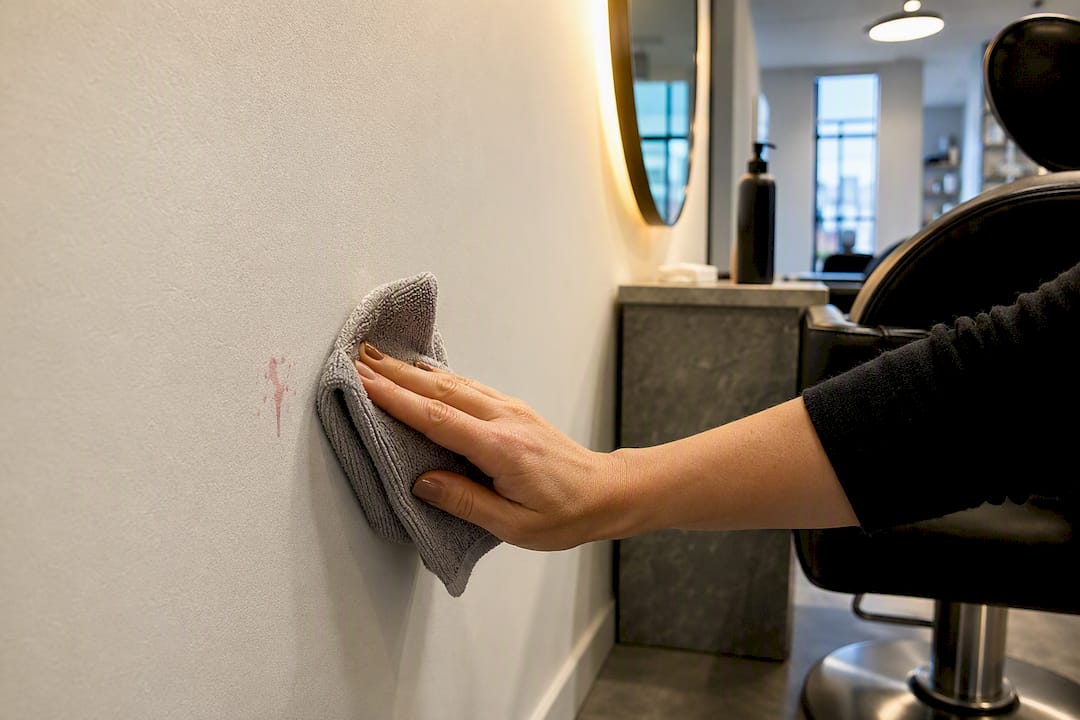
Textured wallpapers earn their place for visual depth and a measurable acoustic benefit, particularly in open-plan salons where blow-dryers and conversation stack up fast. The trade-off: textured surfaces are harder to wipe down than a flat vinyl sheet, so they work best away from splash zones.
Peel-and-stick wins on speed and reversibility. It installs without paste, comes down cleanly at lease-end or rebrand time, and suits DIY-minded owners. Traditional paste application still delivers a marginally more seamless finish for large murals and is worth hiring a professional for on bigger walls.
A few non-negotiables when comparing materials:
- Choose vinyl or vinyl-coated finishes for wash areas and anywhere near sinks or product stations.
- Reserve textured or grasscloth-style paper for dry zones like reception and waiting.
- Confirm low-VOC content and look for Greenguard Gold certification if indoor air quality matters to your clientele, especially in a space that already deals with chemical fumes from color and treatment products.
Sample testing under real salon lighting settles most material debates faster than any spec sheet, since pattern and finish choices shift dramatically under different bulb temperatures.
How Do You Scale Wallpaper Without Overwhelming the Room?
Placement mistakes are almost always about scale, not taste. A pattern that looks great on a sample swatch can swallow a small station or disappear entirely on a long wall. A few rules keep that from happening:
- One bold wall per room. Reserve the boldest pattern for a single feature wall and let the rest of the room stay quiet.
- Match repeat size to room size. Smaller pattern repeats suit tight styling booths and low ceilings; large-scale prints need a wall with enough distance for the eye to read them properly.
- Use vertical stripes to lift low ceilings. This is a simple, reliable trick in salons with 8 or 9 foot ceilings.
- Test samples under your actual lighting. Warm LED bulbs pull colors differently than daylight, and a pattern that reads soft in a showroom can turn muddy or overly warm under salon lighting, a shift documented in wallpaper trend guidance for commercial interiors.
- Zone by mood. Energetic geometric or graphic patterns fit styling stations; calmer, botanical, or tonal patterns fit wash and waiting areas. Cap it at two complementary patterns per salon.
- Handle metallics with restraint. Foil and metallic finishes amplify every light source in the room, so keep them to small feature areas near mirrors rather than full walls.
Installation and Maintenance: A Quick Checklist
Getting the material right means nothing if the install or upkeep falls apart. A short checklist covers most of what goes wrong:
- Measure with waste built in. Add extra for pattern repeat and account for actual roll width before ordering, especially for large mural installations.
- Prep the surface. Smooth walls, prime where needed, and check humidity levels near wash stations before installing anything.
- Choose DIY or professional based on scope. Peel-and-stick on a small feature wall is a reasonable weekend project; large murals or paste application with seam matching are worth hiring out, a distinction covered in guidance on small business storefront wallcoverings.
- Clean with the right products. Test any cleaner or solvent on a hidden patch first, then wipe down hairspray and dye residue regularly rather than letting it set.
- Set a wipe-down schedule. Daily quick wipes at styling stations beat monthly deep cleans for keeping vinyl looking new.
Why Certified, Fast-Turnaround Wallpaper Matters for Salons
Salons rebrand and refresh more often than most commercial spaces, chasing seasonal promotions or a new color line. That is where custom-printed peel-and-stick and paste options fit naturally: orders can be made within a few days, which matters when a promotional wall needs to change on short notice. Some lines carry Greenguard Gold certification, a real consideration in a space already dealing with chemical fumes from color and treatment services, and collections may include work from local artists alongside curated commercial patterns.
Pro Tip: Order sample panels before committing to a full wall, and test them in place under your salon’s actual lighting rig, not a phone flashlight in the stockroom.
— WallsNeedLove
Order Swatches or Request a Commercial Quote
Walls Need Love supplies both peel-and-stick and custom murals sized for commercial salon walls, so you’re not stuck choosing between a stock big-box roll and a full custom print run. If you want something bold for a reception wall, the Monkeying Around removable wallpaper shows how a large-scale pattern reads on a feature wall, and the Java Mountain wall mural works as a full scenic backdrop for a waiting lounge or retail display.
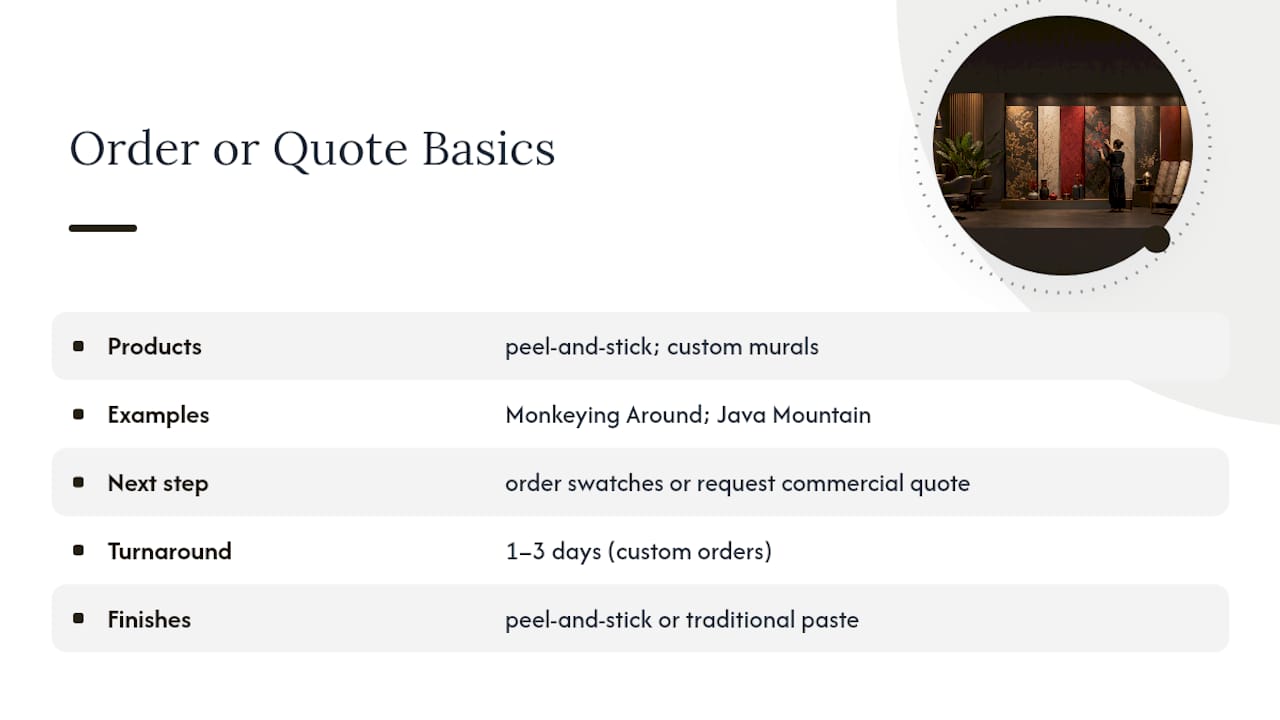
The practical next step is simple: order sample swatches before you commit to a full wall, or request a commercial quote if you’re outfitting multiple stations or a full location. Turnaround runs 1 to 3 days for custom orders, and finishes are available in both peel-and-stick and traditional paste depending on the wall and the install team you have on hand. Browse the full wallpaper and mural collection to compare patterns side by side, and if you’re also planning to drive more bookings once the space is refreshed, salon-focused marketing support is worth a look alongside the design work.
Sources
- Enhance Your Salon’s Ambiance With Trendy Wallpaper Patterns
- Wallpaper for Clinic Waiting Rooms: Calm Design Ideas
FAQ
What wallpaper colors are best for salons?
Soft, botanical tones work best for waiting and reception areas, while bolder, saturated colors suit styling stations where energy and personality matter more than calm.
What is the wallpaper trend for 2026?
Nature-inspired palettes, textured grasscloth-style finishes, and large-scale botanical murals are leading commercial interiors, alongside a continued shift toward peel-and-stick for its fast, low-mess installation.
What kind of wallpaper is trending right now?
Textured wallpapers with tonal, earthy palettes are trending for their dual visual and acoustic benefits, while bold geometric feature walls remain popular for styling stations that want a stronger personality.
What are current salon decor trends?
Salons are pairing washable vinyl or peel-and-stick wallpaper with mixed textures, brand-driven color palettes, and mural-scale feature walls that double as a backdrop for social media content, a shift reflected in current commercial wallpaper pattern guidance.
Should I choose peel-and-stick or traditional paste for my salon?
Peel-and-stick suits smaller feature walls, leased spaces, and frequent rebrands, while traditional paste application gives a more seamless finish for large murals and is worth hiring a professional for.


Leave a comment