

Get 5–15 Years from Peel and Stick Wallpaper: What Homeowners Must Do
Most peel-and-stick wallpaper lasts anywhere from 1 to 15 years, with quality materials on properly prepped walls landing in the 5 to 15 year range. Three factors decide where a project falls on that spectrum: the substrate and adhesive quality, how well the wall was prepped, and the room’s humidity and sunlight exposure. Wallsneedlove builds its removable wallpaper around those variables, and EPA guidance on indoor air quality is worth knowing before you pick an adhesive product for any enclosed room.
TL;DR:
- The longevity of peel-and-stick wallpaper depends heavily on wall preparation and environmental conditions, with a typical lifespan of 5 to 15 years for quality products on properly prepped, stable walls.
- Poor wall prep, textured surfaces, and high humidity or direct sunlight can drastically reduce durability, with failure sometimes occurring within months on low-quality materials or incompatible environments.
- Wall surfaces that are smooth, sealed, painted drywall, especially with a satin or semi-gloss finish, dramatically extend wallpaper life, while textured or unsealed walls hinder adhesion and longevity.
- Using high-quality, heavier substrates like fabric-backed vinyl and choosing products with protective coatings and proper installation can improve lifespan and resist fading or damage.
- Proper installation techniques—including thorough cleaning, waiting for paint to cure, and careful adhesion—are crucial, and maintenance beyond installation primarily involves gentle cleaning and prompt repairs of lifted edges.
Table of Contents
- Peel and Stick Lifespan: What to Actually Expect
- What Peel and Stick Wallpaper Is Actually Made Of
- Which Walls Hold Peel and Stick Wallpaper Longest?
- How Humidity, Heat, and Sunlight Shorten Adhesive Life
- How to Install and Maintain Peel and Stick Wallpaper for Maximum Lifespan
- Signs Your Peel and Stick Wallpaper Is Failing
- Why Wallsneedlove’s Approach to Durability Is Different
- Realistic Expectations Beat Perfect Products
- Ready to Choose Peel and Stick Wallpaper Built to Last?
- Sources
- FAQ
Peel and Stick Lifespan: What to Actually Expect
The 5 to 15 year figure is a real range, not a marketing number, but it hides a lot of variation. Break it into three practical brackets and the picture gets clearer.
Short lifespan (under 1 to 3 years). This bracket usually means one of two things went wrong: cheap material or bad wall prep. Thin paper substrates, weak adhesive, or an installation on textured or unsealed drywall almost guarantees peeling within the first year or two. Angi’s reporting confirms that low-quality products on poorly prepared surfaces can fail within months, well short of a year.
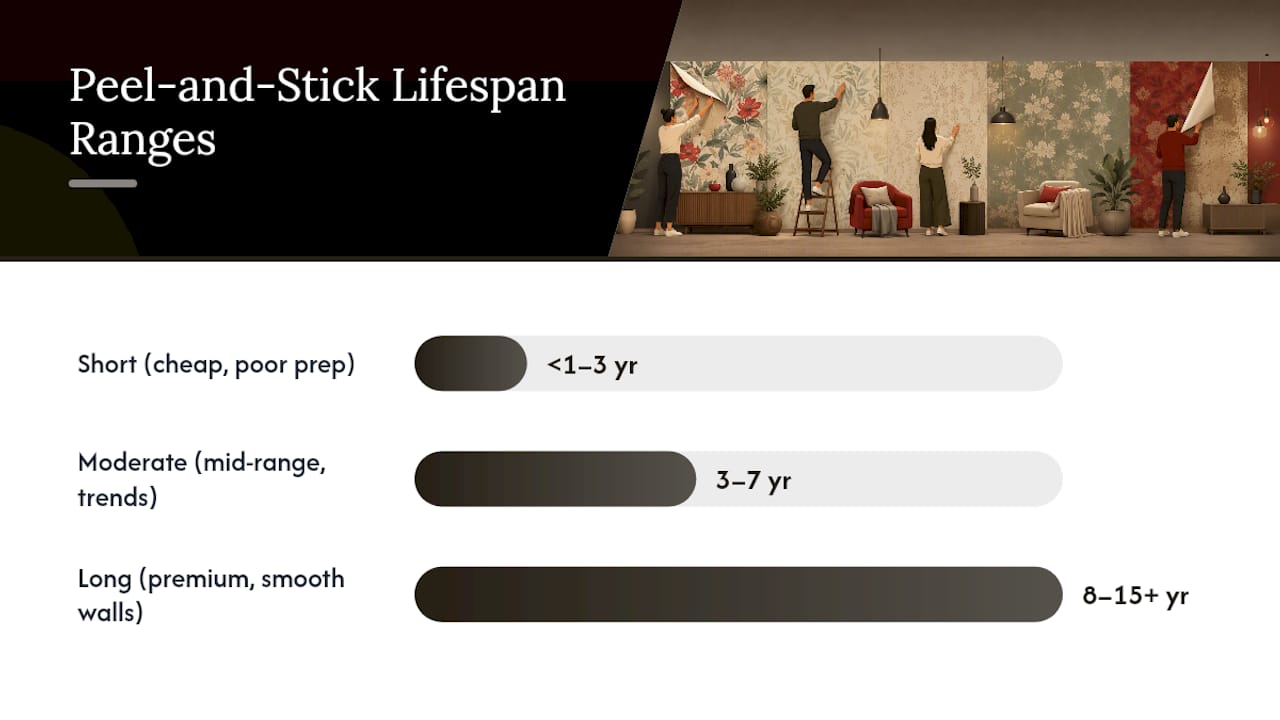
Moderate lifespan (3 to 7 years). This is where most mid-range peel-and-stick projects land. The material holds up, the seams stay tight, but homeowners often replace it here for reasons that have nothing to do with failure. Trends shift. Kids outgrow a mural. A room gets repainted and the old pattern suddenly clashes.
Long lifespan (8 to 15+ years). This bracket belongs to well-made, fabric-backed or vinyl products installed on smooth, properly cured walls in climate-controlled rooms. Some homeowners report installations still holding strong after seven-plus years in stable conditions, and that anecdotal pattern lines up with what manufacturers claim for premium products.
Here’s the distinction that matters most: cosmetic replacement and adhesive failure are two different problems. A wall covering that still adheres perfectly but no longer matches your décor isn’t a durability failure. It’s a style decision. Adhesive failure means the material is lifting, bubbling, or curling away from the wall on its own, regardless of whether you still like the pattern.
That distinction changes expectations depending on who’s asking:
- Renters typically prioritize easy, damage-free removal over multi-year durability, since lease terms often force a change within 1 to 3 years anyway.
- Homeowners planning to stay put can lean toward premium, fabric-backed products built for the 8 to 15 year bracket, since the wall isn’t going anywhere either.
- Accent walls and rental flips often make more sense with mid-tier products, since the room’s purpose or occupant will likely change before the material does.
What Peel and Stick Wallpaper Is Actually Made Of
Peel-and-stick wallpaper durability comes down to two things layered on top of each other: the substrate (the material itself) and the adhesive backing that holds it to the wall. Both matter and skimping on either one shortens the lifespan bracket you land in.
Substrate types fall into three general categories. Removable vinyl is the most common, offering decent durability and washability, though thinner vinyl sheets tend to show seams and can wrinkle during installation. Fabric-backed materials, often a woven or non-woven blend, resist tearing better and lie flatter against minor wall imperfections, which is part of why they tend to land in the longer lifespan bracket. Thin paper substrates are the cheapest option and the most prone to tearing during installation or removal, and they rarely hold up past a couple of years in daily-use rooms.
Pressure-sensitive adhesive (PSA) is the technology behind every “peel and stick” product. Unlike traditional wallpaper paste, PSA is designed to bond on contact and release cleanly without water or heat. That convenience comes with a tradeoff called adhesive fatigue: the tackiness that makes installation easy gradually weakens with repeated exposure to temperature swings, moisture, and time. A wall that gets touched, wiped, or exposed to steam regularly will wear that adhesive down faster than a quiet hallway wall.
Protective coatings separate mid-tier products from premium ones. UV-resistant inks slow the fading that comes from sunlight exposure, and laminate topcoats add scratch resistance and make the surface washable rather than just wipeable. Photodegradation, the process by which UV light breaks down polymer chains, is a real and predictable failure mode. Protective coatings slow it down considerably, but they don’t stop it entirely.
Quick fact: Manufacturer and installer guidance puts well-made peel-and-stick products at 5 to 15 years of reliable performance in stable indoor conditions, with humidity, UV exposure, and poor surface prep cited as the three biggest factors that cut that range short.
When you’re shopping, look for three signals of quality before you check out:
- Weight and thickness (often listed in gsm). Heavier material resists tearing and hides wall imperfections better than thin, flimsy sheets.
- Fabric backing. A woven or non-woven backing generally outlasts pure paper or thin vinyl.
- A cleanability claim or installation warranty. If a brand doesn’t say whether its product is washable, that’s a hint about how confident they are in the coating.
Which Walls Hold Peel and Stick Wallpaper Longest?
The wall matters almost as much as the wallpaper itself. Experts consistently point out that installation technique and surface prep create bigger lifespan differences than the price gap between a mid-tier and premium paper. You can buy the best product on the market and still watch it peel within weeks if the wall underneath isn’t ready.
Ideal surfaces are smooth, sealed, painted drywall with a satin or semi-gloss finish. That sheen matters because it seals the porous surface of flat or matte paint, giving the adhesive something consistent to grip. Freshly painted walls need to fully cure, and properly primed drywall gives peel-and-stick its most reliable bond.
Problem surfaces include textured walls (orange peel, popcorn, brick, shiplap grooves) and porous, unsealed surfaces like raw drywall or matte plaster. Texture creates air gaps behind the material that lead to early lifting at the edges. If you’re dealing with a textured wall, a skim coat or a smooth underlayment board can create a workable surface without a full remodel.
Follow this sequence before you commit to installing anything:
- Wait for paint to cure. Freshly painted walls need three to four weeks to fully cure before peel-and-stick goes up. Installing too early traps uncured paint fumes and weakens the bond.
- Clean thoroughly. Wipe the wall with isopropyl alcohol to remove dust, grease, and residue that block adhesion.
- Inspect for texture and imperfections. Run a hand across the wall. Any bumps, cracks, or rough patches need to be addressed before installation, not after.
- Decide whether to prime. Bare drywall, matte paint, or a wall that’s been patched recently usually benefits from a light primer coat to even out absorbency.
- Skip installation on wallpaper over wallpaper, unsealed wood paneling, or brick. These surfaces almost never hold peel-and-stick long term without significant remediation first.
Pro Tip: Test a small sample piece in an inconspicuous corner and leave it for 24 to 48 hours before committing to the full wall. If it lifts at the edges that quickly, the surface needs more prep, not a different pattern.
How Humidity, Heat, and Sunlight Shorten Adhesive Life
Environment plays a bigger role in peel and stick wallpaper durability than most people expect walking into a project. The same product installed in two different rooms of the same house can age at completely different rates.
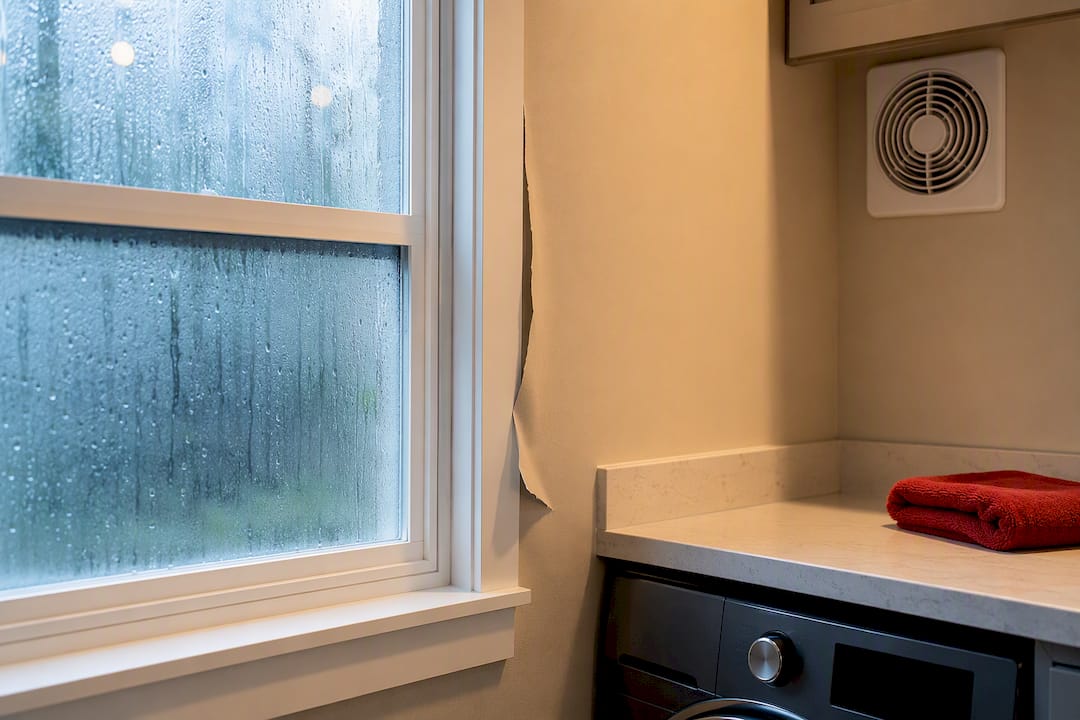
Humidity and moisture are the fastest way to shorten adhesive life, which is why understanding the Master Bathroom Wall Tile Workflow for Elegance can be crucial when selecting peel-and-stick wallpaper for wet environments. Steam from showers, condensation around windows, and general dampness weaken the pressure-sensitive bond over time, which is why bathrooms and laundry rooms see the highest failure rates. Moisture-resistant, vinyl-based products with sealed edges hold up better in these rooms than paper-based options, but no peel-and-stick material is fully immune to sustained steam exposure. If you’re set on a bathroom install, a moisture-tolerant pattern designed for wet rooms is a smarter starting point than a standard product.
Temperature swings matter more than people realize. Repeated cycles of expansion and contraction, common in sunrooms, garages, or poorly insulated walls, gradually fatigue the adhesive’s polymer structure. A stable, climate-controlled room is one of the biggest reasons some installations exceed conservative lifespan estimates.
UV exposure causes two separate problems: fading and physical breakdown. Photodegradation breaks down polymer chains under sunlight, and protective UV-resistant inks slow this process without eliminating it. South-facing rooms with heavy direct sunlight will show fading years before a shaded hallway with the same product.
Here’s how that plays out room by room:
- Best rooms: bedrooms, hallways, home offices, and living rooms with indirect light and stable temperatures.
- Moderate-risk rooms: kitchens (grease and occasional steam) and sunrooms (heat and UV combined).
- Highest-risk rooms: bathrooms with poor ventilation, laundry rooms, and any space with direct, unfiltered sunlight for most of the day.
Quick fact: Trade and consumer reporting consistently names humidity, UV exposure, and surface prep as the three biggest variables separating a wallpaper that lasts years from one that fails in months, regardless of price point.
How to Install and Maintain Peel and Stick Wallpaper for Maximum Lifespan
Good installation habits do more for peel and stick wallpaper durability than any single product upgrade. Follow this sequence from prep through long-term care.
Before you start:
- Measure your wall dimensions carefully and order slightly more material than the bare minimum to account for pattern matching and trimming.
- Confirm painted walls have cured for three to four weeks before installation begins.
- Clean the surface with isopropyl alcohol and let it fully dry.
- Repair any dents, cracks, or rough patches with spackle and let it dry completely before wiping down again.
During installation:
- Start from a level, plumb line rather than a corner, since most rooms aren’t perfectly square.
- Peel the backing away gradually, a few inches at a time, rather than removing it all at once. This gives you control over alignment and prevents the sheet from sticking to itself.
- Use a smoothing tool or squeegee in overlapping strokes from the center outward to push out air bubbles as you go.
- Trim excess material at edges and outlets with a sharp utility knife rather than scissors for a cleaner line.
- Press seams firmly with the squeegee or a seam roller to eliminate any lifting edges before the adhesive fully sets.
After installation, ongoing maintenance:
Clean washable peel-and-stick wallpaper with a soft sponge and mild soap and water, wiping gently rather than scrubbing. Avoid steam cleaners, abrasive sponges, and harsh chemical cleaners, all of which degrade both the print surface and the underlying adhesive faster than normal wear would. In humid rooms, run a fan or dehumidifier when possible to reduce the moisture load on the adhesive over time.
Small repairs go a long way. A lifted corner doesn’t mean the whole project has failed. Lift the loose section carefully, clean any dust or debris underneath, and press it back down with the squeegee. If the original adhesive has lost its tack, a small amount of clear seam adhesive, sold specifically for wallpaper repairs, will re-secure it without leaving visible residue. Persistent lifting across multiple seams, though, usually signals it’s time to replace that section rather than keep patching it.
Pro Tip: Keep a small offcut from your original roll in a drawer. If a corner ever lifts for good, you’ll have an exact pattern match ready for a quick patch instead of hunting down a discontinued print.
Signs Your Peel and Stick Wallpaper Is Failing
Catching adhesive failure early makes removal easier and protects the wall underneath. Watch for these signs:
- Bubbling or air pockets that weren’t there at installation, especially ones that grow over time rather than staying static.
- Edge lift, where corners or seams start curling away from the wall on their own.
- Color change or fading, particularly in direct sunlight, which signals UV breakdown of the print layer.
- Visible adhesive residue left behind when you press on a lifted section, a sign the PSA is breaking down rather than just losing its grip temporarily.
- Musty smell or discoloration behind a lifted edge, which can indicate trapped moisture and, in worse cases, mold growth. If you spot this, peel back a larger section to inspect the wall directly rather than covering it back up.
For safe removal, work slowly at a steady, low angle rather than yanking the material straight off the wall. A hair dryer on low heat aimed at the adhesive for a few seconds at a time softens the bond and makes the peel much cleaner. Any leftover residue usually comes off with warm soapy water and a soft cloth. If you find significant paint damage, heavy adhesive buildup, or signs of mold behind the panel, that’s the point to call in a professional rather than continuing on your own. Persistent adhesion problems during the original install are also worth troubleshooting against common causes of wallpaper not sticking before assuming the product itself is at fault.
Why Wallsneedlove’s Approach to Durability Is Different
Wallsneedlove designs its peel-and-stick wallpaper and murals around the same variables covered throughout this guide: material quality, adhesive performance, and installation support. Custom orders are designed to address indoor air quality concerns related to VOCs in adhesive-backed products. Custom designs are produced with a focus on quick turnaround times to facilitate room planning.
Wallsneedlove’s own installation and lifespan guide walks through the same prep and maintenance principles detailed in this article, tailored to its own material line. For readers tackling trickier surfaces, the textured wall guide and priming guide go deeper into remediation options before you commit to a full room.
Realistic Expectations Beat Perfect Products
The biggest gap in most peel-and-stick advice is that it treats the product as the whole story. It isn’t. A $40 roll installed on a cured, primed wall in a climate-controlled bedroom will outlast a premium product slapped onto a humid, textured bathroom wall. That’s not a popular thing to admit when you’re trying to sell wallpaper, but it’s the honest read of how these materials actually behave.
Conventional advice also tends to treat replacement as failure. It usually isn’t. Most peel-and-stick projects come down years before the adhesive gives out, because tastes change or a room gets repurposed. That’s a feature of removable wallpaper, not a flaw, and homeowners chasing a 15 year lifespan on an accent wall they’ll want to change in three years are optimizing for the wrong number.
If you take one thing from this guide, prioritize the wall over the wallpaper. Clean it, cure the paint, address texture, and pick a room with stable humidity before you spend a single extra dollar upgrading the print itself.
— WallsNeedLove
Ready to Choose Peel and Stick Wallpaper Built to Last?
Certain peel-and-stick wallpaper collections are designed for smooth-prepped walls and stable rooms, suitable for homeowners seeking durable prints without professional installation. Designs are offered with attention to indoor air quality standards and produced with an emphasis on timely fulfillment, balancing style and durability.

Browse patterns like the playful Monkeying Around mural for a kids’ room or a geometric option like Pixel Diamonds for a home office accent wall. Measure your space, check the surface against the prep steps above, and place your order when you’re ready to see it on your wall in days, not weeks.
Sources
- What are volatile organic compounds (VOCs)? | US EPA
- How Long Does Peel and Stick Wallpaper Last? | Edward Martin
- Does peel-and-stick wallpaper actually last? | Martha Stewart
- Photodegradation | ScienceDirect Topics
- How long does peel-and-stick wallpaper last? | Angi
FAQ
How long does peel and stick wallpaper actually last?
Most peel-and-stick wallpaper lasts 5 to 15 years when it’s a quality product installed on a smooth, properly prepared wall in a stable room. Cheap materials or poor prep can cause failure within months.
What is the downside to peel and stick wallpaper?
Its biggest weakness is sensitivity to surface and environment: textured or unsealed walls, high humidity, and direct sunlight all shorten its lifespan considerably compared to smooth, climate-controlled rooms.
Can mold grow behind peel and stick wallpaper?
Yes, if moisture gets trapped behind the material, usually in humid rooms with poor ventilation or where the wall wasn’t fully dry before installation. A musty smell or discoloration at a lifted edge is a sign to inspect behind the panel right away.
Does peel and stick wallpaper come off easily?
Quality peel-and-stick is designed to remove cleanly without damaging paint or drywall, especially when removed slowly at a low angle with a little heat from a hair dryer to soften the adhesive. Cheaper products or ones left up for many years can leave more residue behind.


Leave a comment