
Stop Reprints: Logo Wall Mural Design Checklist for Buyers
For most commercial spaces, a custom printed background paired with a dimensional or printed logo overlay gives the best mix of visual impact, durability, and cost. Removable decal logos, full-bleed printed logo murals, and backlit logo signs are solid alternatives depending on lease terms and budget. Before quoting anything, gather your vector logo files, measure the wall, and pick a base material.
TL;DR:
- Peel-and-stick materials are ideal for rentals and short-term branding, while acrylic and aluminum are more suitable for high-traffic, long-term installations.
- Logo size should be scaled according to viewing distance, with 36 to 48 inches wide for entry walls and up to several feet for reception areas to ensure visibility.
- Most custom murals can be produced faster than traditional sign shops, but costs vary widely based on size, material, and complexity, so clear scope and hardware details are essential.
- Accurate wall measurements, vector logo files, and preferred finish options are critical for a smooth ordering process and to avoid costly reprints or delays.
- Fire-rated, low-VOC, and Greenguard Gold certified materials should be prioritized to meet safety standards and indoor air quality requirements.
Table of Contents
- Logo Wall Mural Design Approaches: Which One Fits Your Space?
- What Materials Work Best for a Logo Wall Mural?
- How Big Should a Logo Be on a Wall?
- What Files Do You Need Before Ordering a Custom Wall Mural?
- Installation and Upkeep: What to Expect After the Mural Arrives
- How Much Does a Logo Wall Mural Cost, and How Long Does It Take?
- Logo Wall Design Ideas Worth Adapting
- What Business Owners Get Wrong About Logo Walls
- Ready to Design Your Logo Wall Mural?
- Sources
- FAQ
Logo Wall Mural Design Approaches: Which One Fits Your Space?
Three approaches cover most commercial logo wall projects, and each solves a different problem.
A full-bleed mural with a centered logo turns the entire wall into branded art, with the logo sitting inside a larger printed scene, texture, or color field. It reads well from a distance and photographs beautifully for social media, since logo walls double as backdrops that visitors and employees photograph and share. A logo accent wall is simpler: a single flat color or subtle pattern with the logo as the sole focal point, better suited to conference rooms or corridors where you want branding without visual noise. A dimensional logo mounted over a printed background adds raised letters or a cut logo in acrylic, metal, or wood on top of a mural, creating shadow and depth that a flat print cannot match.
For leased spaces, peel-and-stick decals and removable fabric panels let you brand a wall without violating a lease agreement, and they come down cleanly at move-out. Illuminated or interactive elements, like backlit channel letters or LED-edge halos, work best in lobbies with high foot traffic where legibility and a premium feel matter more than budget.
- Full-bleed mural: highest visual impact, moderate cost, best for lobbies and entryways
- Accent wall: lowest cost, cleanest look, best for corridors and meeting rooms
- Dimensional overlay: highest perceived value, requires mounting hardware, best for reception areas
Pro Tip: If you’re renting your space, ask your landlord about wall modification clauses before ordering anything permanent. Peel-and-stick materials sidestep the issue entirely.
What Materials Work Best for a Logo Wall Mural?
Material choice depends on foot traffic, budget, and how long you plan to keep the design up.
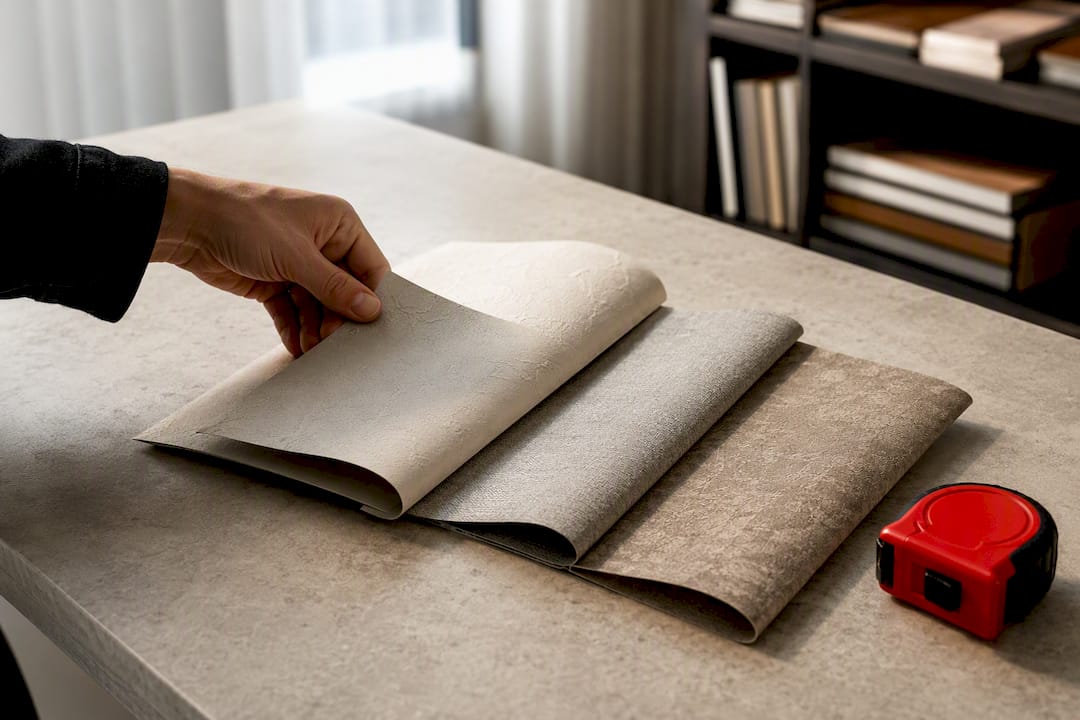
Peel-and-stick removable wallpaper suits tenants and short-term installs. Commercial-grade vinyl holds up in high-traffic hallways and costs less than fabric options. Dye-sublimation fabric and acoustic fabric murals produce seamless large-format prints and can double as sound dampening in open-plan offices, a real advantage when acoustic murals handle branding and noise control together. Laminated finishes add scratch resistance for lobbies and reception desks that see constant contact.
For dimensional logos, acrylic and aluminum tend to outperform vinyl decals in high-traffic areas, while vinyl remains the cheaper, shorter-term option. Wood and preserved moss letters bring warmth to hospitality or wellness brands but need more upkeep than metal or acrylic.
- Peel-and-stick wallpaper: tenant-friendly, easiest to remove, moderate durability
- Commercial vinyl: budget-friendly, good for corridors, moderate lifespan
- Dye-sublimation and acoustic fabric: premium finish, sound-dampening bonus, higher cost
- Acrylic, metal, or wood dimensional letters: highest visual weight, best for entry statements
Fire rating matters more than most buyers expect. Commercial acoustic murals are often available with Class A fire-rated materials, and low-VOC or Greenguard Gold certified inks reduce indoor air quality concerns, a standard worth confirming with any vendor before signing off. See our guide to branded wall murals for offices for a deeper material breakdown.
How Big Should a Logo Be on a Wall?
Logo size should scale to viewing distance, not to the wall’s total square footage. A logo that looks right on a screen often reads as tiny once it’s fifteen feet up a lobby wall.
- Small entry walls (viewed from 3 to 8 feet): aim for a logo roughly 36 to 48 inches wide, following sizing guidance based on typical entryway distances.
- Lobbies and reception areas (viewed from 10 to 20 feet): scale up to several feet wide depending on ceiling height and wall width.
- Long corridors (viewed in passing): keep logos modest and repeat them at intervals rather than sizing one oversized mark.
- Meeting rooms (viewed from a seated position, 6 to 12 feet): a mid-size logo, 24 to 40 inches, avoids overwhelming a room used for video calls.
Balance the logo against its background. A mark that’s too small gets lost in a busy mural; one that’s too large crowds out any texture or color that gives the wall visual interest. If your space serves as a photo backdrop for events or social content, position the logo where natural light hits it evenly, avoiding glare from overhead fixtures. Where raised or tactile lettering is used near entrances, confirm placement doesn’t obstruct required clearances under ADA accessibility guidelines.
What Files Do You Need Before Ordering a Custom Wall Mural?
Getting file specs right the first time saves you a reprint and a delayed install.
- Logo files: vector formats only (AI, EPS, or outlined PDF), with exact Pantone and RGB values specified so colors print consistently across materials.
- Background artwork: raster files at 150 to 300 DPI at final print size, saved as high-resolution TIFF or PDF.
- Color mode: CMYK for most print processes, confirmed with your production partner before final files are locked.
- Multi-panel murals: build in overlap or bleed at panel seams, typically an extra half inch to inch per edge, and keep critical logo elements out of the seam zone entirely.
- Safe zones: keep text and logo edges at least 2 inches from any panel break or wall corner.
Most vendors will send a 2D digital mockup for approval, and proofing before production catches color or scale issues before they become expensive reprints. Ask for a physical material sample if you’re unsure how a finish will look under your specific lighting.
Pro Tip: If your logo has never been output as a vector file, ask your original designer for the source file rather than recreating it. A rebuilt logo from a low-res image rarely matches the original exactly.
For a full handoff checklist, our guide to specifying custom murals walks through what to send a production partner.
Installation and Upkeep: What to Expect After the Mural Arrives
Peel-and-stick materials are designed for self-install, and most teams can hang a standard wall in an afternoon without hiring a contractor. Paste-up murals, tensioned fabric systems, and dimensional logo overlays generally call for a professional installer, especially on textured or uneven walls.
Silicone Edge Graphic frames are worth considering if you want a display you can update seasonally. SEG systems use a tensioned fabric print that tucks into an aluminum frame, giving a wrinkle-free finish with clean edges, and letting you swap graphics without replacing hardware.
- Standoffs: hold dimensional letters slightly off the wall, creating a shadow gap that reads well under angled lighting.
- Z-clips: conceal mounting hardware for a flush, seamless look on panel-based logos.
- Magnetic panels: allow toolless removal, useful for temporary branding or trade show walls.
Wipe fabric and vinyl murals with a soft, damp cloth on a regular schedule, and check dimensional mounting hardware annually for loosening. Confirm fire-rating documentation stays on file if your building inspector requests it later.
How Much Does a Logo Wall Mural Cost, and How Long Does It Take?
Costs vary widely by size and material. A basic vinyl decal logo on an accent wall runs at the low end of the spectrum. A full custom mural with a dimensional logo overlay costs considerably more, and illuminated or living-wall installations sit at the top of the range once you add electrical work or living plant maintenance.
Several factors push cost up: overall size, the number of dimensional elements, site prep on uneven or textured walls, and any permits required for electrical or structural mounting. Turnaround windows depend on complexity, with peel-and-stick murals typically moving faster through production than multi-panel or dimensional builds.
- Confirm whether the quote includes installation or materials only
- Ask about lead time for proofing, printing, and shipping separately
- Get a written breakdown of dimensional hardware costs if applicable
- Clarify what happens if wall measurements change after ordering
A strong entryway brand does more than decorate a lobby. Well-designed logo walls are linked to improved visitor trust and stronger employee engagement, which is worth factoring into the budget conversation, not just the aesthetic one.
Logo Wall Design Ideas Worth Adapting
- Centered logo on textured background: a subtle woodgrain or concrete-print backdrop keeps focus on the mark without competing for attention.
- Tonal logo on photography: a monochrome logo overlaid on a full-color photo mural, ideal for brands with strong imagery.
- Illuminated halo lettering: backlit channel letters for a premium, high-visibility entrance statement.
- Vertical stacked logo: works well in narrow corridors or elevator lobbies where width is limited.
- Partial-coverage decals: logo elements scattered across a wall rather than one central mark, good for playful or creative office cultures.
- Social-media photo wall: a mural designed specifically for the angle and lighting of phone cameras, framed for tagging and sharing.
Budget and permanence scale together here: textured backgrounds and decals sit at the affordable, temporary end, while illuminated halos and dimensional stacked logos require more investment and installation time. For layout ideas suited to shared or multi-use spaces, see our guide to wall murals in event venues.
What Business Owners Get Wrong About Logo Walls
Most clients ask for three things: fast turnaround, low-VOC materials, and clear installation instructions, and those priorities usually shape the whole project. The most common mistake is undersizing the logo for the room’s actual sightlines, followed closely by poor lighting that flattens a dimensional overlay. Fix both before you finalize files, not after installation.
— WallsNeedLove
Ready to Design Your Logo Wall Mural?
Logo murals are printed to order, with most custom jobs completed quickly, often faster than traditional sign shops that may take weeks. You get peel-and-stick or paste options, Greenguard Gold certified inks, and installation guides written for both DIY teams and hired installers.
Before requesting a quote, gather three things: exact wall measurements, your logo in vector format, and a preferred finish (peel-and-stick for leased spaces, paste for permanent installs). From there, browse Custom Wall Murals to upload your files and get started, or check the Wall Murals collection for standard sizing options that can be adapted with your branding. If you’re weighing dimensional wood elements alongside your printed background, dimensional wood wall treatments are worth a look for texture and depth.
FAQ
How Can I Create My Own Wall Mural?
Start with a vector version of your logo, measure your wall, choose a material based on traffic and lease terms, then send both to a mural printer for a proof before production.
How Do You Get a Logo on a Wall?
Logos can be printed directly into a mural, cut as a dimensional overlay in acrylic or metal, or applied as a standalone removable decal, depending on your budget and how permanent you want the install.
What Is the Average Cost of a Wall Mural?
Costs range from budget-friendly vinyl decals to higher-end dimensional or illuminated logo installs, with size, material, and site prep driving most of the difference. Wallsneedlove’s current pricing for custom murals is available directly on its Custom Wall Murals page.
What Are Some Creative Wall Mural Ideas?
Tonal logos over photography, illuminated halo lettering, and vertical stacked logos for narrow spaces all work well, along with partial-coverage decals for a more playful brand feel.


Leave a comment