

Ready in Days: School Mural Ideas for Teachers and Administrators
This article gives you a curated set of school-ready mural ideas, sorted by space and purpose, plus the exact steps to plan, budget, and execute one with students or a contractor. It covers classrooms, libraries, hallways, stairs, outdoor walls, and printed mural alternatives for schools that need speed or durability. Pick an idea below, then jump to the planning section for materials, timeline, and cost.
TL;DR:
- Murals that reinforce curriculum or school values, like STEM timelines or community mosaics, promote long-term engagement and student ownership.
- Using printed or peel-and-stick murals can dramatically reduce installation time and avoid hallway closures, especially for high-traffic areas or short timelines.
- Regular maintenance, including touch-ups and inclusive design features, is essential to ensure murals remain vibrant and durable over several years.
- Structuring mural projects with clear roles, proper surface prep, and protective measures improves quality and longevity, whether painted or printed.
- Obtaining district approval and selecting a location that aligns with daily routines maximizes the mural’s impact and relevance.
Table of Contents
- School Mural Ideas by Space and Purpose
- How to Plan and Run a School Mural Project
- Painted Projects vs. Printed Murals: What Schools Should Weigh
- What Actually Makes a School Mural Last
- A Practical Option When Painting Isn’t Realistic
- Sources
- FAQ
School Mural Ideas by Space and Purpose
Good classroom mural ideas connect to something the school already values: reading, curiosity, identity, or a subject area. The best library mural ideas and hallway concepts do double duty as both decoration and daily teaching tool. Below is a working list organized by location, each with a low-effort execution option and a higher-impact alternative.
Library and reading corner ideas
- Genre map mural. A stylized map where each “region” represents a book genre (mystery forest, sci-fi galaxy, historical village). Low effort: painted outline with student-colored sections. High impact: full wall printed mural with laminate coating for durability.
- Book-spine stair risers. Printed or painted spines climb the stairs, organized by genre, so kids can spot categories on their way up. This works especially well when it pairs with genre shelving directly below, turning a passive display into a wayfinding tool.
- Favorite book characters wall. Rotating cast of characters chosen by student vote each year. Low effort: painted silhouettes updated annually. High impact: removable wallpaper panels swapped out without repainting.
- Wonder wall. A stable painted or printed background with a running strip for sticky notes or laminated question cards that changes weekly. Keeping the base artwork fixed and the interactive layer removable is what makes a wonder wall sustainable over years rather than a one-time install.
- Reading nook sky mural. Clouds, constellations, or a canopy of leaves painted above a low-key reading corner, using soft colors that don’t compete with book covers.
Classroom subject-area ideas
- STEM timeline wall. A horizontal mural tracking scientific milestones, useful in upper elementary and middle school science rooms. Low effort: printed timeline banner. High impact: painted mural with removable date markers students update.
- World map with pinned projects. A large map where classes pin current-events stories or pen pal locations. Works as classroom wall art and a living geography lesson at once.
- Math concepts visual wall. Fractions, geometry, or number lines rendered as art rather than worksheets, giving struggling students a visual anchor.
- Process and draft wall. Instead of finished-only student art, display sketches, edits, and revisions side by side. This kind of display supports a growth mindset better than a polished, slogan-only mural because it normalizes revision as part of learning.
- Class values mural. Words like “kindness” or “curiosity” illustrated by student-designed icons, refreshed each school year.
Hallway and corridor ideas
- Historical timeline corridor: decades or centuries marching down a long hallway, tied to social studies curriculum.
- Local heroes and leaders wall: portraits of community figures, town founders, or notable alumni.
- Diversity and inclusion mosaic: tile or painted mosaic representing student cultures, languages, or family origins.
- Science-of-nature corridor: a food web, water cycle, or ecosystem mural stretching along a science wing.
- Student art gallery frame system: painted “frames” on the wall that rotate real student artwork inside them.
Stair risers and small spaces
Stair risers are a favorite because the mural is bite-sized. Book-spine risers, piano-key risers outside a music room, or a step-by-step growth chart (seedling to tree) all fit naturally on riser height. Any mural in a stairwell needs slip-compliant, low-gloss finishes rather than smooth glossy paint, since traction matters more than shine on a walking surface.
Outdoor walls and sensory spaces
- Playground mural of a giant board game or hopscotch path that doubles as active play.
- Sensory garden wall with tactile elements (textured tiles, raised shapes) for students with sensory needs.
- Counseling office calm-down mural, using muted colors and simple nature scenes rather than busy patterns.
- Outdoor “kindness rock” wall where painted stones get added by students over time.
Across every category, build in accessibility from the start: high-contrast color pairs, large lettering for any text, and tactile elements where budget allows. A mural that only works visually excludes part of the student body it’s meant to serve.
How to Plan and Run a School Mural Project
Every successful mural starts before anyone picks up a brush. Follow this sequence:
- Get sign-off first. Clear the concept with the principal, facilities staff, and, for anything visible from outside, the district. Confirm which wall, what surface, and what budget line covers it.
- Pick a location that earns its wall. A hallway everyone walks past daily beats a rarely used corner, especially for identity or values murals.
- Tie it to curriculum or culture. Murals that reinforce something the school already teaches, rather than existing as decoration, get more long-term engagement.
- Set a realistic timeline and budget. A single classroom accent wall can happen in a weekend. A full hallway or library mural with PTA volunteers usually takes several weeks. A professionally installed, full-immersion project can run months from design approval to install.
- Choose your technique. Project the design onto the wall and trace the outline, then have students paint one color at a time across the entire mural rather than section by section. This keeps a mixed-age group working in parallel instead of bottlenecked on one small area, according to The Art of Education’s guide on student murals. Some teachers use a butcher-paper tracing method as a low-tech alternative to projection when equipment isn’t available.
- Assign roles by grade. Younger students fill in traced sections with one color; older students handle line work, tile-making, or documentation with photos for a project journal. Always keep an adult on quality control near edges and detail work.
- Protect the space. Lay drop cloths, mark off edges with tape, and keep a wet-wipe station nearby for spills.
Pro Tip: Assign one student per grade level as the “color captain” who checks that everyone finished their assigned color before the group moves to the next one. It keeps the project from stalling on a slow section.
For materials, interior latex paint with a scuff-resistant topcoat holds up best in hallways and stairwells. Printed peel-and-stick murals are worth considering anywhere classroom downtime is tight. Funding often comes from PTA grants, local arts councils, or a bake-sale-style fundraiser tied to the reveal event.
Painted Projects vs. Printed Murals: What Schools Should Weigh
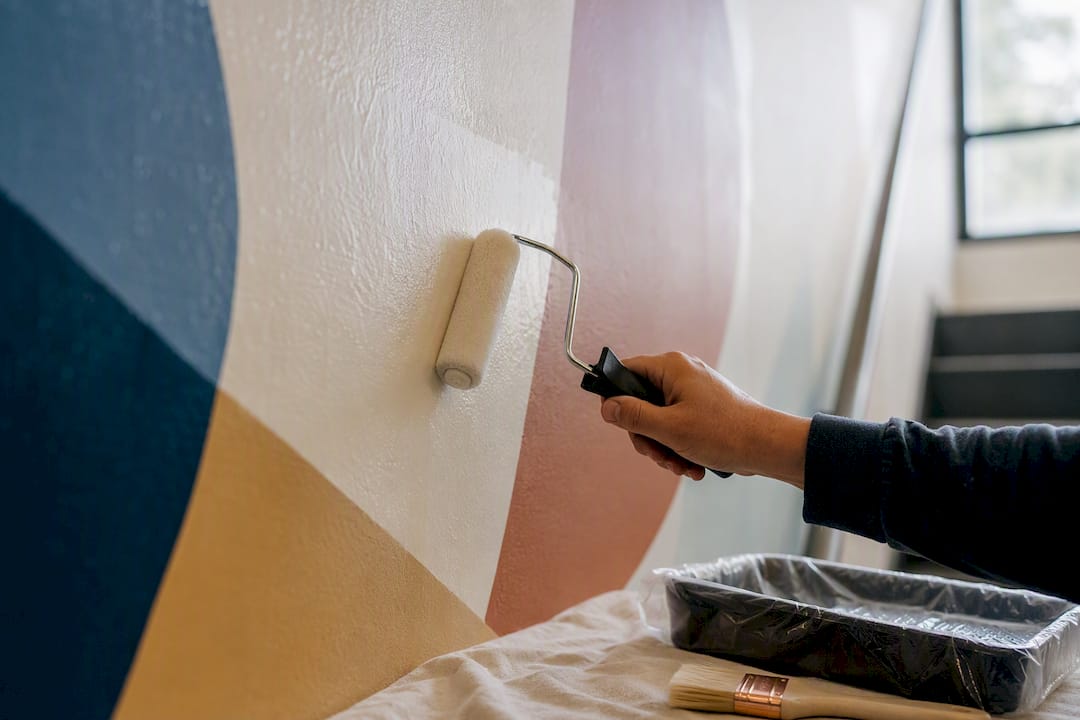
A hand-painted mural builds ownership. Watching students design and paint their own hallway increases respect for the space and improves behavior in areas that used to cause problems. But painting takes time, ties up a wall for weeks, and needs annual touch-ups in high-traffic zones.
Printed and peel-and-stick murals trade some of that hands-on process for speed and durability:
- Custom-printed murals arrive sized to the exact wall, so there’s no guesswork on scale.
- Peel-and-stick removable wallpaper installs without wet paint, letting a library or hallway go back into use the same day, which matters when minimizing classroom downtime is the priority.
- Traditional paste installations suit larger, permanent hallway or library walls where a contractor handles the job.
Installation guides for DIY and professional application, covering panel alignment and surface prep, are available for schools weighing either route.
What Actually Makes a School Mural Last
A mural earns its wall space when it supports a learning goal or strengthens community identity, not when it’s just filling blank paint. Schools that skip maintenance planning end up with a chipped, dated image within two years. Build in a touch-up budget and an inclusive design pass (contrast, text size, tactile options) before the first coat goes on, not after someone complains.
— WallsNeedLove
A Practical Option When Painting Isn’t Realistic
Not every school has a free wall for six weeks or a PTA crew ready to volunteer. There are options for schools to get full-scale, custom-sized murals installed in days instead of weeks, without wet paint, drop cloths, or a hallway closed off during school hours.

Custom-printed murals can arrive sized to the exact wall, in peel-and-stick or traditional paste forms, with finishes designed to hold up against backpacks, rolling carts, and daily hallway traffic. That durability matters most in stairwells and corridors, the same high-wear spots where painted finishes chip fastest. Schools that need a library reading wall wrapped over a weekend, or a stairwell risers project done without shutting down the stairs, get a faster path to the same visual impact a painted mural delivers. Installation guides are provided to assist facilities staff or contractors with panel alignment and surface prep.
Browse the wall mural collection to see finish and size options, or start a custom mural project built to your school’s exact wall dimensions.
Sources
- How to create a successful mural with younger students | The Art of Education
- 33 Incredible School Mural Ideas To Inspire You | We Are Teachers
FAQ
What are some creative ideas for classroom murals?
Genre maps, book-spine stair risers, STEM timelines, and class-values walls illustrated with student-designed icons all work well because they tie decoration to something the classroom already teaches.
What are some creative mural ideas beyond typical designs?
Process walls that show drafts and revisions instead of only finished art, wonder walls with a removable question layer, and community mosaics built from student-contributed tiles all push past standard mural formats.
How much do school murals cost?
Costs vary widely by scale and method: a weekend classroom accent wall costs far less than a professionally installed, full hallway mural. Wallsneedlove’s custom and peel-and-stick mural pricing is available directly on its wall mural pages.
How do you create a mural with students?
Project the design onto the wall, trace the outline, then have students paint one color at a time across the whole mural rather than one section at a time, which keeps mixed-age groups working without bottlenecks.
Do school murals need special permission?
Yes. Get sign-off from school leadership and facilities staff before starting, and check district rules for anything visible from outside the building.


Leave a comment