

Yes, Class A Fire Rated Wallpaper Exists for U.S. Buyers
Yes, Class A (Class 1) fire rated wallcoverings exist and are sold in the U.S. today. The rating means a product met the ASTM E84 threshold for low flame spread when tested in a lab, and it shows up constantly in commercial specs and increasingly in residential projects. Building codes referencing NFPA and the IBC lean on this exact test. Some manufacturers pair it with Greenguard certification for indoor air quality.
TL;DR:
- Class A wallcoverings have an flame spread index of 25 or below and a smoke index usually under 450, but they are still combustible.
- The ASTM E84 test measures flame spread and smoke production, serving as the basis for NFPA and IBC fire classification standards.
- Verification of a Class A claim requires reviewing a proper lab report, matching the SKU, and checking for third-party certifications like Greenguard Gold.
- Fire ratings depend heavily on correct installation, including adhesive choice, substrate, and adherence to specified cure times.
- Building code requirements for fire-rated wallcoverings apply mainly to commercial or multi-occupant spaces, not typical residential interiors.
Table of Contents
- What Class A Fire Rated Wallpaper Actually Means
- How ASTM E84 Testing Works and Why Codes Reference It
- How Different Wallpaper Materials Handle Fire
- Verifying a Manufacturer’s Class A Claim
- Where Building Codes Require Class A Wallcoverings
- Buying and Installing Class A Wallpaper the Right Way
- Our Take on Fire Rated Wallcoverings
- Get a Sample Before You Commit to a Full Room
- Where to Verify These Standards Yourself
- Sources
What Class A Fire Rated Wallpaper Actually Means
Class A, sometimes labeled Class 1 on older spec sheets, is a performance grade, not a brand name or a marketing flourish. It corresponds to a Flame Spread Index (FSI) of 25 or below, measured against a scale where untreated red oak flooring sits at 100. A lower number means the material resists spreading flame across its surface more slowly than materials with higher scores. Smoke output matters too. The Steiner tunnel test that produces the FSI also generates a Smoke Developed Index (SDI), and most Class A products keep that number under 450.
You’ll see the label written a few different ways on product pages: “Class A fire rated,” “ASTM E84 Class 1,” or “meets Class A fire code.” They all point to the same underlying test result. What Class A does not mean is noncombustible or fireproof. A rated wallcovering will still burn under sustained flame exposure; it just resists ignition and spread more effectively than lower classes. That distinction trips up a lot of buyers who assume “fire rated” means “won’t burn.”
How ASTM E84 Testing Works and Why Codes Reference It
The Steiner tunnel test is the industry’s standard method for measuring how a material reacts to fire, and it’s been the backbone of American wallcovering classification for decades. A sample gets mounted inside a horizontal tunnel furnace, exposed to a controlled gas flame at one end, and observed as flame travels across its surface over ten minutes. Two numbers come out of that test: FSI, which tracks how far and fast flame spreads, and SDI, which measures smoke density.
Class A/Class 1 requires an FSI of 0 to 25, with SDI typically expected below 450. Class B allows FSI up to 75, and Class C stretches to 200. This is why smoke matters as much as flame in real fire scenarios. Most fire deaths result from smoke inhalation rather than direct burns, which is part of why code officials weigh both numbers rather than flame spread alone.
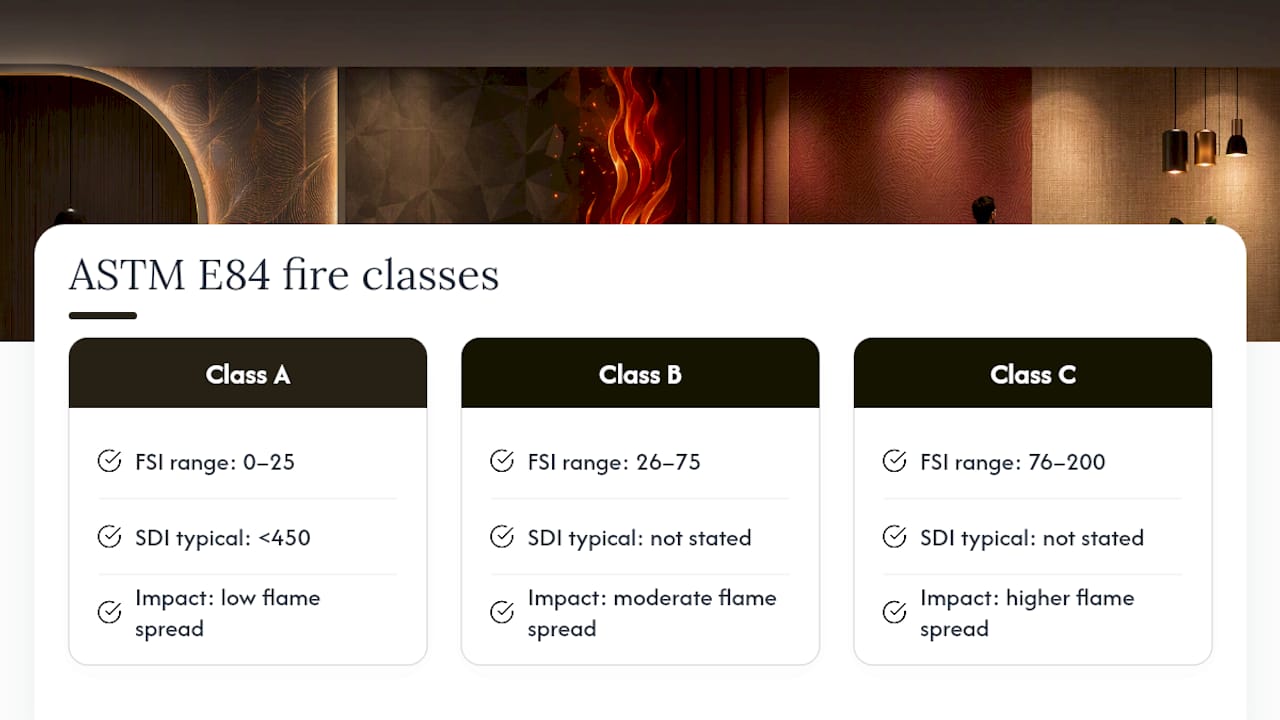
The NFPA and the International Building Code both point back to ASTM E84 (or the closely related NFPA 286) when defining reaction-to-fire requirements for interior finishes. That’s why a spec sheet that lists “ASTM E84 Class A” isn’t just marketing shorthand. It’s the specific test a building inspector or fire marshal will ask about.
How Different Wallpaper Materials Handle Fire
Not every wallcovering construction performs the same way in a Steiner tunnel, and knowing the categories helps you shop smarter.
- Peel-and-stick wallpaper: Popular for its easy installation and removability. Many peel-and-stick products can achieve Class A, but performance varies significantly by manufacturer and backing material, so verification matters more here than anywhere else.
- Type I commercial wallcovering: Lightweight vinyl, generally used in lower-traffic commercial areas. Often meets Class A, though thinner facestocks sometimes fall short without a fire-retardant backing.
- Type II commercial wallcovering: Heavier-duty vinyl built for high-traffic corridors and public spaces. This category commonly meets Class A and is the default choice for many architects specifying commercial interiors.
- Non-woven wallpaper: A blend of natural and synthetic fibers, breathable and easier to remove than solid vinyl. Fire performance depends heavily on the specific fiber blend and any applied coating.
Environmental tradeoffs run alongside fire performance. Heavier vinyl products tend to hold up longer under cleaning but come with less favorable off-gassing profiles unless certified. Non-woven and peel-and-stick options often pair more easily with low-VOC adhesives, which matters if you’re also chasing Greenguard certification for a school, office, or nursery.
Verifying a Manufacturer’s Class A Claim
A “Class A” label on a product page is a starting point, not proof. Manufacturers make the claim; you confirm it. Here’s how to do that without a chemistry degree.
- Request the ASTM E84 lab report directly. A legitimate report names the testing lab, the test date, the exact FSI and SDI scores, and the SKU or sample identifier tested.
- Match the SKU to your order. Fire ratings apply to the specific product tested, not the whole product line. A pattern change or substrate swap can void the match.
- Check for third-party certification. Greenguard Gold or similar low-emissions certification adds a second layer of verified testing beyond fire performance alone.
- Read the fine print for conditional language. Some ratings only apply when installed with a specific adhesive or over a specific substrate, a detail system-level fire testing makes clear: change the adhesive, and you may change the classification.
- File the paperwork. Keep a copy for your records; inspectors and building officials will ask for it during occupancy review.
Pro Tip: Save the lab report as a PDF with the project address in the file name. When a fire marshal asks for documentation six months after installation, you don’t want to be searching your inbox for a forwarded email from a vendor.
Where Building Codes Require Class A Wallcoverings
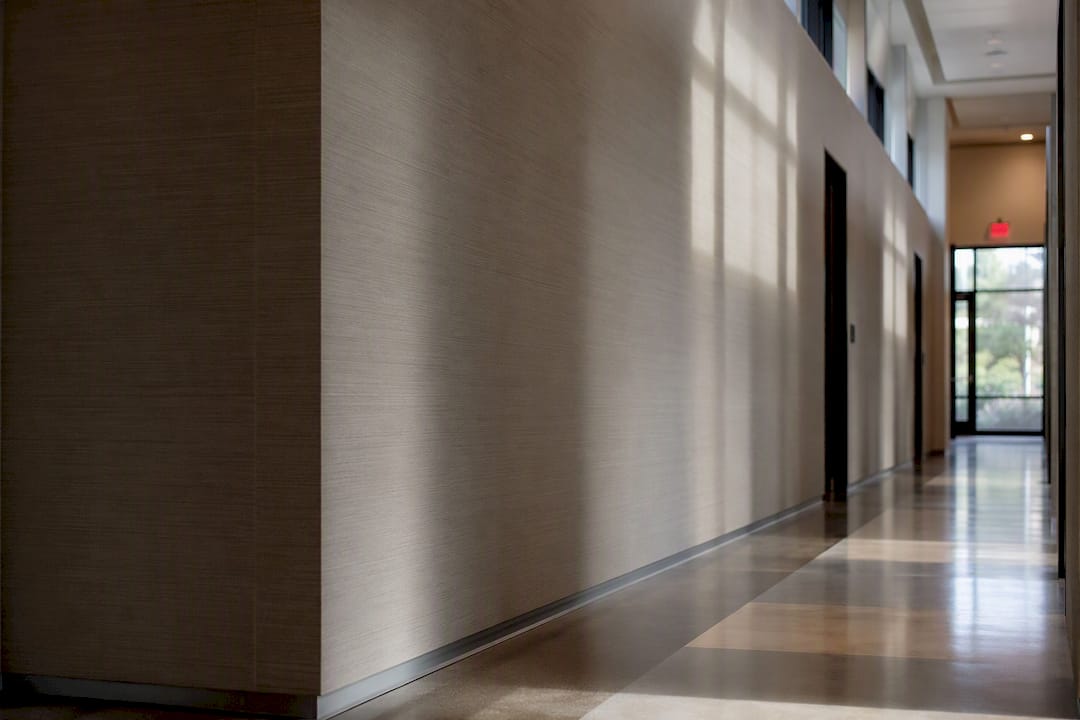
Code requirements hinge on occupancy type, not on whether you like the look of a fire-rated finish. Egress corridors in commercial buildings, hallways in hotels and multifamily housing, and interior finishes in high-occupancy spaces like theaters or assembly halls commonly require Class A or Class B wallcoverings under NFPA and IBC provisions. High-performance wallcovering suppliers treat ASTM E84 Class A as a baseline requirement for exactly this reason.
Single-family homes, by contrast, usually face no such requirement. Residential building codes generally don’t mandate a fire class for interior wallpaper in a private house. Multifamily buildings, assisted living facilities, and certain leased commercial tenant spaces fall into a gray zone where local amendments matter. If you’re specifying wallcovering for anything beyond a single-family residence, a call to your local Authority Having Jurisdiction (AHJ) or a licensed design professional saves you from a failed inspection later. Code interpretation varies by municipality even within the same state.
Buying and Installing Class A Wallpaper the Right Way
Getting the rating right on paper means nothing if installation undermines it. Follow this sequence before you commit to a full room or building.
- Order a physical sample and confirm the pattern and finish match what was lab tested.
- Request the ASTM E84 report tied to that exact SKU, not a general product family.
- Confirm the adhesive and substrate combination matches what the lab report specifies.
- Ask about installer experience with fire-rated materials, especially for commercial jobs.
- Keep every document (report, invoice, installation notes) in one file for future inspections.
Installation details affect real-world performance even when the lab report looks solid. Gaps, bubbles, or improperly cured adhesive can create pockets where flame behaves differently than in the tested sample. Manufacturer-specified cure times exist for a reason; rushing installation before adhesive fully sets can compromise the assembly the lab actually tested.
Pro Tip: Damaged or peeling wallcovering doesn’t automatically lose its fire rating, but exposed substrate, unsealed seams, or improvised patches can. Replace damaged sections with matching material rather than papering over problems with a different product.
Our Take on Fire Rated Wallcoverings
Walls Need Love offers both removable and traditional paste wallcovering options, and every product carries Greenguard Gold certification for low chemical emissions. Customers can request test reports or sample swatches directly through customer service or design support before committing to a full order. Custom orders are typically produced within one to three days, and installation guides walk buyers through adhesive and substrate considerations that matter for both aesthetics and performance. Fire safety and design don’t have to be separate conversations. Ask early, get the documentation in hand, and choose a pattern you’ll actually want to live with.
— WallsNeedLove
Get a Sample Before You Commit to a Full Room
The fastest way to confirm a Class A wallcovering fits your project is to hold it in your hands first. Wallsneedlove ships sample packs so you can check pattern, texture, and finish before ordering a full run, and our team can point you toward ASTM E84 documentation for a specific SKU when a project requires it for permitting or tenant improvement review.
If you’re outfitting a commercial corridor, a rental property, or a nursery where indoor air quality matters as much as fire code, start with a pattern like Monkeying Around or browse the full wallpaper and mural collection to see current Greenguard Gold certified options. For projects involving other interior finishes, interior door selection plays into the same fire-safety planning as wallcovering choice. Reach out to customer service with your project’s occupancy type and square footage, and get the documentation you need before your inspector asks for it.
Where to Verify These Standards Yourself
For readers who want the primary sources: the ASTM E84 test methodology and Class A thresholds are explained in detail by industry technical guides, while Carnegie Fabrics’ technical specs show how commercial suppliers document compliance. System-dependent fire performance is covered in the SYSTEXX Active FireProtect brochure, and a plain-language breakdown of what the rating protects against is available from Commercial Wall Decor.
Sources
- SYSTEXX Active FireProtect brochure
- What “Class A Fire Rated” means and why it matters
- High Performance Wallcoverings | Carnegie Fabrics


Leave a comment