

Why Custom Wallpaper Costs More: A Clear Price Guide
Custom wallpaper is more expensive than standard wallpaper because it combines premium materials, bespoke manufacturing, and specialized installation into a single project. Understanding why custom wallpaper costs more helps you budget accurately and avoid surprises. Standard rolls run $20–$50 each, while luxury custom options reach $150–$400 or more per roll. Labor adds $3–$7 per square foot, and surface preparation can push the total well beyond the material price alone. Each of these factors builds on the others, which is why the final number often catches homeowners off guard.
Why custom wallpaper costs more: materials and manufacturing
The biggest driver of custom wallpaper pricing is the raw material itself. Standard wallpaper materials cost $20–$50 per roll in the U.S., while handmade or luxury custom wallpapers reach $150–$400 or more per roll. That gap reflects a real difference in what goes into the product.
Standard wallpaper uses vinyl or basic paper stock, produced in large runs that spread fixed costs across thousands of units. Custom wallpaper uses materials like grasscloth, natural fiber weaves, or specialty coated substrates that cannot be mass produced. Each order is printed or crafted individually, which eliminates every bulk production efficiency that keeps standard prices low.
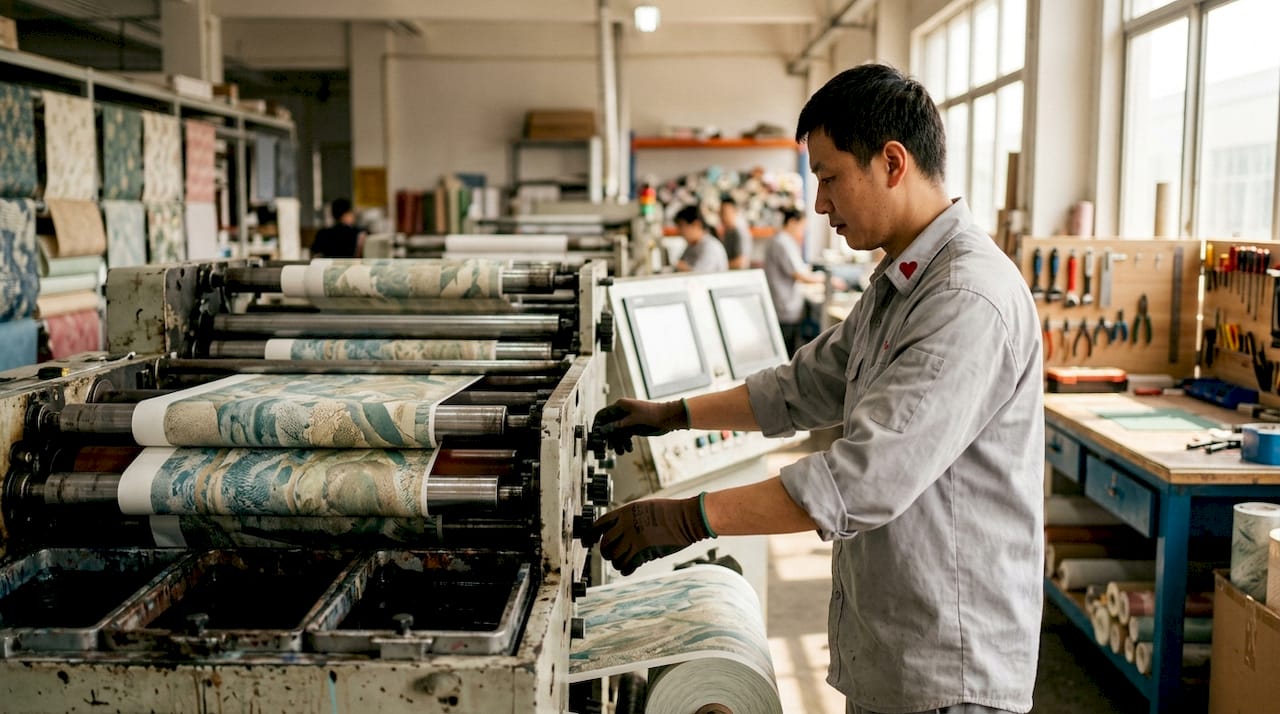
Design complexity adds another layer of cost. Large pattern repeats of 18–24 inches require 15–30% more material and increase installation time by 2–3 times compared to simple patterns. Proofing a custom design before full production also costs money. Color calibration, dye lot matching, and test prints all happen before a single panel ships to your home.
The table below shows how material type affects price per roll.
| Material type | Approximate cost per roll |
|---|---|
| Standard vinyl | $20–$50 |
| Mid-range specialty paper | $50–$150 |
| Luxury grasscloth or natural fiber | $150–$400+ |
| Handmade or artist-printed | $200–$400+ |
Pro Tip: When ordering custom wallpaper, request a physical sample before committing to a full order. Color rendering on screen differs from how ink reads on your chosen substrate under room lighting.
Understanding custom digital wallpaper printing helps clarify why each step in the production process adds cost. The more tailored the design, the fewer shortcuts the manufacturer can take.
How do installation requirements affect the cost difference?
Materials account for a large share of the price, but installation is where many homeowners underestimate the total. Professional installers charge $60–$100 per hour, and complex custom projects take significantly longer than standard jobs.
Custom wallpaper with large patterns requires precise alignment at every seam. A single misaligned panel can ruin the visual continuity of an entire wall. Skilled installers work more slowly and deliberately to prevent that outcome. In high-cost metro areas like San Francisco and New York, labor costs per square foot rise above $7, which adds up quickly across a full room.
The stakes are also higher with premium materials. Materials priced over $5 per square foot are generally too expensive to risk on a DIY installation. One bubble, one mismatched seam, or one torn panel means replacing an entire section of material that may cost more than the installer’s hourly rate.
Key installation cost factors for custom wallpaper include:
- Pattern matching across seams, which requires extra time and precision
- Delicate substrates like grasscloth that tear or stain if handled incorrectly
- Longer setup time for large murals that span multiple panels
- Higher risk of errors that require full panel replacement
Pro Tip: Ask your installer for a detailed scope of work before the project starts. Confirm whether surface preparation, primer application, and cleanup are included in the quoted price.
Skilled labor functions as insurance on an expensive material investment. The cost of installation errors includes both the replacement material and the labor to redo the work, which can easily exceed the original installation quote.
What surface preparation adds to the total project cost
Wall preparation is one of the most overlooked factors affecting wallpaper price. Wallpaper reveals every flaw beneath it. Drywall seams, nail pops, and uneven patches all show through the finished surface, especially on smooth or high-sheen custom materials.
Professional skim coating costs $300–$800 before installation begins. Skipping this step on a premium custom wallpaper project leads to permanent imperfections that cannot be corrected without removing the wallpaper entirely. That outcome costs far more than the prep work would have.
Additional preparation factors that increase total project cost:
- Removing existing wallpaper, which can take several hours per room and requires chemical strippers or steamers
- Treating textured walls, which need sanding or skim coating before any wallpaper adheres cleanly
- Priming the surface with a wallpaper-specific primer to prevent adhesive failure
- Addressing corners, window reveals, and ceiling lines that require precise cuts and extra material
Room layout also affects material waste. Rooms with many windows, doors, or irregular angles require more cuts, which means more waste. Ordering at least 15% extra material accounts for pattern matching waste and installation mistakes. Ordering too little creates a serious problem: a reorder from a different production batch may not match the original dye lot, creating a visible color difference on the finished wall.
How do design choices and long-term value justify the higher price?
Custom wallpaper is not just a wall covering. It is a permanent design decision that shapes how a room feels and functions. Designers advise evaluating material performance, lighting conditions, and scale before ordering, because the wrong choice in any of these areas reduces the return on the investment.
The benefits of custom wallpaper over mass-produced options include:
- Exact color matching to furniture, textiles, or architectural details in the room
- Scale control, so a pattern reads correctly on a 10-foot ceiling versus an 8-foot one
- Unique designs that cannot be replicated by any off-the-shelf product
- Acoustic properties in materials like grasscloth, which absorb sound in hard-surfaced rooms
- Architectural flow, where a well-chosen mural or pattern guides the eye through a space
“Custom wallpaper is more than decoration. It is an intentional design feature that impacts ambiance and delivers lasting visual and architectural impact that standard options cannot match.”
Mass-produced wallpaper has a finite lifespan in terms of style. Custom designs, particularly scenic murals or artist-printed patterns, hold their visual relevance longer because they are not tied to a production trend cycle. When you factor in durability and the cost of redecorating, the price per year of use often compares favorably to cheaper alternatives.
Learning how to choose wallpaper based on room scale, lighting, and material performance helps homeowners make selections that hold their value. The right choice at the start avoids costly changes later.
Considering how wall art influences room atmosphere also applies directly to custom wallpaper decisions. Both are permanent visual anchors that define the character of a space.
What budgeting tips help homeowners manage custom wallpaper costs?
Planning ahead prevents the most common and expensive mistakes in custom wallpaper projects. The ordering and installation process has several decision points where small choices create large cost differences.
Practical steps to control the total cost of custom wallpaper:
- Order 15% more material than your square footage calculation suggests, to cover pattern waste and installation errors
- Confirm the full scope of your installer’s quote, including whether prep work, primer, and cleanup are included
- Consider applying custom wallpaper to a single accent wall rather than an entire room to reduce material and labor costs while still achieving a strong design impact
- Request a sample panel before full production to verify color, texture, and scale in your actual room lighting
- Communicate your pattern alignment preferences to the installer in writing before work begins
Pro Tip: For rooms with complex layouts, ask your installer to create a paper layout plan before cutting any wallpaper. This step costs little time and prevents expensive cutting errors.
The wallpaper ordering process involves more steps than most homeowners expect. Understanding each step before you commit to a design prevents reorders, dye lot mismatches, and installation delays that all add to the final cost.
Wallpaper scale for residential spaces is another factor worth reviewing before ordering. A pattern that looks proportional in a product photo may overwhelm a small room or disappear in a large one, leading to a costly replacement.
Key Takeaways
Custom wallpaper costs more because every stage of the process, from material selection to installation, requires more time, skill, and precision than standard wallpaper.
| Point | Details |
|---|---|
| Material cost gap | Luxury custom materials cost up to 8 times more per roll than standard vinyl options. |
| Installation labor | Skilled installers charge $60–$100 per hour, with complex rooms costing $900–$2,100 in labor alone. |
| Surface preparation | Professional skim coating adds $300–$800 before installation and prevents permanent imperfections. |
| Order extra material | Ordering 15% more than your measured square footage prevents costly dye lot reorders. |
| Long-term value | Custom wallpaper delivers lasting design impact that mass-produced options cannot replicate over time. |
The real cost of getting custom wallpaper right
After working with custom wallpaper across many residential projects, the pattern that stands out most is this: homeowners who focus only on the material price consistently underestimate the total. The material is the visible cost. The preparation, the skilled labor, and the extra material for pattern matching are the invisible ones.
The most expensive outcome in any custom wallpaper project is not the initial quote. It is the cost of redoing work because the surface was not prepared, the installer was not experienced with the material, or the wrong amount was ordered. Those errors compound. Replacing a damaged panel of grasscloth or a misprinted mural section costs more than the original installation.
Custom wallpaper is worth the premium when the full investment is planned correctly. That means budgeting for preparation, hiring an installer with direct experience in the material type, and ordering enough product to finish the job without a reorder. Treating the labor as an investment in protecting the material cost changes how the numbers look. The installer’s fee is not overhead. It is the difference between a finished room and a costly redo.
The homeowners who get the best results treat custom wallpaper as a long-term design decision, not a decorating purchase. That mindset leads to better material choices, better installer relationships, and rooms that hold their visual quality for years.
— Wallsneedlove
Wallsneedlove custom wallpaper: quality and selection in one place
Wallsneedlove offers a wide range of custom-printed wallpapers and wall murals built for residential and commercial interiors. Every design ships with Greenguard Gold certification, and orders are typically produced within 1–3 days.
The collection includes peel-and-stick and traditional paste options across floral, geometric, scenic, and faux texture styles. Whether you want a bold statement piece like the Monkeying Around removable wallpaper or a full-room scenic mural like the Java Mountain wall mural, Wallsneedlove carries designs that match a range of budgets and room types. Browse the full wallpaper and mural collection to find a design that fits your space and your budget.
FAQ
Why is custom wallpaper so much more expensive than standard?
Custom wallpaper is priced higher because it uses premium materials, requires individual production runs, and involves skilled installation. Luxury materials alone can cost up to 8 times more per roll than standard vinyl.
How much does professional wallpaper installation cost?
Professional installers charge $60–$100 per hour, with full-room labor costs ranging from $900–$2,100 for complex projects. High-cost metro areas like New York and San Francisco push rates above $7 per square foot.
Do I need to prepare my walls before installing custom wallpaper?
Professional skim coating costs $300–$800 and is required for most custom wallpaper installations. Skipping surface preparation causes permanent imperfections that show through the finished wallpaper.
How much extra wallpaper should I order for a custom project?
Order at least 15% more than your measured square footage. This accounts for pattern matching waste and installation errors, and it prevents dye lot mismatches from a second production run.
Is custom wallpaper worth the higher cost?
Custom wallpaper delivers lasting design impact, exact color and scale control, and architectural benefits that standard options cannot match. When properly installed on a well-prepared surface, it holds its visual quality for years.


Leave a comment