
Branding Wall Mural Ideas That Turn Walls Into Identity
Branded murals communicate identity and mood faster than any other design element in a room. For most spaces, three approaches work best as a starting point: a logo feature wall (best for lobbies and reception areas), a branded pattern wall (best for hallways, retail, and multi-location rollouts), and a scenic or photo-ready wall (best for social content and hospitality settings). Save the examples below or request a custom mockup from Wallsneedlove to see one applied to your actual wall dimensions.
Key Takeaways
Branded murals work best when the concept, material, and placement are all chosen deliberately rather than picked in isolation.
| Point | Details |
|---|---|
| Pick the concept first | Match logo walls, pattern walls, or scenic murals to the specific room and its viewing distance. |
| Match material to traffic | Choose peel-and-stick for rentals and short-term spaces, paste-backed vinyl or fabric for permanent, high-traffic walls. |
| Scale text for distance | Size logos and lettering so they stay legible from the farthest point a visitor will actually stand. |
| Limit the palette | Stick to two to four brand colors and use logo shapes as repeating motifs instead of the full mark. |
| Order through Wallsneedlove | Custom murals ship on a fast turnaround with Greenguard Gold certified materials for both DIY and professional install. |
Table of Contents
- What Are the Best Branding Wall Mural Ideas?
- Which Materials and Finishes Last Longest?
- Where Should You Place a Branded Mural for Maximum Impact?
- How Do You Brand a Mural Without Making It Look Like a Catalogue?
- How Long Does a Branded Mural Take to Install, and What Does It Cost?
- Mural Ideas You Can See and Order Today
- What the Conventional Mural Advice Gets Wrong
- Ready to Turn Your Wall Into a Branded Focal Point?
- Frequently Asked Questions
- Sources
What Are the Best Branding Wall Mural Ideas?
Not every mural idea fits every business or room. The list below ranks concepts by how directly they reinforce brand identity, with placement and execution notes for each.
- Logo feature wall. Center the mark when the wall faces a single entry point, like a reception desk directly across from the front door. Off-center placement works better in longer lobbies where people approach from an angle, since it avoids awkward symmetry with furniture. Uplighting or a single accent fixture aimed at the logo keeps it legible without washing out the wall in overhead light.
- Branded pattern walls. Take a shape from your logo (a leaf, a hexagon, a swoosh) and repeat it at varying scales and rotations to build a motif. This approach brands a space without ever spelling out a word, which is why it reads as intentional design rather than signage.
- Typography and mission-statement murals. Legibility depends entirely on viewing distance: text meant to be read from 15 feet away needs letters roughly 4 to 6 inches tall at minimum. Pick a tone that matches the brand voice, a bold slab face for confidence, a lighter serif for warmth, and resist the urge to fit an entire paragraph on one wall.
- Scenic or narrative murals. These work when the imagery genuinely supports a brand story, a coastal roastery using an ocean scene, a law firm referencing its home city skyline. Use them sparingly. A mural tied too tightly to a single campaign or product line ages faster than an abstract or pattern-based design.
- Social and photo-ready walls. Keep the composition simple: a neutral background, one focal object or word, and enough negative space for a person to stand comfortably in frame. Overdesigned photo walls tend to compete with the subject instead of framing them.
- Biophilic and nature murals. Greenery, water, and organic textures measurably shift the mood of a room, which is why wellness studios, medical offices, and boutique hotels lean on them for waiting areas and treatment rooms, as shown in Bamboo Wall Design Indoor: Ideas That Actually Work.
- Mixed-media features. Pairing a printed mural with wood slats, dimensional logo lettering, or acoustic panels adds depth that a flat print alone can’t achieve, and it’s increasingly common in commercial lobbies that also need sound dampening.
Pro Tip: If you’re unsure which concept fits your space, start with the pattern wall approach. It’s the most forgiving of imperfect walls, awkward corners, and mixed lighting, and it still reads as unmistakably branded from across the room.
Which Materials and Finishes Last Longest?
The right substrate depends on foot traffic, sunlight exposure, and whether the space is a rental. Peel-and-stick wallpaper installs faster and removes cleanly, which makes it the better call for leased retail spaces or homeowners who might repaint in a few years. Traditional paste-backed wallpaper bonds more permanently and tends to hold up better on textured or long-term commercial walls.
Beyond the backing, the material itself matters:
- Commercial vinyl resists scuffs and wipes clean, suited to hallways, waiting rooms, and anywhere carts or bags brush the wall.
- Fabric wallcoverings soften a room acoustically and visually, better suited to offices, boutiques, and hospitality lobbies than high-abrasion zones.
- Acoustic substrates absorb sound in open-plan offices where a flat vinyl mural would otherwise bounce noise around the room.
UV-resistant inks and scuff-resistant laminates prevent color fading in sunlit storefronts and reduce visible wear in high-traffic corridors, both common failure points for murals installed without them. Finish choice also shapes the final look: matte cuts glare under fluorescent lighting, while gloss deepens color saturation but can reflect window light at certain angles.
Where Should You Place a Branded Mural for Maximum Impact?
Entry walls, the space directly behind a service counter, and conference room backdrops deliver the most consistent return because they sit in every visitor’s direct line of sight, not just a passing glance.
- Position logos and headline text so the smallest detail is legible from the farthest point someone will realistically stand, usually 10 to 20 feet in a lobby or retail aisle.
- Walk the room before finalizing dimensions. Check that shelving, seating, or a reception desk won’t crop the mural’s focal point once furniture is back in place.
- Add a small accent light angled across the mural surface. It does double duty: better in-person visibility and a far more photo-ready wall for social posts or press photos.
How Do You Brand a Mural Without Making It Look Like a Catalogue?
The Architectural Digest guidance on wall decor applies directly here: treat the mural as an intentional design element from the start, not a logo slapped onto a blank wall after the fact.
- Limit the palette to two to four core brand colors, then use tonal variations (a lighter tint, a darker shade) so the wall doesn’t feel like a flat color swatch.
- Use logo shapes as recurring motifs instead of printing the full mark over and over. A single icon repeated at different scales brands a space more subtly than ten identical logos.
- Choose geometric or slab display typefaces for anything meant to be read at a distance. Thin script fonts lose legibility fast once they’re blown up to wall size.
- Build a repeat pattern from your logo’s underlying shapes. This is often the fastest way to brand a large wall without relying on text at all.
Pro Tip: Test your color palette and pattern scale on a printed sample swatch before committing to the full wall. What reads as balanced on a screen can feel overwhelming once it covers 12 feet of surface.
How Long Does a Branded Mural Take to Install, and What Does It Cost?
Getting from concept to finished wall follows a predictable sequence, and skipping steps is where most installs go wrong.
- Prep the surface first. Freshly painted walls need adequate cure time before covering, and any patched or uneven areas should be sanded smooth. Skipping this step is the leading cause of bubbling and outgassing under the material later.
- Decide DIY versus professional install. Small peel-and-stick murals suit renters and confident DIY homeowners. Large-scale, textured, or paste-backed installs generally call for a professional, especially across seams or in commercial spaces with tight timelines.
- Schedule around production time. Custom mural wallpaper typically prints on a short turnaround, but building in a buffer before an opening date or event avoids last-minute scrambling.
- Budget by size, substrate, and complexity. A single accent wall in peel-and-stick vinyl costs far less than a multi-wall commercial install in fabric or acoustic material with professional labor included. Simplifying the design or reducing square footage is the most direct lever for controlling cost.
Mural Ideas You Can See and Order Today
Seeing a concept applied to an actual product makes the decision easier than staring at a blank wall and guessing.
- Logo or accent wall: a bold graphic pattern like Pixel Diamonds works as a backdrop for a centered logo without competing for attention.
- Branded pattern wall: Outside the Lines shows how a repeatable watercolor motif can carry a color story across an entire retail or office floor.
- Scenic or narrative mural: the Sumidero Canyon River Gorge mural illustrates how landscape imagery anchors a hospitality or wellness space in a specific mood.
- Social and photo-ready wall: Concrete Jungle offers a clean urban backdrop suited to a single focal object or a person standing in frame.
Save the ones that fit your space, then request a mockup to check scale before ordering.
What the Conventional Mural Advice Gets Wrong
Most guides treat branding and decorating as two separate steps: pick a nice mural, then figure out how to fit the logo on it. That order is backward. A mural chosen for its looks alone and branded after the fact almost always reads as an afterthought, exactly the mistake design experts warn against when they talk about treating wall art as an intentional focal point rather than decoration bolted on at the end.
The bigger blind spot is scale. Business owners obsess over color and imagery, then skip the basic math of viewing distance, and end up with logo text that looks perfect on a laptop screen and disappears from 15 feet away. Get the scale and placement rules right before touching the palette.
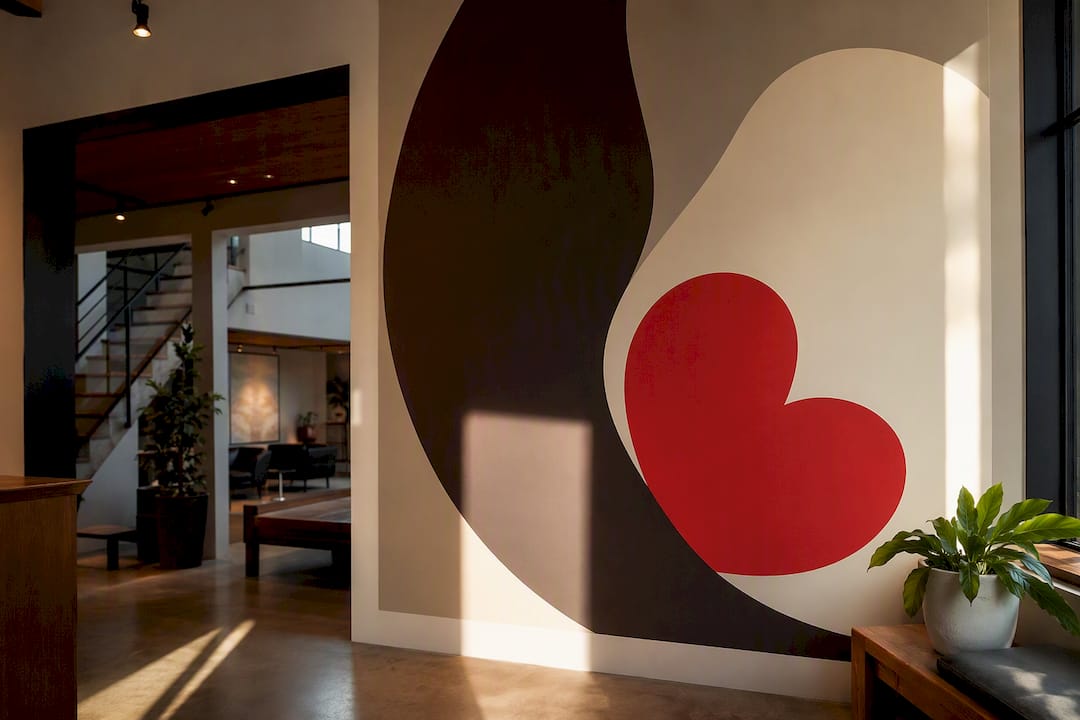
If there’s one thing worth prioritizing above every other idea in this guide, it’s material selection tied to the room’s actual traffic and light. A gorgeous scenic mural on the wrong substrate in direct sun fades within a year or two. That’s not a design failure. It’s a materials failure that better planning would have caught.
Ready to Turn Your Wall Into a Branded Focal Point?
Once you know which mural concept and material fit your space, the fastest path forward is ordering a custom print instead of coordinating a painter, a designer, and a separate materials supplier. Wallsneedlove prints every mural to order, typically within one to three days, in either peel-and-stick or traditional paste, and every option is Greenguard Gold certified for indoor air quality, a real consideration for offices, medical spaces, and homes with kids.
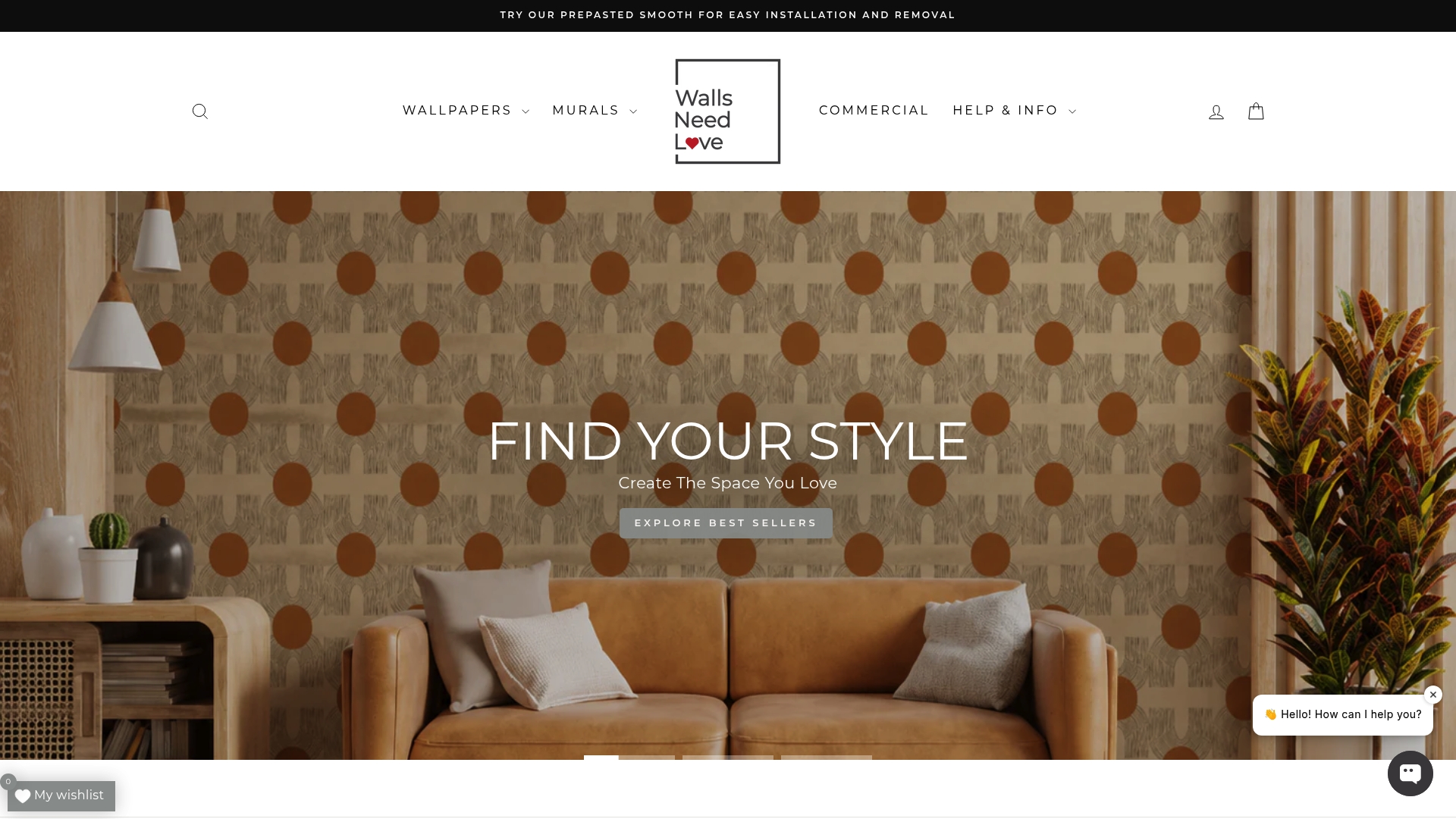
Every design supports custom sizing, so a logo wall, pattern wall, or scenic mural like the Out Wall Mural can be scaled to your exact wall dimensions rather than cropped to fit. Local artists contribute many of the pattern and scenic designs in the catalog, which means you’re also supporting independent creative work with every order. If you’re still deciding between concepts, request a mockup before you commit, so you can check scale, color, and placement against your actual wall before it goes into production.
Frequently Asked Questions
What is the best branding wall mural idea for a small business lobby? A logo feature wall centered on the entry sightline works best for most small lobbies, paired with a simple accent color pattern on adjacent walls rather than repeating the logo everywhere.
Can I remove a branded mural if I’m renting my space? Yes. Peel-and-stick wallpaper murals install and remove cleanly without damaging paint, which makes them the practical choice for leased retail spaces and rental apartments.
How do I keep a branded mural looking sharp for years? Wipe vinyl and laminated finishes with a damp cloth rather than harsh cleaners, avoid direct abrasive contact in high-traffic zones, and choose UV-resistant inks for any wall that gets direct sunlight.
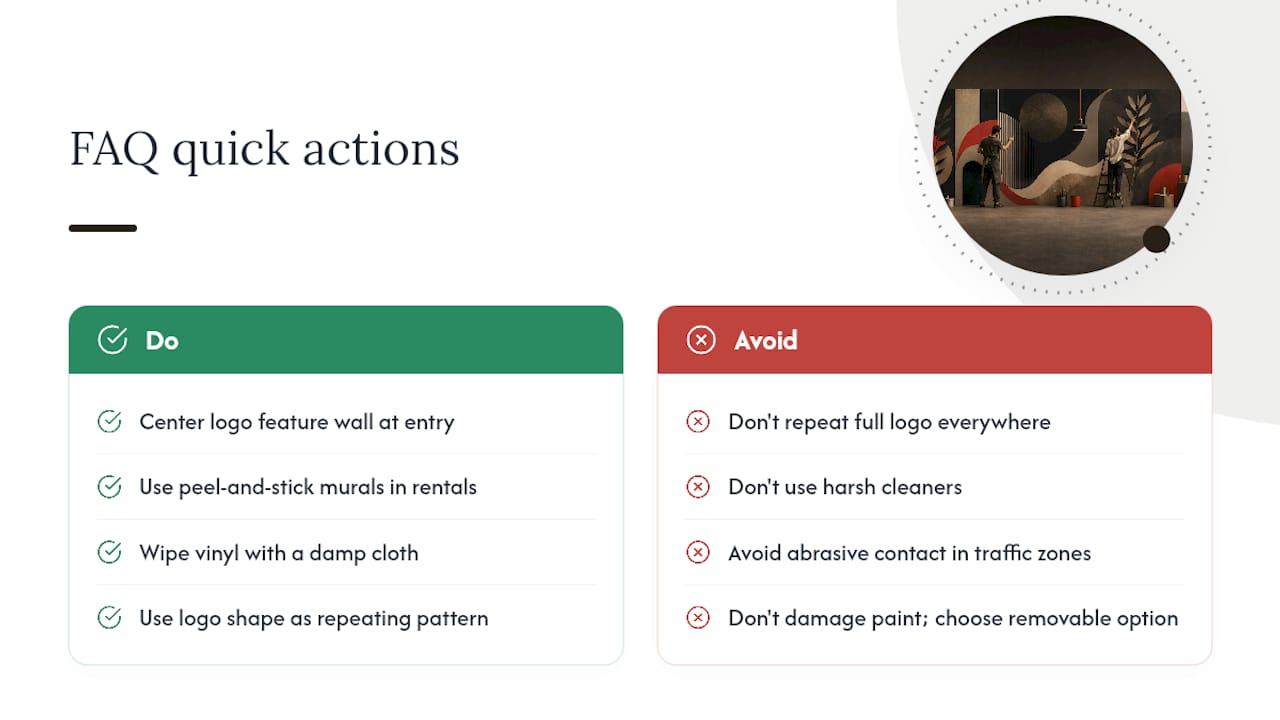
Should a mural show my full logo or just a design element from it? Using a shape or icon from your logo as a repeating pattern usually brands a space more effectively than printing the full logo repeatedly, since it reads as design rather than signage.
Sources
- These 53 Wall Decor Ideas (Toy Installations! Rotating Art!) Bring New Life to Any Room | Architectural Digest
- Wall Murals Graphics Ideas to Improve Interior Branding
- Strategic Office Branding with Wall Graphics: Transforming Workspaces in 2026 | Linemark


Leave a comment