

Why Wall Murals Improve Customer Experience
Wall murals are defined as large-scale, custom-designed graphics applied directly to interior or exterior walls to shape how customers perceive and interact with a commercial space. Visual appeal accounts for 94% of a customer’s first impression of a business. That single fact explains why wall murals improve customer experience more reliably than almost any other design investment. Brands like SpeedPro and Shaded Glass have built entire service lines around this principle, helping retail stores, restaurants, and healthcare facilities use murals as primary brand communication tools. The result is not decoration. It is a measurable shift in how customers feel, navigate, and engage with your space.
Why wall murals improve customer experience from the first second
Businesses have only 7 seconds to make a meaningful first impression when a customer walks through the door. That window is too short for staff introductions or product displays to do the work. The visual environment carries the full load.
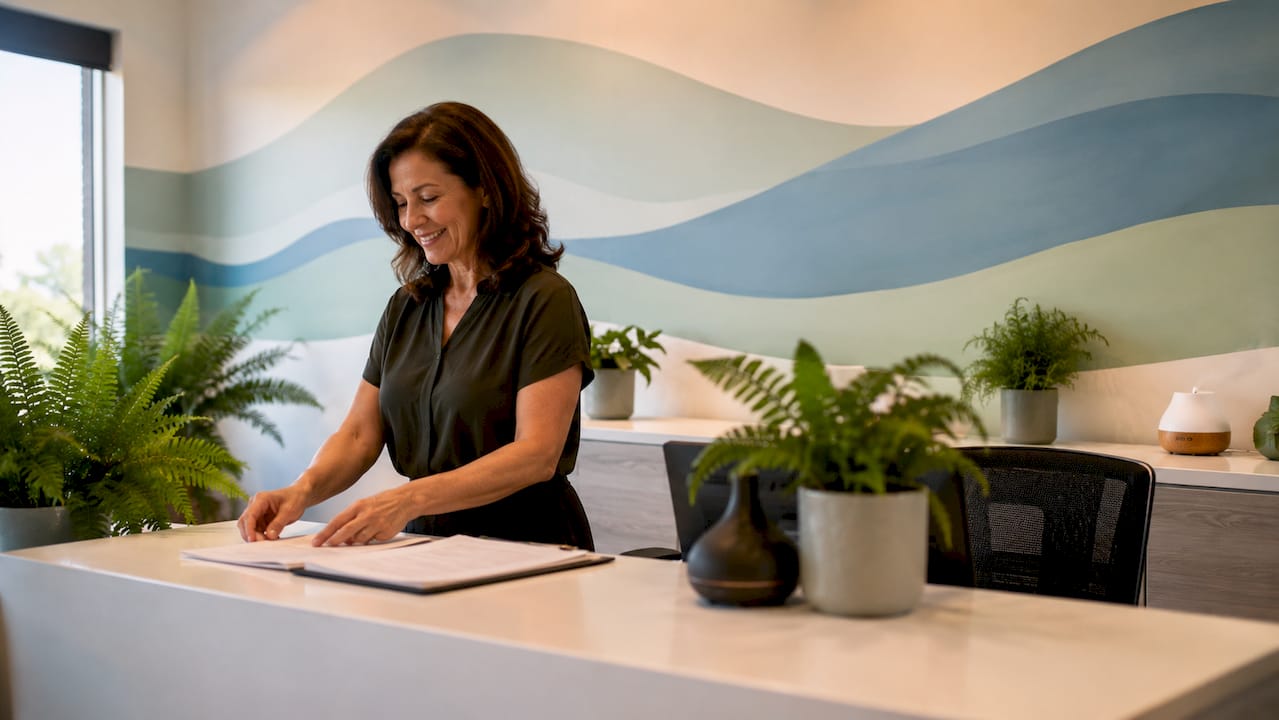
Murals set the tone of a space before a single word is spoken. A nature-themed mural in a wellness clinic signals calm and care. A bold geometric design in a fitness studio signals energy and ambition. Psychological research from the British Psychological Society confirms that murals address psychological and perceptual needs, creating emotional bonds that go well beyond surface-level aesthetics.
How mural themes align with customer emotions
Mood-targeted mural design is a recognized practice in retail, hospitality, and healthcare. Warm earth tones and organic shapes reduce perceived wait times in medical offices. High-contrast, saturated murals in restaurants increase appetite and energy. Cool blues and soft gradients in hotel lobbies lower stress levels for arriving travelers.
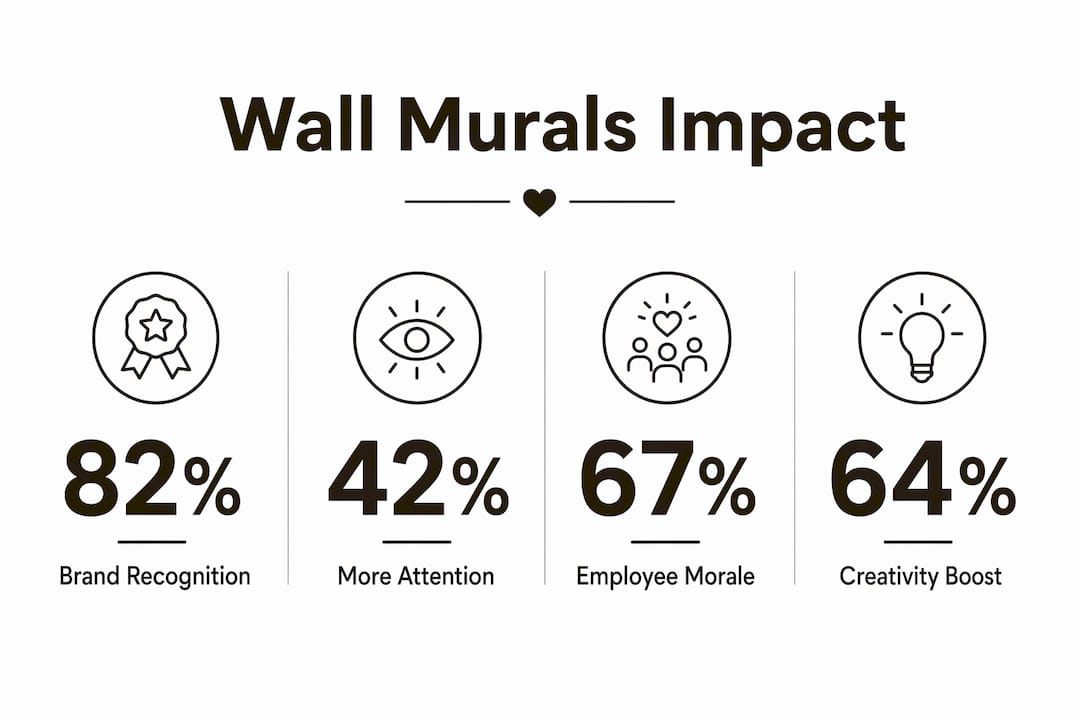
Workplace art also boosts employee morale by 67% and creativity by 64%. That internal effect matters because engaged employees deliver better service, which compounds the customer experience benefit.
Pro Tip: Choose mural themes based on the emotional state you want customers to arrive in, not the one they bring with them. A coffee shop that wants customers to linger should use warm, inviting tones rather than high-energy graphics that signal speed.
Do murals actually strengthen brand identity?
82% of businesses using murals report a positive impact on brand recognition. That number reflects a straightforward truth: walls are the largest available canvas in any commercial space, and most businesses leave them blank.
Business walls should be active brand storytellers, signaling professionalism and values before any verbal interaction occurs. A mural that incorporates brand colors, typography, and mission-driven imagery communicates identity at scale. It also creates a consistent visual language across multiple locations, which matters for franchise operators and multi-site retailers.
Branded hashtags integrated into mural designs take this further. When a customer photographs your mural and posts it with your hashtag, that image becomes a trackable marketing asset with organic reach. The mural does not just reinforce your brand inside the store. It extends your brand into social media feeds without any additional ad spend.
Murals vs. traditional advertising: a direct comparison
| Factor | Wall Murals | Traditional Billboards |
|---|---|---|
| Attention advantage | 42% higher attention rate | Baseline |
| Location | Inside the customer’s space | External, passive exposure |
| Social sharing potential | High (photo-worthy, shareable) | Low |
| Brand alignment | Fully customizable | Limited format |
| Lifespan | 5–7 years | Rotated frequently |
| Cost per impression | Decreases over time | Fixed recurring cost |
Custom murals attract 42% more attention than traditional billboards. That gap exists because murals are immersive. A customer standing inside a mural-decorated space is surrounded by the brand, not passing it at 60 miles per hour.
Pro Tip: Add your Instagram handle or a campaign-specific hashtag directly into the mural design. Shaded Glass documents this approach as a way to turn passive wall space into a trackable social media channel with zero ongoing cost.
How do murals guide customers through your space?
Murals guide people intuitively through large retail or hospitality spaces, improving navigation without requiring staff assistance. This function is underused and undervalued by most business owners.
In large-format retail environments, murals can mark department transitions, highlight featured product zones, or direct foot traffic toward checkout areas. In hotels, corridor murals create visual landmarks that help guests orient themselves without reading room number signs. In corporate offices, floor-specific mural themes help employees and visitors identify their location instantly.
This wayfinding function complements traditional signage rather than replacing it. Signage tells customers where to go. Murals make the journey feel intentional and on-brand.
Best practices for functional mural design
- Place directional murals at decision points. Intersections, stairwells, and entry zones are where customers pause and look around. These are the highest-impact locations for navigation-focused designs.
- Use color zoning to define areas. Distinct color palettes in different sections of a large space help customers build a mental map quickly.
- Scale the design to the viewing distance. A mural meant to be read from 30 feet away needs larger elements and simpler composition than one designed for close inspection.
- Align mural content with the function of each zone. A calm, low-contrast mural works in a waiting area. A high-energy design fits a product launch zone or promotional display area.
- Test the design with fresh eyes. Walk the space as a first-time visitor before finalizing placement. What feels obvious to you may not be obvious to someone entering for the first time.
Can a mural generate real marketing value?
Businesses with murals see increased foot traffic, longer dwell times, and organic social sharing from customers who photograph and post the space. This is not a secondary benefit. For many businesses, it is the primary marketing channel.
Here is how the social engagement cycle works in practice:
- A customer enters and notices the mural. The design is distinctive enough to stop them mid-step.
- They photograph it. Smartphones are always within reach, and a well-designed mural is an automatic photo prompt.
- They post the photo. Tagged with your location or hashtag, the image reaches their entire network.
- New customers discover your space. Followers who have never heard of your business see the image and become curious.
- The cycle repeats. Each new visitor who photographs the mural extends the reach further.
Coffee shops like Blue Bottle Coffee, gyms, and independent restaurants have used this cycle to generate thousands of organic impressions per month from a single mural installation. The 64% of consumers who say outdoor murals increase their likelihood of visiting a business confirms that this exposure converts into actual foot traffic.
Murals also extend the value of event marketing. A seasonal mural update tied to a product launch or holiday campaign gives existing customers a reason to return and photograph the new design.
Choosing and maintaining murals for long-term impact
High-quality vinyl wall graphics last 5–7 years in commercial settings and are designed for clean removal without damaging walls. That durability changes the financial calculation for business owners who think of murals as a short-term expense.
Selecting the right mural involves four decisions: material, design, placement, and maintenance plan. Each one affects how long the mural performs and how much value it delivers over its lifespan.
Mural material comparison for commercial spaces
| Material | Lifespan | Removal | Best Use Case |
|---|---|---|---|
| Peel-and-stick vinyl | 3–5 years | Clean, no wall damage | Leased spaces, seasonal updates |
| Traditional paste vinyl | 5–7 years | Requires professional removal | Permanent installations |
| Fabric wall covering | 3–5 years | Moderate, low damage | Hospitality, soft aesthetic needs |
| Direct wall paint | 7+ years | Requires repainting | Owned properties, permanent branding |
Peel-and-stick options from providers like Wallsneedlove are particularly well-suited for leased commercial spaces. They deliver the full visual impact of a permanent mural without the risk of lease-end wall damage. Wallsneedlove products also carry Greenguard Gold certification, which matters for businesses in healthcare, education, or food service where air quality standards apply.
Routine maintenance is straightforward. Wipe vinyl murals with a damp cloth to remove dust and surface marks. Avoid abrasive cleaners. Inspect edges quarterly for lifting, especially in high-humidity environments like kitchens or gyms. Reapply edge adhesive as needed to extend the mural’s life.
Key takeaways
Wall murals improve customer experience by combining visual impact, brand communication, spatial guidance, and social engagement into a single durable installation.
| Point | Details |
|---|---|
| First impressions are visual | 94% of initial impressions are driven by visual design, making murals a primary customer experience tool. |
| Brand recognition increases measurably | 82% of businesses report improved brand recognition after installing custom murals. |
| Murals outperform traditional ads | Custom murals attract 42% more attention than billboards and generate organic social sharing. |
| Navigation improves without staff | Murals guide customers through large spaces intuitively, reducing confusion and improving flow. |
| Vinyl murals are a durable investment | High-quality vinyl lasts 5–7 years with clean removal, lowering the long-term cost per impression. |
What Wallsneedlove has learned about murals and business spaces
Most business owners think about murals as the last step in a renovation. Wallsneedlove’s experience across thousands of commercial installations shows the opposite is true. The businesses that get the most value from murals plan them at the same time as the floor plan, not after the furniture arrives.
The shift in how customers respond to a well-designed mural is immediate and consistent. Dwell time goes up. Staff report fewer navigation questions. Social media tags appear within days of installation. These are not soft, hard-to-measure outcomes. They show up in foot traffic counts and repeat visit rates.
The other thing worth saying directly: murals are not just for large brands with design teams. A single, well-chosen scenic mural from a curated commercial collection can do the same work as a custom-commissioned piece at a fraction of the cost. The design decision matters more than the budget. A mural that fits the space, the brand, and the customer’s emotional expectations will outperform an expensive mural that does not.
Businesses that treat their walls as passive surfaces are leaving a measurable amount of customer engagement on the table. The research is clear. The technology is accessible. The only remaining question is which design fits your space.
— Wallsneedlove
Transform your space with Wallsneedlove murals
Wallsneedlove offers a broad selection of commercial-ready murals across scenic, geometric, floral, and abstract styles, all available in peel-and-stick or traditional paste formats. Orders are custom made within 1–3 business days, and every product carries Greenguard Gold certification for safe use in commercial environments.
The Java Mountain Wall Mural is a strong starting point for hospitality and café environments, delivering an immersive scenic backdrop that encourages customers to stay longer and photograph the space. For urban-themed retail or office settings, the Midtown Manhattan mural and Downtown San Fran mural offer bold, recognizable visuals that signal sophistication and scale. Browse the full collection at Wallsneedlove to find the right fit for your commercial space.
FAQ
How do wall murals affect customer mood?
Murals influence mood by setting the visual tone of a space before any other interaction occurs. Research from the British Psychological Society confirms that murals address psychological and perceptual needs, creating emotional bonds that reduce stress and increase comfort.
How long do commercial wall murals last?
High-quality vinyl murals last 5–7 years in commercial settings and are designed for clean removal without wall damage. Peel-and-stick options typically last 3–5 years and are ideal for leased spaces.
Do murals help with brand recognition?
82% of businesses using murals report a positive impact on brand recognition. Custom designs that incorporate brand colors, typography, and messaging reinforce identity at scale across every customer visit.
Can murals generate social media exposure?
Murals attract 42% more attention than traditional billboards and consistently prompt customers to photograph and share the space. Integrating branded hashtags into the design turns each customer photo into a trackable marketing asset.
Are wall murals practical for leased commercial spaces?
Peel-and-stick vinyl murals are specifically engineered for leased environments. They deliver full visual impact and remove cleanly at lease end, eliminating the risk of wall damage or deposit loss.


Leave a comment