

Artist-Designed Wallpaper: Bold Murals and Custom Prints
For most buyers, the fastest practical path is a custom-sized artist-designed mural in peel-and-stick format for renters or paste-the-wall for permanent installs. Order a sample before committing to a full print. Wallsneedlove ships custom artist designs across the U.S. with Greenguard Gold certification and a 1–3 day production window.
- Format: Choose a full-wall mural for a single statement image or a repeat-pattern roll for a tiled, all-over look.
- Material: Peel-and-stick for rental spaces; traditional paste for long-term installs. Look for Greenguard Gold certification on any substrate.
- First step: Order a material swatch and a small print of your chosen design. Measure wall height and width before placing a full order.
Key Takeaways
Artist-designed wallpaper delivers the best results when buyers match the format (mural or repeat roll) to the wall, verify Greenguard Gold certification, and order a sample before committing to a full print.
| Point | Details |
|---|---|
| Format first | Choose a full-wall mural for a single image or a repeat roll for all-over pattern coverage. |
| Material and certification | Confirm Greenguard Gold certification and substrate type (peel-and-stick or paste) before ordering. |
| Measure and sample | Measure in three places, add trim allowance, and order a swatch plus a small print to check color and scale. |
| Review real photos | Prioritize customer-submitted photos over star ratings when evaluating a vendor’s color accuracy and installation quality. |
| Wallsneedlove | Offers custom murals and removable wallpaper with Greenguard Gold certification, 1–3 day production, and U.S. shipping. |
Table of Contents
- What types of artist-designed wall coverings are available?
- How do artist collaborations and design styles shape your choices?
- What materials and certifications should you check?
- How do you measure, order, and customize a mural?
- Installation basics and how to maintain artist-designed wallpaper
- What does artist-designed wallpaper cost, and what are the return policies?
- How to evaluate real-room photos and customer reviews
- Why Wallsneedlove is a strong option for U.S. buyers
- The Wallsneedlove team’s perspective on artist collaborations
- Start your order with Wallsneedlove
- Sources
What types of artist-designed wall coverings are available?
Artist-designed wall coverings split into two main product formats: full-wall murals and repeat-pattern rolls.
Full-wall murals print one continuous image scaled to your exact wall dimensions. They suit feature walls, commercial lobbies, and nurseries where a single bold scene carries the room. Panels ship in numbered strips that align edge to edge.
Repeat-pattern rolls tile a motif across multiple rolls. They work well for all-over coverage in bedrooms, dining rooms, and powder rooms. Matching the repeat at seams takes more precision, but the result looks intentional and layered.
Peel-and-stick vs. paste-the-wall
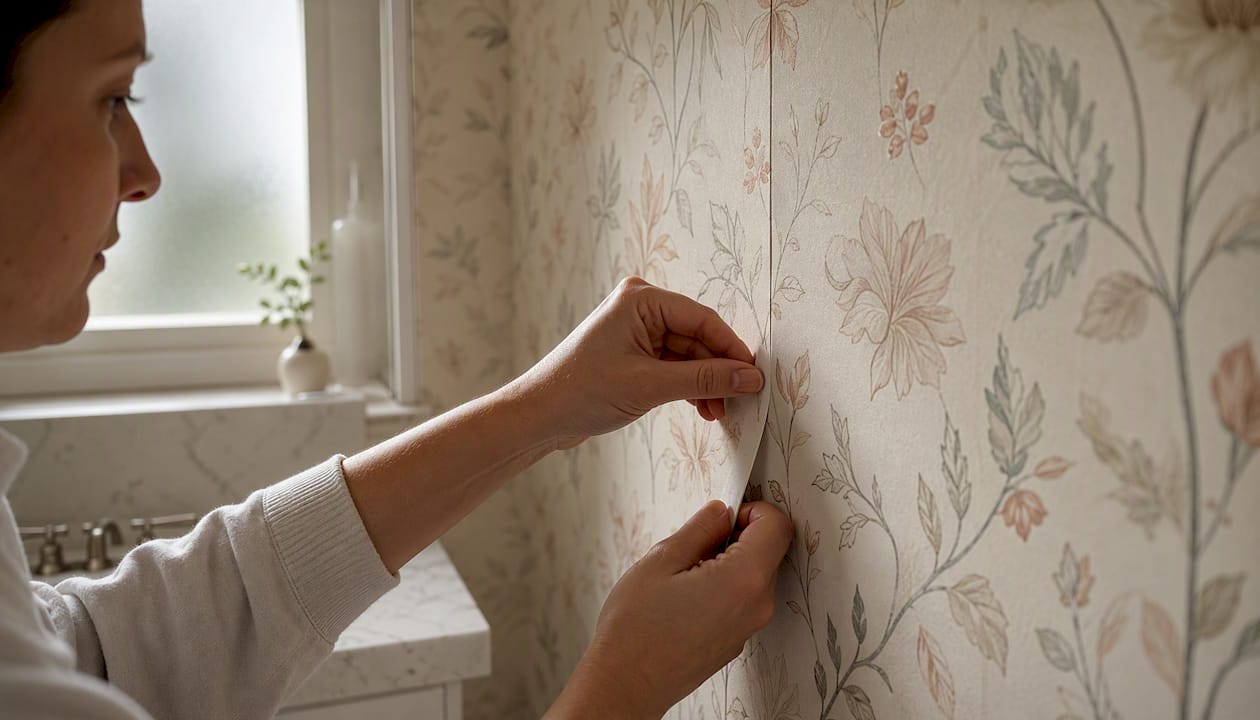
Peel-and-stick suits renters and temporary staging. Paste-the-wall bonds more firmly and handles high-traffic commercial walls better. Neither format is universally superior; the right choice depends on the wall surface and how long the design needs to stay.
Pro Tip: Test peel-and-stick adhesion on a small corner of your wall before installing the full mural. Textured or freshly painted surfaces can reduce grip significantly.
How do artist collaborations and design styles shape your choices?
Artist-driven collections cover a wide range of motifs. Knowing what each style does to a room helps narrow the field quickly.
- Hand-painted botanicals and florals: Soft, layered, and organic. They add warmth to bedrooms and dining rooms. Examples include muted floral removable wallpaper and watercolor pastel flowers.
- Illustrative and scenic murals: Large-scale photographic or painted scenes. They work as focal points in living rooms and commercial spaces.
- Abstract painterly repeats: Loose brushwork and color-field designs. They read as art without committing to a literal subject.
- Geometric and line-work patterns: Crisp, structured, and scale-flexible. The Art Deco City pattern shows how geometric designs translate across both residential and commercial walls.
Checklist for evaluating an artist collection:
- Does the motif scale correctly for your wall size?
- Are multiple colorways available, or is the design a single-run print?
- Does the vendor offer a sample of the exact colorway you plan to order?
- Are mural-ready files available, or is the design only sold as a repeat roll?
- Is the artist credited by name, and does the product page show close-up texture shots alongside in-room mockups?
What materials and certifications should you check?
The substrate affects how a design looks, how long it lasts, and whether it is safe for indoor air quality.
Common materials include:
- Non-woven eco paper: Breathable, dimensionally stable, and paste-friendly. Preferred for traditional installs.
- Vinyl: Durable and washable. Common in commercial and high-humidity spaces.
- Removable self-adhesive (peel-and-stick): Pressure-sensitive backing. Repositionable during install.
- Textured options: Grasscloth-look substrates that add tactile depth without the fragility of natural fiber.
Print method affects the final look. Rotary roller printing, as used in the Alex Monroe x Sophie Harpley collection, produces a raised, tactile finish that reads as handcrafted. High-resolution digital printing delivers photographic sharpness and is the standard for custom murals. Surface printing sits between the two in texture and cost.
Trust signals to check before ordering:
- Greenguard Gold certification (low chemical emissions, safe for bedrooms and schools)
- Named artist credit on the product page
- Printed-in-country or production-location disclosure
- Sample availability before full-order commitment
Custom-print platforms commonly offer multiple substrate types and samples. Contrado, for example, lists seven paper types with custom dimensions and sample ordering. That variety is useful context when comparing what a vendor offers against the market standard. Many small artist-driven shops manage orders and samples through e-commerce platforms like Shopify, which supports product variants and custom fulfillment at scale.
How do you measure, order, and customize a mural?
Getting the dimensions right before ordering prevents the most common and costly mistakes.
- Measure wall height and width in inches. Measure in three places (top, middle, bottom for width; left, center, right for height) and use the largest figure.
- Add trim allowance. Add 2 inches to each edge for overlap and trimming at baseboards, ceiling, and corners.
- Account for obstacles. Note door frames, windows, and outlets. Most vendors let you specify obstacle placement so panels align around them.
- Confirm the repeat. For repeat-pattern rolls, the vertical repeat determines how much extra material you need per strip to match the pattern at seams.
- Request a layout mockup. Before approving print, ask the vendor to show how panels will divide across your wall width.
Custom sizing works differently for murals versus repeat rolls. Murals print as a single image scaled to your exact dimensions, delivered in numbered panels. Repeat rolls tile a fixed motif and require calculating how many rolls cover the square footage with pattern-match waste included. Product pages list roll width, roll length, and vertical repeat — confirm all three before ordering.
Ordering process checklist:
- Order a material swatch and a small print of the chosen design
- Choose substrate (peel-and-stick or paste)
- Confirm a color proof or digital mockup
- Approve panel layout before print begins
- Download or request installation instructions specific to your substrate
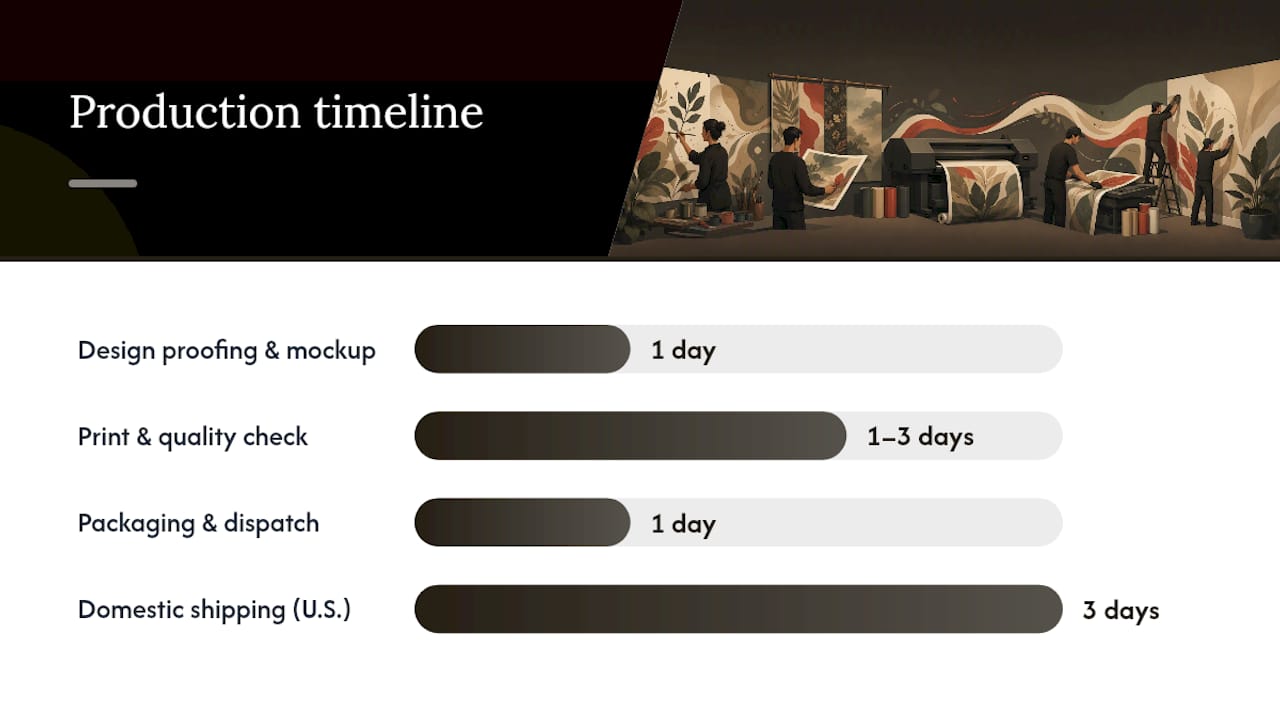
Typical production timeline:
| Stage | Timeframe |
|---|---|
| Design proofing and mockup | 1 day |
| Print and quality check | 1–3 days |
| Packaging and dispatch | 1 day |
| Domestic shipping (U.S.) | 3 business days |
Installation basics and how to maintain artist-designed wallpaper
Tools you need
For peel-and-stick:
- Squeegee or smoothing tool
- Sharp utility knife and spare blades
- Plumb line or level
- Measuring tape
For paste-the-wall:
- Paste tray and brush or roller
- Seam roller
- Sponge and clean water bucket
- Plumb line and pencil
Maintenance steps
- Spot clean with a damp cloth and mild soap. Avoid abrasive scrubbers on printed surfaces.
- Keep humidity below 60% in rooms with paste-the-wall installs. High moisture can lift seams over time.
- For minor seam lifts on peel-and-stick, press the edge back with a seam roller and a small amount of repositionable adhesive.
- Document the install with photos immediately after completion. If a warranty claim arises, dated photos showing correct installation are the clearest evidence.
Pro Tip: In high-humidity rooms like bathrooms, choose a vinyl substrate over non-woven paper. Vinyl resists moisture absorption and cleans more easily without surface damage.
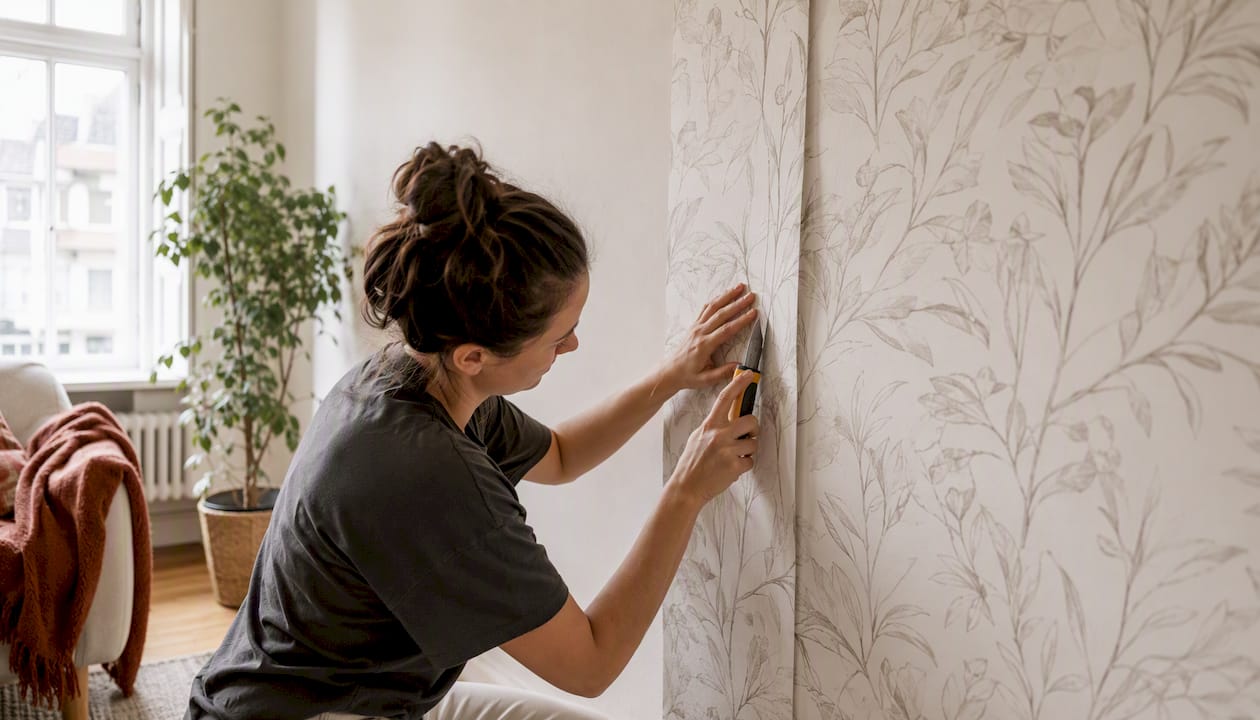
Corners and textured surfaces are the two spots where DIY installs most often fail. On inside corners, overlap the panel by half an inch and cut vertically through both layers for a clean seam. On textured walls, peel-and-stick adhesion drops noticeably; skim-coating the wall first or switching to a paste substrate solves the problem. When the wall is unusually large, the pattern is complex, or the surface is uneven, hiring a professional installer is the practical call.
What does artist-designed wallpaper cost, and what are the return policies?
Pricing for custom wall coverings depends on several factors:
- Size: Square footage is the primary driver. Larger murals cost more per order, though the per-square-foot rate often drops at larger sizes.
- Substrate: Vinyl and specialty textured substrates carry a premium over standard non-woven paper.
- Mural vs. repeat roll: Single-image murals require custom file preparation and panel layout, which adds to production cost.
- Artist licensing: Named-artist or limited-edition collections may include a licensing component in the price.
- Finishing options: Matte, satin, or gloss coatings affect both appearance and price.
Shipping for custom prints is typically parcel-based for residential orders. Rush production fees apply when standard 1–3 day production windows are too slow. Geographic distance from the print facility affects transit time; U.S.-based production shortens domestic delivery compared to overseas printing.
Pro Tip: Always order a sample before placing a full mural order. Sample cost is small relative to the cost of reprinting an entire wall because the color or texture was not what you expected.
Return policies for custom prints are narrow by nature. Most vendors do not accept returns on custom-sized orders unless there is a verified printing defect or significant color mismatch from the approved proof. Samples, swatches, and standard-size rolls are more commonly returnable. Google Customer Reviews merchant pages include customer-submitted photos and ratings that can surface recurring color-accuracy or service issues before you commit to a vendor.
How to evaluate real-room photos and customer reviews
In-room mockups and real customer photos serve different purposes. Mockups show scale and color in a styled setting; they are produced by the vendor and optimized to look good. Real customer photos show actual installed results, including seam visibility, color accuracy under different lighting, and how the design reads at full scale.
What to look for in real-room photos:
- Seam visibility at normal viewing distance
- Color match between the photo and the product listing
- How the pattern aligns at corners and ceiling lines
- Furniture and fixture scale relative to the mural
Review checklist for trustworthy feedback:
- Photos included with the review
- Mention of installation experience (easy, difficult, professional required)
- Comment on color accuracy versus the product page
- Note of customer service response time for issues
Trustpilot review pages for wallpaper retailers let you filter by topic and scan for recurring themes. Look for patterns across multiple reviews rather than reacting to a single outlier. Retailers that curate artist collaboration collections with named designs and multiple SKUs tend to generate more detailed reviews because buyers have specific expectations tied to the artist’s name.
When planning a room, ask the vendor directly for in-room photos of the exact colorway and substrate you intend to order. Many sellers have more customer photos on file than they publish on the product page.
Why Wallsneedlove is a strong option for U.S. buyers
Wallsneedlove offers custom-printed murals and repeat-pattern wallpaper for residential and commercial spaces, with both peel-and-stick and paste-the-wall substrates available across a range of styles.
Key features:
- Custom-sized murals and repeat rolls printed to order
- Peel-and-stick removable format for renters and temporary installs
- Collections spanning floral, geometric, watercolor, scenic, and abstract styles, including artist-curated collections
- Greenguard Gold indoor-air-quality certification
- 1–3 day production turnaround
- Sample ordering available before full purchase
- Installation guides included with orders
- U.S.-focused shipping and customer support
The vintage flower wall mural and sketch floral removable wallpaper are good starting points for buyers comparing hand-drawn styles and substrate options side by side. For geometric patterns, the hand-drawn abstract pattern shows how repeat designs translate in removable format.
Pro Tip: Use Wallsneedlove’s sample option to test both the substrate and the printed color in your actual room lighting before approving a full mural order.
Interior designers sourcing for client projects may also find value in reviewing designer trade program options when planning broader room refreshes that pair new wallpaper with architectural updates.
The Wallsneedlove team’s perspective on artist collaborations
Working directly with artists changes what a wallpaper collection can be. When a design starts as original artwork rather than a stock pattern, the result carries detail and intention that repeat-generated motifs rarely match. Wallsneedlove values those collaborations because they give customers access to designs that are genuinely singular, not just visually distinct.
The practical steps covered in this guide — measuring carefully, ordering a sample, confirming a mockup before print — reflect what the team has learned from supporting custom orders across residential and commercial projects. Getting those steps right is what separates a wall that looks exactly as planned from one that requires a reprint.
Start your order with Wallsneedlove
Wallsneedlove makes custom artist-designed wallpaper accessible without the complexity of a bespoke design studio. Three steps get you from idea to installed wall:
- Order a sample. Choose a material swatch and a small print of your selected design to check color and texture in your own lighting.
- Measure and upload. Use the measuring guide above, then submit your wall dimensions for a custom layout.
- Approve and print. Confirm your color proof or mockup, then Wallsneedlove produces your order within 1–3 days.
Renters can select the peel-and-stick substrate on any design, including bold statement patterns like the Monkeying Around removable wallpaper or the Java Mountain wall mural for a scenic feature wall. Browse the full collection and request a sample at Wallsneedlove.


Leave a comment